
Table of Contents
- What Reliable Solar Energy Support Actually Means in Australia
- Choosing a Solar Installer Australia: What Sets Reliable Support Apart
- Solar Panel Maintenance Australia: Keeping Your System Performing
- Solar Inverter Problems Australia: Diagnosis and Support
- Solar Battery Storage Australia Reliability: Beyond Grid-Connected Systems
- How to Compare Solar Quotes and Reliable Energy Support Options
- Building a Long-Term Relationship: Reliable Solar Energy Support Beyond Installation
- Conclusion
Last Updated: July 29, 2026
What Reliable Solar Energy Support Actually Means in Australia
When you invest in solar, you’re entering a 25-year relationship with a company that needs to support your system through equipment failures, performance drops, and unexpected issues. Reliable solar energy support australia means having a partner who answers the phone when something goes wrong, diagnoses problems accurately, and fixes them without disappearing for months.
At Solazone Australia, we’ve spent over 40 years understanding what this requires. It’s not just a warranty document, it’s trained technicians who know your system, dependable response times, and a commitment to keeping your installation performing at its peak. A system that loses 15% of its output because of a faulty inverter costs you thousands in lost generation over its lifetime. Many installers disappear after final payment. Reliable ones stay involved, monitor performance, and catch problems before they become expensive.
The best solar support includes proactive monitoring, not just reactive repairs. Ask your installer whether they monitor system performance remotely and alert you to issues before you notice them.
Below, we’ll walk you through what separates reliable solar energy support australia from inadequate support, how to identify it in quotes, and what to expect from a partner worth trusting with your energy independence.
Choosing a Solar Installer Australia: What Sets Reliable Support Apart
Not all solar installers are equal. A company that prioritises reliable solar energy support australia will have clear processes, trained staff, and a track record of following through.
The first signal is accreditation. An installer with Clean Energy Council accreditation has met specific technical and business standards. Ask directly: "How many service calls do you average per year, and what’s your typical response time?" If an installer hesitates or gives vague answers, that’s a warning sign.
Accreditation and Certification Standards
Your installer should hold current Clean Energy Council accreditation, this is the baseline standard for professional solar work in Australia. Beyond this, look for individual technician certifications including electricians’ licenses and solar-specific qualifications. Solazone Australia has trained more than 200 staff members over decades, ensuring that whoever comes to your home has real expertise.
Ask whether your installer’s technicians hold current first aid and working-at-heights certifications. These indicate a company that invests in proper training and takes professional standards seriously.
Warranty and Long-Term Support Commitments
A warranty is only valuable if the company backing it still exists in five years and actually honours claims. Reliable solar energy support australia includes clear, written warranty terms spelling out what’s covered, for how long, and what the claim process looks like.
Standard warranties cover panels (25 years), inverters (typically 5-10 years), and installation workmanship (usually 5 years). The real test is whether the installer stands behind these warranties when something goes wrong. Ask: "If my inverter fails in year three, what’s the process? How long does a replacement typically take? Will you provide a loaner inverter while mine is being repaired?"
The best warranty is backed by a company with a solid reputation for honouring claims quickly. Check online reviews specifically for warranty claim experiences.
Solar Panel Maintenance Australia: Keeping Your System Performing
Your solar panels don’t require constant attention, but they do require routine monitoring and occasional cleaning. A neglected system loses output gradually, sometimes so slowly you don’t notice until years have passed and you’re missing thousands in generation.
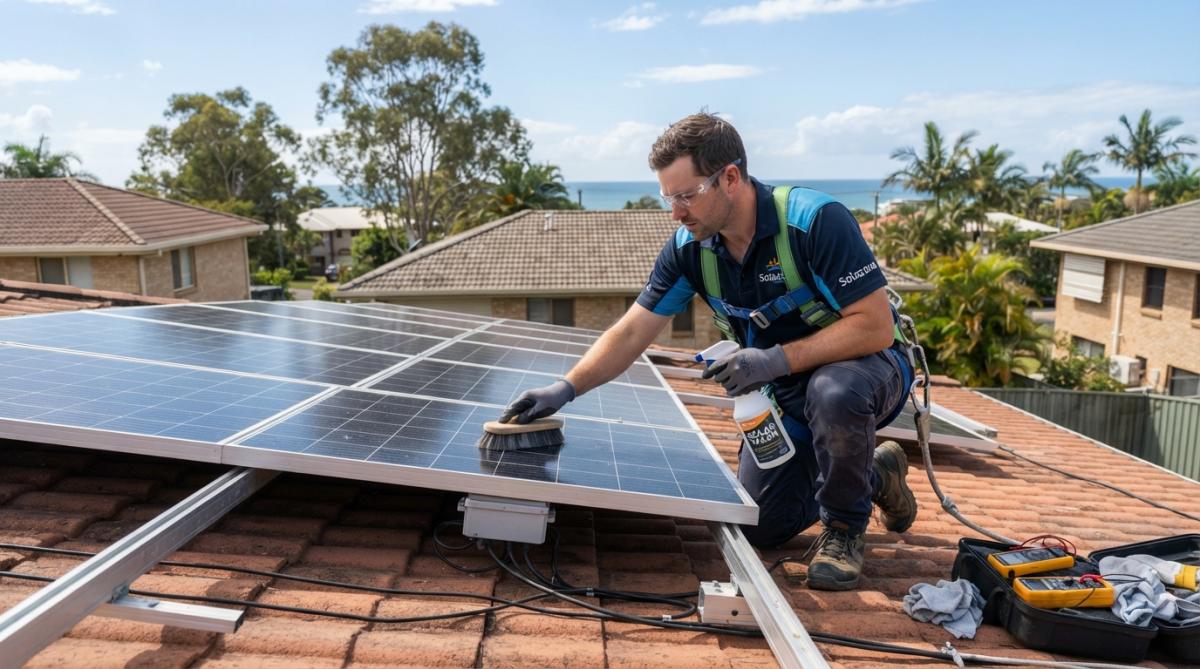
Reliable solar energy support australia includes a maintenance plan that catches problems early. Many installers offer monitoring services that track your system’s output in real time and alert you when performance drops.
Routine Maintenance Best Practices
Most Australian solar systems need cleaning 1-2 times per year, depending on your location. Coastal areas with salt spray, rural areas with dust, and regions with frequent bird activity need more frequent cleaning. A system covered in dirt loses 15-25% of its potential output.
Your installer should provide clear guidance on cleaning frequency for your specific location. Some offer annual or bi-annual cleaning services as part of a maintenance package. Routine maintenance also includes checking electrical connections, verifying mounting hardware is secure, and confirming no vegetation shades your panels.
Regional Performance Monitoring
Your system’s output varies by season and weather, but should follow predictable patterns. If generation suddenly drops 10% compared to the same month last year, something’s wrong.
Reliable installers offer monitoring systems that track output continuously and flag anomalies automatically. The best systems provide historical data, so you can see how your system performed over seasons and years. This data becomes valuable when troubleshooting problems and comparing actual output against your installer’s original projections.
Solar Inverter Problems Australia: Diagnosis and Support
Your inverter converts DC power from your panels into AC power your home can use. When an inverter fails, your entire system stops producing usable electricity, even if your panels work perfectly.
Inverter problems are common enough that reliable solar energy support australia includes fast diagnosis and replacement protocols. Response time matters enormously.
Common Inverter Faults and Warning Signs
String inverters fail due to component degradation, overheating, electrical surges, and manufacturing defects. Early warning signs include error codes on the inverter display, no output on sunny days, and unusual humming or buzzing sounds.
Some failures are obvious; others are subtle, the inverter produces output at 80% of its rated capacity. Subtle failures are dangerous because you might not notice them for months, losing thousands in generation silently. A reliable installer has clear protocols for diagnosing inverter issues and identifying whether the problem is the inverter itself, wiring, panels, or grid connection.
Post-Installation Troubleshooting Support
When your inverter fails, you need a response within 24-48 hours. Reliable solar energy support australia means having technicians available to diagnose the problem quickly and either repair it on-site or arrange a replacement.
Ask your installer: "If my inverter fails, do you keep replacement units in stock, or do I wait for a new one to arrive?" Companies that keep spare inverters on hand can restore your system within days. Companies that order replacements after diagnosis leave you without generation for weeks.
If your inverter fails and your installer tells you “the manufacturer will handle it,” ask how long that typically takes. Manufacturer warranty claims can take 4-8 weeks. A reliable installer will handle the logistics themselves.
Solar Battery Storage Australia Reliability: Beyond Grid-Connected Systems
Battery storage adds complexity but also resilience. A grid-connected system with battery backup keeps your home running during blackouts. Both require reliable solar energy support australia because batteries are more complex than panels or inverters.
Battery Performance and Lifespan Expectations
Modern lithium batteries last 10-15 years in typical Australian conditions, though some premium systems claim 20+ years. Your installer should provide clear documentation on your battery’s expected lifespan, degradation curve, and warranty terms.
Temperature matters significantly. Batteries in hot climates degrade faster than those in cooler regions. A reliable installer accounts for your local climate when recommending battery systems and sets realistic expectations about lifespan.
Support for Off-Grid and Hybrid Configurations
Off-grid systems require careful load management, generator backup for extended cloudy periods, and regular monitoring of battery state of charge. Reliable solar energy support australia includes monitoring and load management support for off-grid systems.
Your installer should help you understand your daily energy budget, seasonal variations, and when to use backup power. Hybrid systems (grid-connected with battery backup) are simpler than off-grid but require monitoring battery charge levels and ensuring your system prioritises battery charging during peak solar hours.
How to Compare Solar Quotes and Reliable Energy Support Options
You’ll likely get multiple quotes from different installers. The cheapest quote is rarely the best choice, you’re comparing reliability, support, and long-term value, not just upfront price.
| Evaluation Criteria | What to Look For | Red Flag |
|---|---|---|
| Accreditation | Clean Energy Council certified, licensed electricians | No accreditation or vague about certifications |
| Warranty | 25-year panel, 10-year inverter, 5-year workmanship, clear claim process | Vague warranty terms or short workmanship coverage |
| Monitoring | Real-time system monitoring with alerts for performance drops | No monitoring offered or monitoring costs extra |
| Response Time | 24-48 hour response for service calls, stock spare inverters | No commitment to response times or long wait periods |
| Support Timeline | Ongoing support beyond installation, annual inspections offered | Support ends after installation warranty period |
| References | Customer testimonials specifically about support and service | No references or reluctance to provide them |
Key Questions to Ask Before Committing
Before signing any contract, ask these questions and get written answers:
On Support: "Who handles service calls after installation? What’s your average response time for emergency calls? Do you monitor system performance remotely?"
On Warranty: "What exactly does your workmanship warranty cover? If my inverter fails in year three, what’s the claim process and typical replacement time?"
On Performance: "What output do you project for my system in year one, and how does that compare to industry benchmarks for my location?"
On Long-Term Support: "How long will you support this system? Do you offer annual inspections, and what do they include?"
Red Flags in Quotes and Support Promises
Watch for these warning signs: vague support claims without specifics about response times or monitoring; pressure to decide quickly; cheap inverters or panels without justification; monitoring offered only as an expensive add-on; reluctance to provide references.
Call at least two customer references and specifically ask about their experience with service calls and support. Ask “Has anything broken, and if so, how quickly did they fix it?”
Building a Long-Term Relationship: Reliable Solar Energy Support Beyond Installation
Your solar system will operate for 25+ years. The installer you choose needs to be someone you can trust for the long haul, not just someone who disappears after final payment.
Communication and Response Times
Reliable installers maintain regular contact with customers. Some send annual performance reports showing how your system performed compared to the previous year. Others reach out proactively when they notice performance anomalies in their monitoring data.
Response times matter enormously. If your system fails on a Monday morning, you need someone picking up the phone, not waiting until Thursday for a callback. Ask your installer: "If I call with a problem, who answers the phone? Are you available on weekends?"
Independent Performance Audits and Verification
After your system has been running for 3-5 years, it’s worth getting an independent performance audit. This involves a third party reviewing your system’s output against your installer’s original projections and industry benchmarks for your location.
Some customers discover their systems are underperforming by 10-15% due to shading issues, equipment failures, or poor installation quality. Reliable installers welcome independent audits because they’re confident their work is sound.
Solazone Australia’s commitment to Australian-made systems and personalized customer service means we’re available for these conversations long after installation. We’ve supported thousands of customers across Australia, and that experience informs how we approach every new installation.
Choosing reliable solar energy support australia isn’t about the cheapest quote or shiniest marketing. It’s about finding a partner who will be there when something breaks, who monitors your system proactively, and who stands behind their work for decades. The right choice saves you money, stress, and years of underperforming generation. Get in touch with Solazone Australia to discuss your specific situation and see how our 40+ years of technical expertise can deliver the reliable support your system deserves.
Frequently Asked Questions
What does reliable solar energy support include in Australia?
Reliable solar energy support encompasses pre-installation consultation, professional installation by accredited installers, comprehensive warranty coverage on both equipment and workmanship, ongoing maintenance scheduling, rapid response to faults, and long-term technical guidance. It includes monitoring system performance, troubleshooting inverter problems, and ensuring your solar PV modules and battery storage operate at optimal efficiency. Quality support providers offer clear communication timelines, documented service records, and access to spare parts or replacement components when needed.
How do I choose a reliable solar installer in Australia?
Verify accreditation with the Clean Energy Council, check for relevant certifications and insurance, ask about their experience with your specific roof type and climate region, review customer testimonials from similar installations, request detailed written quotes that itemise all components, and confirm their warranty terms in writing. Ask about post-installation support availability, response times for service calls, and whether they offer performance monitoring. A reliable installer will provide references and be transparent about timeline expectations and any structural work required for your property.
What are common solar inverter problems in Australia, and how is support provided?
Common inverter faults include error codes indicating grid connection issues, thermal shutdowns during extreme heat, and firmware compatibility problems. Reliable support involves rapid fault diagnosis through remote monitoring, clear explanation of the problem in non-technical language, and swift replacement or repair. Quality providers offer 24-hour emergency contact for critical faults, maintain spare inverters for quick swaps, and provide detailed troubleshooting guides. Support should include prevention education about voltage fluctuations and surge protection, especially important in regional areas with variable grid conditions.
Is solar battery storage in Australia reliable for long-term backup, and what support is essential?
Modern battery systems are reliable when properly installed and maintained, with typical warranties covering 10+ years. Essential support includes regular health monitoring software, scheduled maintenance checks, and clear documentation of battery performance degradation over time. Your support provider should explain depth-of-discharge limits, explain seasonal performance variations across Australian climates, and help optimise your energy management strategy. For off-grid or hybrid systems, ongoing technical guidance on load management and backup protocols is critical. Verify warranty coverage includes labour costs, not just parts replacement.
This article was written using GrandRanker