
Table of Contents
- What makes Australian-made solar panels different
- Solar panel efficiency ratings Australia: what the numbers mean
- Durability and performance in harsh weather
- Solar panel warranty and support Australia: coverage and claims
- Cost of solar power systems Australia: investment and payback
- Installation quality and system monitoring
- Verdict: which Australian-made solar panels to choose
What makes Australian-made solar panels different
Australian-made solar panels are engineered specifically for local conditions: intense UV exposure, extreme temperature swings, salt corrosion in coastal areas, and high peak sun hours. Manufacturers like Tindo Solar build monocrystalline PERC technology with materials, frame construction, and backsheet formulations that differ from generic international models designed for temperate climates.
Australian-made panels offer supply chain transparency, your installer, warranty handler, and technical support operate within the same regulatory environment and time zone. Australia’s Clean Energy Regulator guidance on solar panel standards outlines certification requirements; Australian manufacturers typically exceed baseline standards because they engineer for known, predictable conditions rather than a generic global market. Supporting local manufacturing also builds domestic supply chain resilience and keeps jobs local.
Solar panel efficiency ratings Australia: what the numbers mean
Solar panel efficiency tells you what percentage of sunlight converts into usable electricity. A 22% efficient panel converts 22 out of every 100 watts of sunlight into electrical output. The Tindo Karra range demonstrates how efficiency scales: the Karra-410 delivers 410 watts, while the Karra-440 and Karra-490 push higher wattage through the same footprint, requiring fewer panels for equivalent energy generation.
What matters in practice is the performance ratio, how much actual energy your system produces compared to its theoretical maximum. Australian conditions create specific challenges: peak sun hours vary between regions, coastal salt spray degrades panels differently than inland dust, and shading cuts output in ways international ratings don’t account for.
Efficiency ratings are tested under standard test conditions (25°C, 1000W/m² irradiance). Your actual system will perform differently depending on ambient temperature and seasonal variation. A panel rated at 22% efficiency might deliver 16-18% effective efficiency in real-world Australian summer conditions when heat reduces output.
The thermal coefficient matters more than raw efficiency for Australian installations. This measures how much power output drops as panel temperature rises above 25°C. A panel with a -0.4% per degree thermal coefficient loses 4% of its output for every 10°C temperature increase. Australian-made panels are engineered with thermal coefficients optimised for local conditions, typically tighter than international equivalents.
Energy yield, the total kilowatt-hours your system produces annually, is what actually affects your power bills and payback timeline. This depends on efficiency, system design, inverter compatibility, and monitoring quality.
Durability and performance in harsh weather
Australian weather creates specific durability demands that manufacturers must engineer for explicitly. Intense UV radiation, temperature extremes, salt-laden coastal air, and severe weather events cause accelerated stress compared to most global markets.
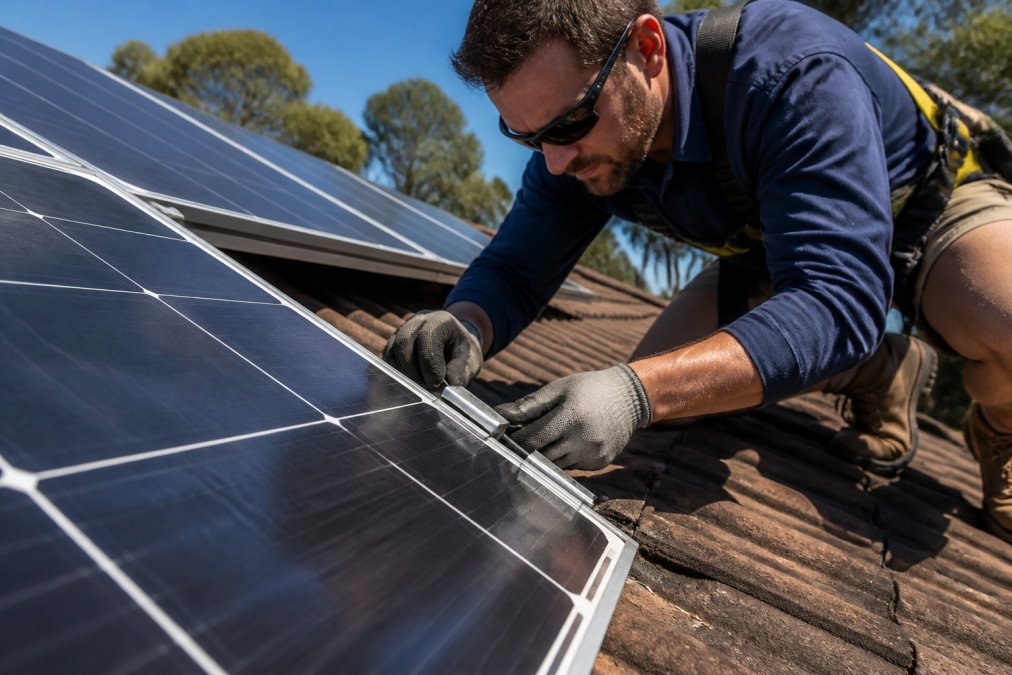
Monocrystalline PERC technology resists light-induced degradation better than older polycrystalline designs. The single-crystal silicon structure and passivated emitter rear contact design reduce electron recombination losses that accelerate under intense radiation. Over 25 years, this translates to measurably better performance retention.
The backsheet material is where many panels fail prematurely in harsh Australian conditions. Standard polyester backsheets degrade under UV exposure and salt corrosion. Australian-made panels typically use fluoropolymer backsheets (like PVDF) that resist both UV degradation and salt spray. Aluminium frames require proper anodising to prevent corrosion in coastal environments.
Temperature cycling creates mechanical stress that cheaper panels struggle with. When a panel heats to 70°C in summer then cools to 5°C at night, materials expand and contract at different rates. Poor adhesion causes delamination, visible as cloudiness inside the panel, which reduces output and can lead to water ingress and electrical hazards. Australian-made panels use adhesive systems and lamination processes engineered for these temperature swings.
Australian manufacturers often exceed minimum durability testing standards. Accelerated weathering tests simulate years of UV exposure in weeks. Thermal cycling tests run hundreds of freeze-thaw cycles. Salt-fog testing exposes panels to salt spray equivalent to decades of coastal exposure. A 25-year product warranty covering manufacturing defects, combined with a 25-year performance warranty guaranteeing at least 80% of rated output, reflects this durability confidence.
Solar panel warranty and support Australia: coverage and claims
A solar panel warranty is only valuable if you can actually claim it. The Tindo Karra panels come with dual 25-year warranties: one covering product defects, the other guaranteeing performance retention. Understanding what’s actually covered prevents surprises when you need to make a claim.
Product warranty covers manufacturing defects: delamination, frame corrosion, electrical failures, and degradation beyond normal expectations. It typically does not cover installation errors, physical damage from weather events, or performance loss from poor system design. Performance warranty guarantees at least 80% of rated output after 25 years, accounting for normal degradation of 0.5-0.8% annually.
The critical detail: who processes the claim? Australian-made panels from manufacturers like Tindo Solar have local warranty administrators who understand Australian conditions and process claims quickly. International panels often require claims to go through overseas distributors, adding delays and complexity. Solazone Australia has extensive experience with warranty claims and understands the process.
Many warranty claims fail because homeowners can’t prove proper maintenance or installation. Keep installation documentation, have your system professionally inspected annually, and document performance anomalies immediately. A claim filed while the issue is current is far easier to substantiate than one filed years later.
Performance monitoring is essential for warranty claims. Your system needs to track actual power output against expected output based on weather conditions. Without monitoring, you won’t know your panel is underperforming until years of lost energy have accumulated. Solazone Australia provides ongoing system monitoring and support as your local partner.
Cost of solar power systems Australia: investment and payback
System costs vary based on roof size, orientation, shading, energy consumption, and local electricity rates. A typical residential system ranges from 5kW to 10kW, requiring roughly 2.5-3 square metres of roof space per kilowatt. Costs include panels, inverter, mounting hardware, wiring, and installation labour.
The payback period depends on electricity consumption, feed-in tariff rates, and system energy yield. A system producing 15,000 kilowatt-hours annually in an area with average electricity rates might save 3,000-4,000 AUD annually, meaning a 10-15 year payback depending on total system cost. Coastal areas with higher peak sun hours see faster payback; southern regions with lower insolation take longer.
Energy Matters solar ROI calculator provides state-by-state payback estimates based on your postcode, system size, and consumption patterns.
Battery storage changes the economics substantially. Adding a battery system lets you store excess daytime generation for evening use, reducing grid reliance and increasing savings. However, battery costs are significant, and payback periods extend considerably. A battery system makes sense if you have high evening consumption, frequent power cuts, or want energy independence.
Government rebates vary by state and change regularly. The Small-scale Renewable Energy Scheme provides STCs (Small-scale Technology Certificates) that reduce upfront costs. Clean Energy Regulator’s small-scale solar information provides current rebate details for your location.
The cost comparison between Australian-made panels and cheaper imported alternatives often overlooks long-term factors. A 15% cheaper imported panel might degrade faster, have longer warranty claim turnaround times, or perform worse in Australian conditions. Over 25 years, total cost of ownership often favours quality Australian-made options.
Installation quality and system monitoring
Installation quality determines whether your panels perform to specification or underperform for decades. Poor installation causes voltage drop, shading issues, inadequate ventilation, and electrical safety hazards.
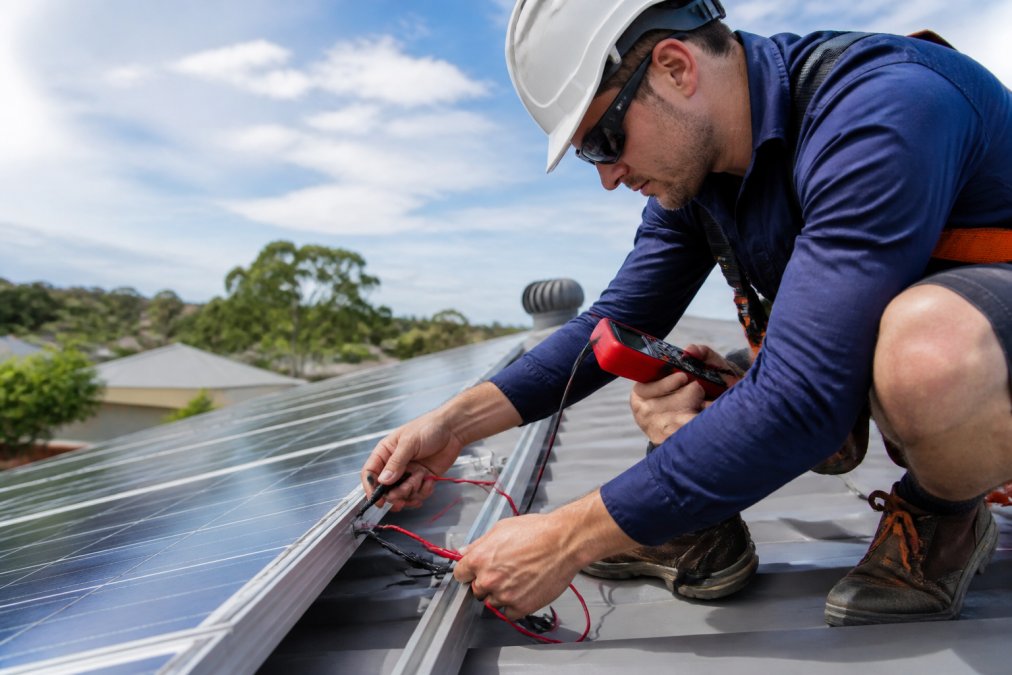
A certified solar installer should hold relevant qualifications, typically a Certificate III or IV in Solar Photovoltaic System Installation. They should assess roof structural capacity, calculate optimal panel orientation and tilt angle, design string configuration to minimise voltage drop, and ensure all electrical work meets Australian standards. Solazone Australia’s 40+ years of installation experience means they have extensive experience with various roof layouts, shading challenges, and structural quirks.
Shading analysis is critical and often done poorly. Even partial shading of one panel can significantly reduce output from an entire string. A proper assessment uses satellite imagery and 3D roof modelling to identify shading from trees, buildings, and roof features at different times of year. If shading is unavoidable, microinverters or power optimisers can mitigate impact by allowing each panel to operate independently.
System monitoring transforms a static installation into an active asset. A good monitoring system tracks real-time power output, cumulative energy generation, system efficiency, and alerts you to performance issues. Without monitoring, you won’t know if your system is underperforming until you compare electricity bills months or years later.
Professional monitoring systems integrate with your inverter and provide cloud-based dashboards accessible from your phone. They log data at 5-15 minute intervals, creating detailed performance history invaluable for warranty claims and identifying problems early.
Inverter selection affects long-term performance and monitoring capability. String inverters suit simple roofs without shading. Hybrid inverters integrate battery management. Microinverters work best for complex roofs with multiple orientations or significant shading. Your installer should explain why they’ve chosen a specific inverter type for your situation.
Electrical safety standards are non-negotiable. Your installation must comply with Australian Standard AS/NZS 3000 (electrical safety) and AS/NZS 4777 (grid-connected solar systems). A certified installer ensures proper earthing, surge protection, isolators, and circuit breaker sizing. Substandard electrical work creates fire hazards and voids insurance.
Verdict: which Australian-made solar panels to choose
The choice between Australian-made solar panels depends on your priorities: maximising energy yield, minimising upfront cost, or balancing both.
Tindo Karra-410 suits homeowners with moderate energy consumption and limited roof space. At 410W per panel, it requires more panels than higher-wattage options, but lower per-watt cost makes it attractive for smaller systems. Best for: budget-conscious homeowners who want Australian-made quality without premium pricing.
Tindo Karra-440 represents the middle ground, offering higher power output than the 410W model without premium pricing of the 490W option. It reduces panel count needed for a given system size, lowering installation complexity. Best for: homeowners seeking balanced performance and value.
Tindo Karra-490 maximises energy generation per panel, ideal for properties with limited roof space or high energy consumption. Higher wattage reduces installation footprint and labour costs. Best for: larger properties, high-consumption households, or those prioritising maximum energy independence.
| Panel Model | Power Output | Best For | Key Advantage |
|---|---|---|---|
| Tindo Karra-410 | 410W | Budget-conscious, moderate consumption | Lower per-panel cost, proven performance |
| Tindo Karra-440 | 440W | Most residential applications | Balanced efficiency and value |
| Tindo Karra-490 | 490W | High consumption, limited roof space | Maximum energy yield per panel |
Beyond the panel choice, your installer matters as much as the product. Solazone Australia’s 40+ years of experience, commitment to Australian-made systems, and comprehensive support ensure your system performs to specification. They have served thousands of customers across Australia, solving problems unique to various regions and roof types.
The Australian-made advantage extends beyond the panel itself. You get local warranty support, system monitoring integrated into your region’s grid conditions, and an installer who understands how your location’s weather patterns affect performance.
Frequently Asked Questions
Are there actually Australian-made solar panels available?
Yes. Tindo Solar manufactures monocrystalline PERC solar panels in Australia, with models ranging from 410W to 490W power output. These panels are designed specifically for harsh Australian conditions and come with 25-year product and performance warranties. Australian-made panels support local manufacturing and often feature stricter quality control suited to extreme weather exposure.
How do Australian-made solar panels compare to imported brands in terms of efficiency?
Australian-made panels like Tindo's Karra range use monocrystalline PERC cell technology, delivering high module efficiency suitable for both residential and commercial applications. Efficiency ratings depend on specific models and conditions, but Australian-made panels are engineered for local climate challenges including UV exposure, thermal stress, and temperature fluctuations. Imported panels may offer different efficiency profiles, but Australian-made options are optimised for local performance.
What warranty coverage should I expect with Australian-made solar panels?
Australian-made panels typically offer comprehensive coverage. Tindo's range includes 25-year product warranties covering defects and 25-year performance warranties guaranteeing output levels. This extended protection reflects confidence in durability and long-term reliability. Warranty claims are handled locally, which can mean faster resolution. Check specific terms with your installer, as support quality and response times vary between providers.
What is the typical cost of a solar power system in Australia, and how long is the payback period?
System costs depend on size, panel choice, inverter type, battery storage, and installation complexity. Australian-made panels typically cost more upfront than imported alternatives, but this reflects local manufacturing, quality assurance, and warranty depth. Payback periods vary by state, roof orientation, energy usage, and feed-in tariff rates. Request a personalised quote and ROI calculation for your specific situation rather than relying on generic estimates.
Why choose Australian-made solar panels instead of cheaper imported options?
Australian-made panels offer supply chain transparency, local manufacturing standards, and support from providers with deep Australian market experience. They perform reliably in harsh climates, come with comprehensive warranties handled locally, and support the local economy. While upfront costs are higher, durability testing, quality control, and long-term reliability often justify the investment. Cheaper imports may have longer lead times, warranty complications, and less climate-specific design.
Choosing Australian-made solar panels is choosing reliability, local support, and proven performance in your climate. Solazone Australia combines quality panels with 40+ years of installation expertise and ongoing system monitoring, ensuring your solar investment delivers real energy savings and comfort improvements for decades. Get started with a personalised system design and performance projection tailored to your home or business.
This article was written using GrandRanker