
Table of Contents
- What Government Rebates Are Available for Solar Panels
- Understanding the Small-scale Renewable Energy Scheme (SRES)
- How to Calculate Your STC Solar Rebate
- State-Based Solar Battery Rebates and Incentives
- Australian-Made vs. Imported Solar Systems: Quality and Eligibility
- Maximising Your Rebate: Eligibility Criteria and Application Steps
- Lifecycle Cost Analysis: Real Payback Periods for Your Home
- Conclusion
- Frequently Asked Questions
Last Updated: September 19, 2026
What Government Rebates Are Available for Solar Panels
Government rebates for australian made solar panels represent one of the most significant financial incentives available to homeowners and businesses looking to transition to renewable energy. These incentives come from both federal and state-level schemes designed to reduce upfront installation costs and accelerate adoption of clean energy systems.
The primary federal incentive is the Small-scale Renewable Energy Scheme (SRES), which provides Small-scale Technology Certificates (STCs) to eligible solar installations. Beyond this, individual states offer their own battery rebates, grants, and interest-free loan programs. Understanding which rebates apply to your situation requires navigating multiple eligibility criteria and application processes.
With over 40 years of technical expertise, we understand how these schemes work and how to position your system for maximum financial benefit.
Understanding the Small-scale Renewable Energy Scheme (SRES)
The Small-scale Renewable Energy Scheme (SRES) is the federal government’s primary mechanism for supporting residential and small commercial solar installations. Under this scheme, eligible solar photovoltaic systems generate Small-scale Technology Certificates (STCs) that can be sold to help offset installation costs.
The scheme operates on a straightforward principle: when you install a solar PV system, the system’s capacity generates a specific number of STCs based on the kilowatt-hour output it’s expected to produce over its lifetime. These certificates have a tradeable value in the market, and most installers handle the sale on your behalf, applying the credit directly to your invoice. This means you receive an upfront discount rather than claiming a rebate after installation.
Your eligibility under SRES depends on several factors. The system must be less than 100 kilowatts in capacity for residential properties, though businesses can install larger systems up to 250 kilowatts. The installation must be performed by a Clean Energy Council accredited installer, and your property must be owner-occupied or a rental property where the owner consents to the installation. Clean Energy Council accreditation requirements outline the specific technical standards your installer must meet.
Many homeowners don’t realise that SRES credits can vary significantly based on your location, because the scheme accounts for solar irradiance differences across regions. If you’re on the border between states, the location of your roof makes a measurable difference to your rebate value.
How to Calculate Your STC Solar Rebate
Calculating your STC solar rebate requires understanding three key variables: your system’s capacity in kilowatts, your postcode’s solar irradiance zone, and the current STC price. The calculation itself is straightforward once you have these inputs.
The government provides a baseline formula that determines how many STCs your system generates. A typical residential system generates a specific number of STCs over its 15-year deeming period. Each STC has a tradeable value that fluctuates based on market demand.
To calculate your personal rebate, multiply your system’s STC generation by the current market price. Most installers publish current STC prices on their websites, and you can verify these independently through the Clean Energy Regulator’s official resources. The calculation is transparent and standardised across all accredited installers.
A common mistake is assuming all systems of the same capacity generate identical STCs. They don’t. Your postcode determines which solar irradiance zone applies to your property, and this directly affects the number of certificates generated. Your postcode determines which solar irradiance zone applies to your property, and this directly affects the number of certificates generated. Clean Energy Regulator STC calculator provides the official tool for calculating your specific system’s STC value.
Your STC rebate is determined at the time of installation and locked in based on your system’s capacity and postcode. If STC prices rise after your installation, you don’t benefit from the increase. If you’re considering solar, timing your installation when STC prices are favourable can meaningfully improve your financial outcome.
State-Based Solar Battery Rebates and Incentives
Beyond the federal SRES scheme, individual states offer additional rebates specifically for solar battery storage systems. These state-based programs recognise that batteries represent a significant additional investment and aim to make energy independence more accessible.
Individual states offer additional rebates specifically for solar battery storage systems. These state-based programs recognise that batteries represent a significant additional investment and aim to make energy independence more accessible. Navigating the administrative requirements for claiming energy rebates ensures that these financial incentives remain a practical pathway for households seeking to reduce their long-term reliance on the grid.
Each state’s program operates independently with different eligibility criteria, rebate amounts, and application processes. Some states require that you install solar and battery together, while others allow you to add a battery to an existing solar system years later. The rebate amounts vary significantly, so comparing your state’s specific offering is essential.
A critical detail often missed is that state battery rebates typically require installation by a registered installer within that state. If you’re planning to move or have a complex installation scenario, verify that your chosen installer meets your state’s specific registration requirements. The rebate becomes unavailable if your installer doesn’t hold the correct accreditation for your location.
Australian-Made vs. Imported Solar Systems: Quality and Eligibility
The distinction between Australian-made and imported solar panels affects both your eligibility for certain programs and the long-term performance of your system. Understanding this difference helps you make an informed decision aligned with both your budget and your values around domestic manufacturing.
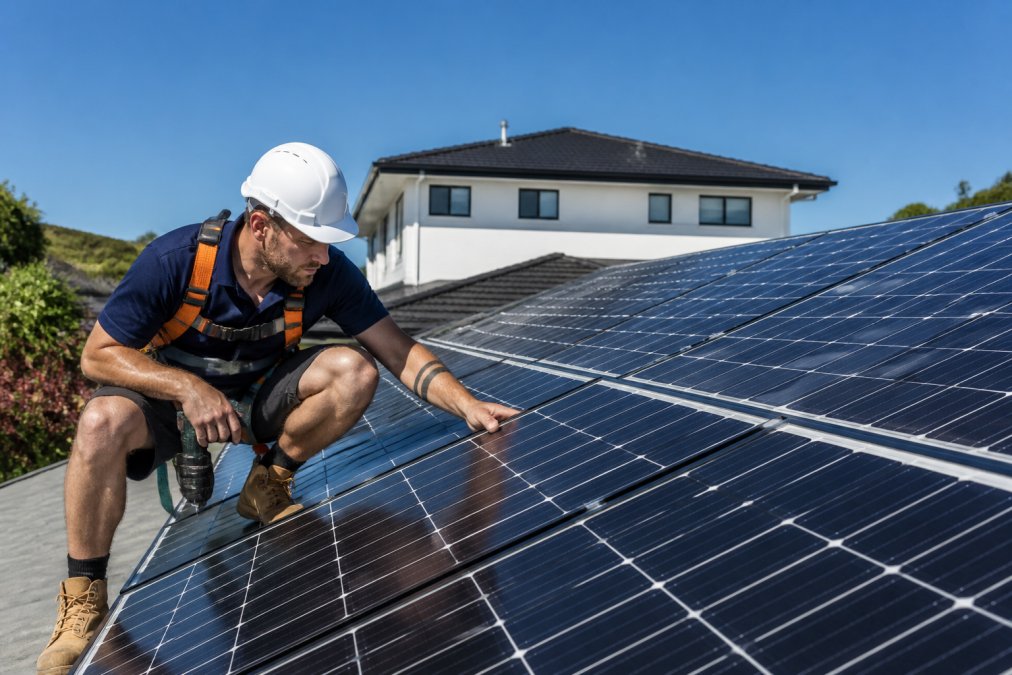
Australian-made solar panels and components are manufactured domestically, typically subject to stricter quality control standards and more accessible local support if issues arise. The manufacturing process for Australian-made systems often incorporates rigorous testing protocols aligned with Australian climate conditions.
Imported systems, particularly those from leading Asian manufacturers, represent the majority of the market by volume and often offer competitive pricing. However, quality varies significantly among imported brands. Some imported panels are genuinely high-quality and reliable; others cut corners on materials or testing. The challenge for homeowners is distinguishing between the two without deep technical knowledge.
From a rebate perspective, neither Australian-made nor imported systems are explicitly favoured by the SRES scheme itself. The rebate applies equally regardless of panel origin, as long as the system meets technical standards and is installed by an accredited installer. However, state-based programs occasionally include preferences for locally-manufactured components, so checking your state’s specific guidelines is worthwhile.
A practical verification approach involves checking the manufacturer’s local presence and warranty support. Australian-made manufacturers typically maintain local service networks and can respond quickly to warranty claims. With imported systems, verify whether the manufacturer has an Australian distributor or service centre. Systems with no local support infrastructure create complications if you need warranty service, potentially leaving you waiting months for replacement components shipped internationally.
Maximising Your Rebate: Eligibility Criteria and Application Steps
Eligibility for government rebates for australian made solar panels depends on meeting specific criteria across property type, system specifications, and installer accreditation. Understanding these requirements upfront prevents costly delays or disqualification after installation.
For the SRES scheme, your property must fall into one of these categories: owner-occupied residential property, rental property with owner consent, or small business premises. The solar PV system must be new (not previously installed), have a capacity under 100 kilowatts for residential installations, and be installed by a Clean Energy Council accredited installer. Your system must meet Australian Standards for electrical safety and performance.
The application process typically works like this: your accredited installer handles the SRES application on your behalf as part of the installation process.
Lifecycle Cost Analysis: Real Payback Periods for Your Home
Understanding the true financial benefit of solar requires looking beyond the initial rebate to the complete lifecycle cost and energy savings your system delivers over its operational life.
Avoid relying on online solar calculators that don’t account for your specific roof orientation, shading patterns, or actual consumption data. A system that looks financially attractive in a generic calculator might underperform significantly on your actual roof. Request a professional site assessment from your installer that includes shading analysis and your 12-month electricity consumption history before finalising your financial projections.
Conclusion
Government rebates for australian made solar panels make renewable energy more accessible than ever, with federal SRES rebates and state-based battery incentives combining to reduce upfront costs significantly. The key to maximising your financial benefit lies in understanding which schemes apply to your situation, verifying your installer’s accreditation, and calculating realistic payback periods based on your specific property and consumption patterns.
| Rebate Type | Eligibility | Application Timeline | Typical Benefit |
|---|---|---|---|
| SRES (Federal) | Owner-occupied or rental properties, system under 100kW, accredited installer | Completed at installation | Upfront discount reducing net cost |
| State Battery Rebate | Varies by state; typically new installations only | Pre-approval or post-installation claim | Percentage rebate on battery cost |
| Feed-in Tariff | Grid-connected systems, varies by state | Automatic once connected | Ongoing credit for exported energy |
Frequently Asked Questions
What is the current government rebate for solar panels in 2026?
The primary government rebate scheme is the Small-scale Renewable Energy Scheme (SRES), which provides upfront discounts through Small-scale Technology Certificates (STCs). The rebate amount depends on your system’s capacity, location, and the number of STCs your installation generates. Additionally, many states offer their own incentives including battery storage rebates and interest-free loans. Contact Solazone Australia for a personalised calculation based on your specific situation and location.
How do I apply for the Small-scale Renewable Energy Scheme?
To access SRES rebates, your solar system must be installed by a Clean Energy Council accredited installer and registered with the Clean Energy Regulator. Your installer handles most of the registration process. You’ll need to provide proof of ownership, roof details, and system specifications. Solazone Australia manages the compliance and registration requirements as part of our installation service, ensuring you receive your full rebate entitlement without delays or paperwork complications.
Does choosing Australian-made solar panels increase my rebate amount?
The rebate amount itself is not higher for Australian-made systems under SRES, the STC value is based on system capacity and location, not panel origin. However, Australian-made panels are promoted by Solazone Australia. Additionally, some state-based incentives may prioritise domestic manufacturing. Solazone Australia specialises in Australian-made systems that maximise both rebate eligibility and real-world performance over the system’s lifetime.
Are solar rebates being cut in 2026?
The SRES continues in 2026. State-based incentives vary and are subject to government policy changes. To secure the best available rebate, it’s important to apply sooner rather than later. Solazone Australia can provide current rebate estimates and advise on timing to maximise your financial benefit.