
Table of Contents
- How Off-Grid Solar Systems Work
- Off-Grid Solar Battery Cost 2026: What to Expect
- System Sizing and Energy Consumption Calculations
- Standalone Power System Regulations and Compliance
- Government Rebates and Financial Incentives for 2026
- DIY Off-Grid Solar Installation Rules and Professional Installation
- Battery Storage Technology and System Maintenance
- Conclusion
Last Updated: August 15, 2026
How Off-Grid Solar Systems Work
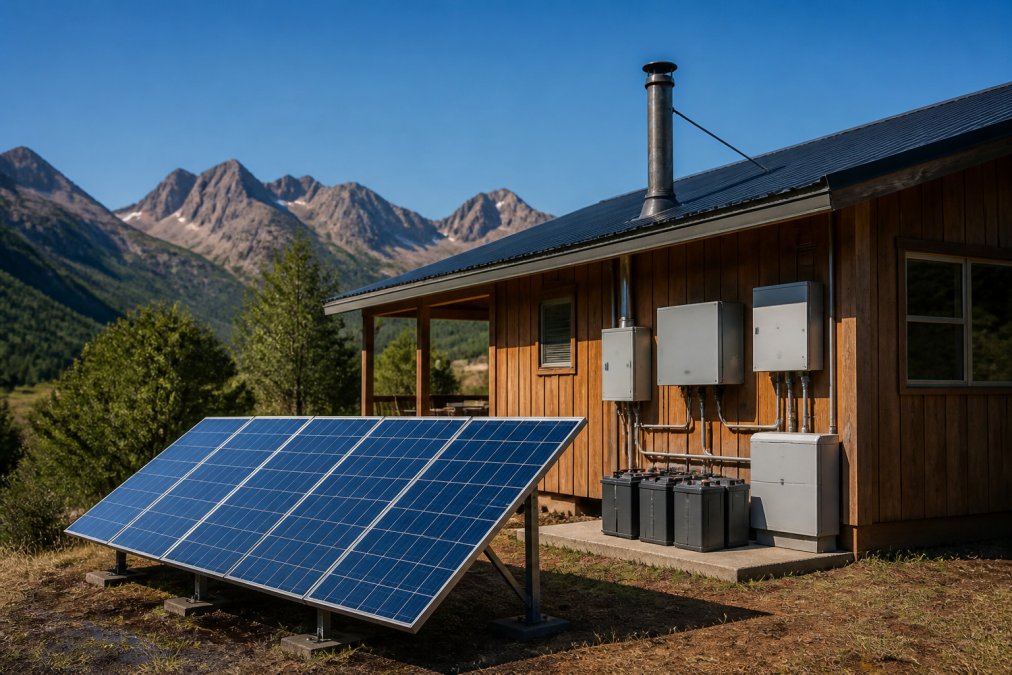
An off-grid solar system is a standalone power installation that generates, stores, and manages electricity independently from the grid. Unlike grid-tied systems, off-grid setups must handle all energy production and storage on-site, making them ideal for remote properties, rural locations, or homes seeking complete energy independence.
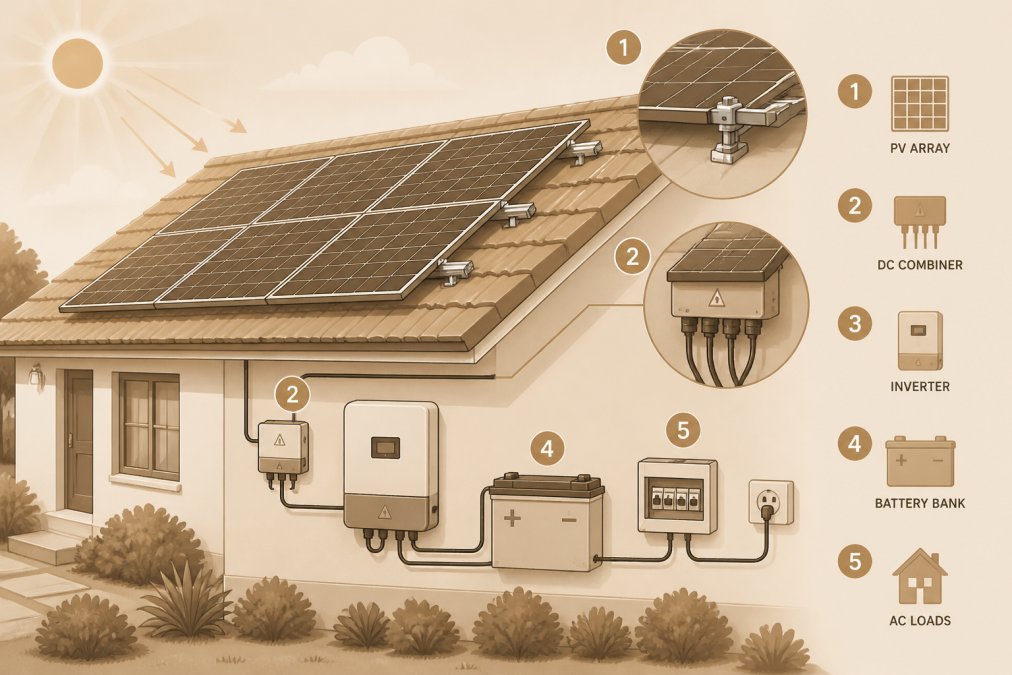
The system operates through four core components: solar panels convert sunlight into direct current electricity, a charge controller regulates power flow to prevent battery damage, battery storage holds energy for use when the sun isn’t shining, and an inverter converts stored direct current into alternating current for household appliances. What sets off-grid systems apart is their reliance on battery storage as the backbone, grid-tied systems push excess power back to the network, while off-grid systems must store everything or lose it.
Most residential off-grid installations in Australia operate at 48-volt systems, which balance efficiency with safety. Inverter efficiency matters significantly: a quality inverter converts 95-98% of stored energy into usable power, while cheaper models drop to 85-90%, wasting kilowatt-hours and requiring oversized battery banks. Over a system’s 25-year lifespan, this efficiency difference compounds into thousands of dollars in lost energy.
Solazone Australia has spent over 40 years helping customers understand these technical foundations. The company’s experience with Australian installations reveals that most failures stem not from equipment quality but from undersized systems or unrealistic expectations about energy autonomy during extended cloudy periods.
Off-Grid Solar Battery Cost 2026: What to Expect
Battery storage represents the largest expense in any off-grid solar system. Lithium-ion batteries dominate the market, offering deeper discharge cycles (typically 80-90% usable energy), longer lifespan (10-15 years), and better efficiency than lead-acid alternatives. Lead-acid batteries, while cheaper upfront, require more frequent replacement and deliver only 50% usable capacity, meaning you need nearly double the physical battery bank for the same stored energy.
A modest 10 kWh lithium system suits a small home with conservative energy use, while a 20 kWh system serves a family home with air conditioning and electric hot water. Pricing depends on quantity, dates, and delivery; contact Solazone Australia for current quotes tailored to your specific energy needs.
Battery degradation is real. After 10 years, most lithium systems retain 80-85% of their original capacity. Planning for this decline means oversizing your initial battery bank slightly, adding to upfront costs but ensuring reliable power in later years.
Installation complexity also drives costs. Batteries require proper ventilation, temperature control, and safety isolation from living spaces. Some installations need dedicated battery rooms with climate control, especially in hot climates like the Sunshine Coast.
| Battery Type | Typical Lifespan | Usable Capacity | Replacement Frequency |
|---|---|---|---|
| Lithium-ion | 10-15 years | 80-90% | Once per system lifetime |
| Lead-acid (flooded) | 5-7 years | 50% | Every 5-7 years |
| Lead-acid (AGM) | 7-10 years | 60-70% | Every 7-10 years |
The real question isn’t the sticker price, it’s the cost per usable kilowatt-hour over the system’s lifetime. A cheaper battery that needs replacement twice costs more than a quality lithium system you install once.
System Sizing and Energy Consumption Calculations
Proper system sizing is where most off-grid projects either succeed or fail. Undersizing means insufficient power on cloudy weeks; oversizing wastes money on unnecessary capacity.
Start with your actual energy consumption. Pull your last 12 months of electricity bills if you’re currently grid-connected, or estimate honestly if you’re building new. The average Australian household uses 15-20 kilowatt-hours daily, though this varies by lifestyle, climate, and appliances.
Convert daily consumption to a load profile. Identify peak demand hours, a family running air conditioning from 2-6 PM during summer has a different peak load than one using it all night. Peak load determines your inverter size; total daily consumption determines your battery capacity.
Calculate your location’s peak sun hours, which represent equivalent hours of full-strength sunlight your panels receive daily, accounting for seasonal variation and angle. Coastal areas near the Sunshine Coast typically see 4-5 peak sun hours in winter and 6-7 in summer. Bureau of Meteorology solar radiation data provides historical averages for your postcode.
Multiply your daily consumption by a safety factor (typically 1.3 to 1.5) to account for cloudy periods and system losses, then divide by your location’s average peak sun hours to determine required panel capacity. A 15 kWh daily consumption with a 1.4 safety factor and 5 peak sun hours requires roughly 4.2 kW of installed panels.
Battery capacity must cover multiple days of autonomy. Most off-grid systems aim for 3-5 days of storage without sun. A household using 15 kWh daily needs 45-75 kWh of battery storage to achieve this.
Using an Off-Grid Solar System Sizing Calculator
A sizing calculator simplifies manual calculations and reduces errors. Quality calculators account for system losses, inverter efficiency, charge controller losses, and wiring resistance, all of which reduce usable energy by 15-20%. Poor calculators ignore this, leading to undersized recommendations.
Solazone Australia’s approach involves detailed site surveys and load analysis before any sizing recommendation. Temperature affects battery performance significantly; lithium batteries perform best between 15-25°C. In hot climates, battery enclosures need cooling systems. A quality sizing tool adjusts for your local climate, not just your location’s latitude.
Standalone Power System Regulations and Compliance
Australia has no unified national standard for off-grid installations, but several regulatory frameworks apply depending on your state. The Australian Standard AS/NZS 4509.1 for standalone power systems defines safety and performance requirements for off-grid installations. Most professional installers follow these guidelines regardless of state, as they represent best practice.
Building codes vary by state. Victoria, New South Wales, and Queensland each have different approval processes for solar installations. Some councils require development approval for battery storage, especially if they involve structural changes or new electrical infrastructure.
The key compliance issue is electrical safety. Off-grid systems with battery storage involve direct current circuits that can deliver lethal shocks if mishandled. All wiring must be properly sized, fused, and isolated. Inverters must have automatic disconnection features. These aren’t optional, they’re essential for preventing fires and electrocution.
Insurance is another compliance consideration. Many standard home insurance policies exclude damage from off-grid solar systems unless they’re installed by licensed professionals and comply with relevant standards. Professional installation through Solazone Australia ensures your system meets these requirements and maintains insurance coverage.
Government Rebates and Financial Incentives for 2026
The rebate landscape for off-grid systems in 2026 differs significantly from grid-tied solar. Most government incentives focus on grid-connected installations. The Small-scale Renewable Energy Scheme (SRES) provides rebates through Small-scale Technology Certificates (STCs) for solar installations, though STCs apply primarily to grid-connected systems. Off-grid systems may qualify for some STCs if installed by accredited installers, but the rebate is typically smaller.
State-based schemes vary. Some states offer additional rebates or grants for renewable energy adoption, including off-grid systems. Victoria and Queensland occasionally launch programs targeting rural electrification or energy independence in remote areas. These programs change annually, so checking with your state’s energy authority is essential.
The real financial incentive for off-grid systems is long-term energy independence. You’re investing in decades of electricity cost avoidance. A properly sized system eliminates grid electricity bills entirely, providing returns through avoided costs rather than direct subsidies.
DIY Off-Grid Solar Installation Rules and Professional Installation
Installing an off-grid solar system yourself is legally possible in most Australian states, but several factors determine whether it’s practical or advisable.
Electrical safety is the primary concern. Direct current circuits in battery systems can deliver fatal shocks. High-voltage systems (48V or higher) require proper training. Professional installers carry insurance and have formal training, critical protections you lose with DIY work.
Building codes and permits create another barrier. Most councils require licensed electricians to perform final connections and sign off on electrical work. A DIY installation might fail final inspection if it doesn’t meet code requirements, forcing expensive rework.
Insurance implications are significant. Homeowner insurance typically excludes damage from non-compliant electrical work. If your DIY system causes a fire or electrocution, insurance won’t cover claims.
Professional installation through Solazone Australia includes site assessment, system design tailored to your property, proper component selection, code-compliant installation, and post-installation testing. While professional installation costs more upfront, it eliminates rework, ensures warranty coverage, and typically performs better than amateur setups.
Battery Storage Technology and System Maintenance
Lithium-ion batteries dominate modern off-grid installations, offering superior energy density, longer lifespan, and deeper discharge cycles than alternatives. Lithium chemistry allows 80-90% of stored energy to be usable, compared to 50% for lead-acid.
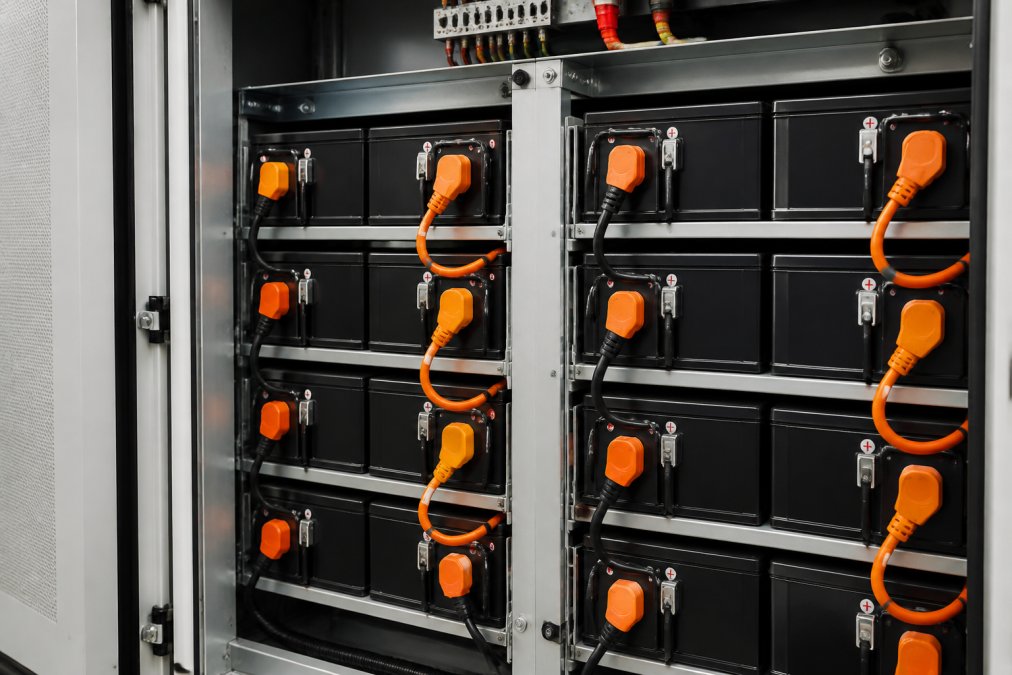
Lead-acid batteries remain common in budget-conscious installations. Flooded lead-acid batteries are inexpensive but require regular maintenance, water top-ups, and terminal cleaning. Absorbed Glass Matt (AGM) variants eliminate water maintenance but cost more. Both types suffer from limited cycle life and shallow usable capacity.
LiFePO4 (Lithium Iron Phosphate) batteries represent the best balance of safety, lifespan, and cost among lithium options. Most quality off-grid systems use LiFePO4 rather than cheaper lithium variants.
System maintenance varies by battery type. Lithium systems require minimal attention, mainly monitoring state of charge and ensuring proper ventilation. Lead-acid systems demand regular maintenance: water top-ups every 2-4 weeks, terminal corrosion cleaning, and periodic equalisation charging.
Temperature management is critical for battery longevity. Batteries discharge faster and degrade quicker in hot conditions. Off-grid installations in warm climates benefit from battery enclosures with cooling systems or placement in shaded, well-ventilated areas.
Monitoring systems track battery health, charge state, and system performance. Quality inverters include built-in monitoring; standalone battery management systems provide more detailed data. Regular monitoring catches degradation early and alerts you to maintenance needs before they cause failures.
Off-grid solar systems represent genuine energy independence, but they demand careful planning and proper installation to deliver reliable power. The technical complexity, system sizing, battery selection, and regulatory compliance make professional guidance invaluable. Solazone Australia’s 40+ years of technical expertise, commitment to Australian-made systems, and personalised customer service ensure your off-grid installation meets your energy needs while maintaining safety and performance. Get in touch with Solazone Australia for a detailed site assessment and system design tailored to your property’s unique requirements.
Frequently Asked Questions
Can I install my own off-grid solar system in Australia?
DIY installation of off-grid solar systems is heavily restricted. Most jurisdictions require licensed electricians to install battery storage systems and handle grid connections. Even for off-grid setups, structural work, electrical wiring, and battery integration must meet Australian electrical standards. Attempting installation without proper qualifications voids warranties and creates safety hazards. Professional installers ensure your system complies with local building codes and insurance requirements.
How do I calculate my daily energy consumption for an off-grid system?
Review your electricity bills to find average daily kilowatt-hour usage, or use an off-grid solar system sizing calculator to estimate based on appliances. List every device you'll use, its wattage, and daily operating hours. Include seasonal variations, heating and cooling demands change significantly. Account for peak sun hours in your location and system losses (typically 15-25%). This data determines your battery storage capacity and solar array size, ensuring your system meets daily needs without regular shortfalls.
What government rebates are available for off-grid solar systems in 2026?
The Small-scale Renewable Energy Scheme (SRES) provides rebates through Small-scale Technology Certificates (STCs) for eligible solar photovoltaic systems, though off-grid systems may have different eligibility criteria. Some states offer additional incentives for battery storage. Rebate amounts vary by location, system size, and date of installation. Contact your local energy regulator or a qualified installer to confirm current 2026 incentives for your specific situation and system configuration.
Is battery storage worth adding to an off-grid solar system?
Battery storage is essential for off-grid systems, it stores excess solar energy for use at night and during cloudy periods, providing energy independence and resilience. Without batteries, you'd have power only during daylight hours. Modern lithium-ion batteries have improved durability and efficiency, though upfront costs remain significant. For properties experiencing frequent power cuts or in remote areas without grid access, battery backup delivers reliable power. The payback period depends on your energy consumption, local electricity costs, and available rebates.
What regulations apply to standalone power system installations?
Standalone power systems must comply with AS/NZS 4509.1 standards and local building codes. Electrical safety work must be performed by licensed electricians in most states. Some councils require development approval or building permits before installation. Battery systems have specific ventilation and safety requirements. Insurance companies may impose conditions on off-grid systems. Requirements vary by state and local council, so check with your local authority and a qualified installer before beginning any project.
How long do off-grid solar components typically last?
Solar panels generally last 25-30 years with minimal degradation (typically 0.5% per year). Lithium-ion batteries have 10-15 year lifespans depending on usage patterns and maintenance. Inverters and charge controllers typically last 10-15 years. Regular maintenance, cleaning panels, monitoring battery health, and checking electrical connections, extends component lifespan. Proper system design and professional installation significantly improve reliability and longevity, reducing the need for premature replacements.
What size off-grid solar system do I need for a typical home?
System size depends on daily energy consumption, peak sun hours in your location, and desired autonomy level. A typical home using 15-20 kilowatt-hours daily might require a 5-8 kW solar array with 15-25 kWh battery storage. Rural properties or homes in lower-sunlight regions may need larger systems. Climate-specific performance data shows systems in northern regions receive more consistent year-round sunlight than southern areas. Use a sizing calculator with your location and consumption data to determine exact requirements for your situation.
This article was written using GrandRanker