
Last Updated: November 3, 2026
Quick Summary
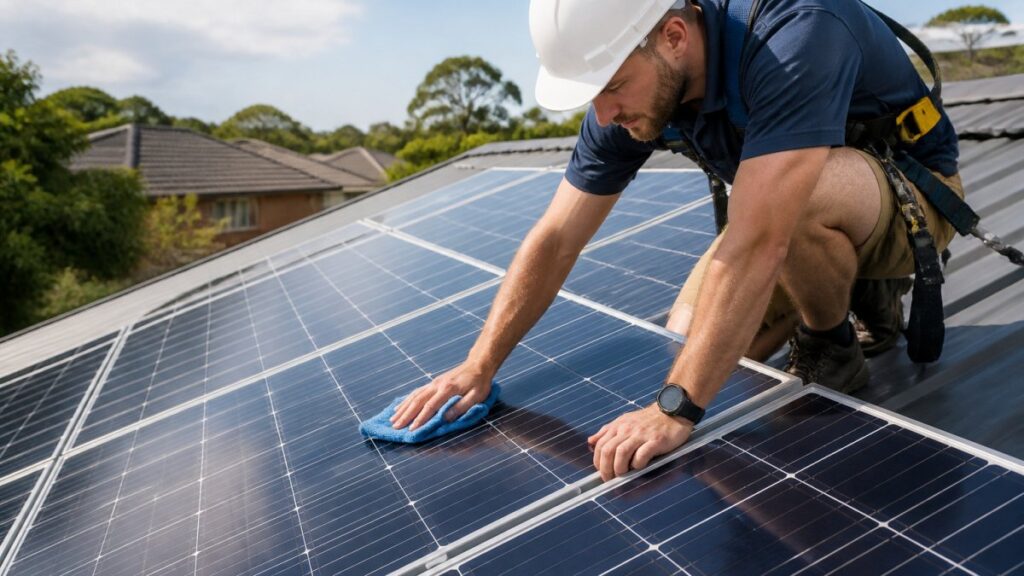
Solar maintenance costs are spread across cleaning, periodic health checks, inverter attention and reserve funds for repairs, and the total depends on system size, roof access and installation quality. Most homeowners should budget yearly for cleaning and one professional health check, plus a reserve for eventual component replacement.
- Panels and visual checks are typically needed every 6 to 12 months.
- Full system health checks are recommended every 12 to 24 months by an accredited installer.
- Cleaning costs depend on roof access, array size, and local conditions such as coastal salt.
- Choose accredited providers to reduce the risk of voided warranties and substandard work.
- Keep every service record, since it supports warranty claims and eases resale.
Table of Contents
Solar maintenance costs are lower than most homeowners expect, but they are spread across several line items that rarely appear together on a single quote. Routine servicing, cleaning, inverter checks, and the occasional component replacement each carry their own price, and the total depends heavily on system size, roof access, and how well the system was installed in the first place. Solazone Australia works with homes and businesses across Melbourne and the Sunshine Coast, and the same questions come up again and again: what is routine, what is optional, and what is a genuine warning sign.
Maintenance costs for solar systems follow a broadly similar logic across installations, and they are worth understanding in their own right. The point is not to avoid spending money. It is to know where the spending belongs, so you are not surprised by a bill for work you did not need, or caught out by a fault that should have been caught months earlier.
A realistic budget for solar maintenance costs usually covers four areas: panel cleaning, a periodic system health check, inverter and monitoring attention, and reserve funds for eventual repairs or replacements. Each one behaves differently. Cleaning is a recurring, visible cost. Health checks are periodic and inexpensive relative to what they catch. Inverter issues are less frequent but can be expensive. Component replacement is the largest unpredictable item, and it is the one most homeowners underestimate.
Warranty coverage changes the picture considerably. Panels and inverters carry manufacturer warranties, typically longer than the workmanship warranty offered by installers, and these warranties often only apply if the system has been serviced to a documented standard. Keeping records of every visit protects your position if a claim is ever needed.
Watch out: relying solely on the monitoring app. A system can show reasonable-looking numbers while a string is quietly underperforming, so a physical inspection still matters.
Typical Maintenance Tasks and How Often They Are Needed
Most solar systems in Australia need very little day-to-day attention, but a handful of tasks follow a predictable schedule. For the full picture, see our long-term solar maintenance guide, which covers schedules, safety checks and cleaning frequency. Knowing that schedule lets you plan rather than react.
| Task | Typical Frequency | Who Usually Does It |
|---|---|---|
| Visual check of panels and mounting | Every 6 to 12 months | Homeowner or installer |
| Panel cleaning | Every 6 to 12 months, sooner in dusty or coastal areas | Professional or homeowner (ground level only) |
| Monitoring app review | Monthly | Homeowner |
| Full system health check | Every 12 to 24 months | Accredited installer |
| Inverter inspection and firmware check | Every 2 to 3 years | Accredited installer |
| Battery health assessment (if fitted) | Annually | Installer or battery provider |
A monthly look at your monitoring data is the cheapest protection you can buy. A sudden drop in output on a sunny day usually points to a fault, shading, or soiling, and catching it early often means a small fix rather than a large one.
Be cautious about climbing onto the roof yourself. Working at height carries real risk, and most reputable installers will not warrant work done by unqualified people. Ground-level checks, such as looking for cracked glass, loose cabling, or debris under the array, are safe and worthwhile.
Solar Panel Cleaning Cost Australia: What Drives the Price
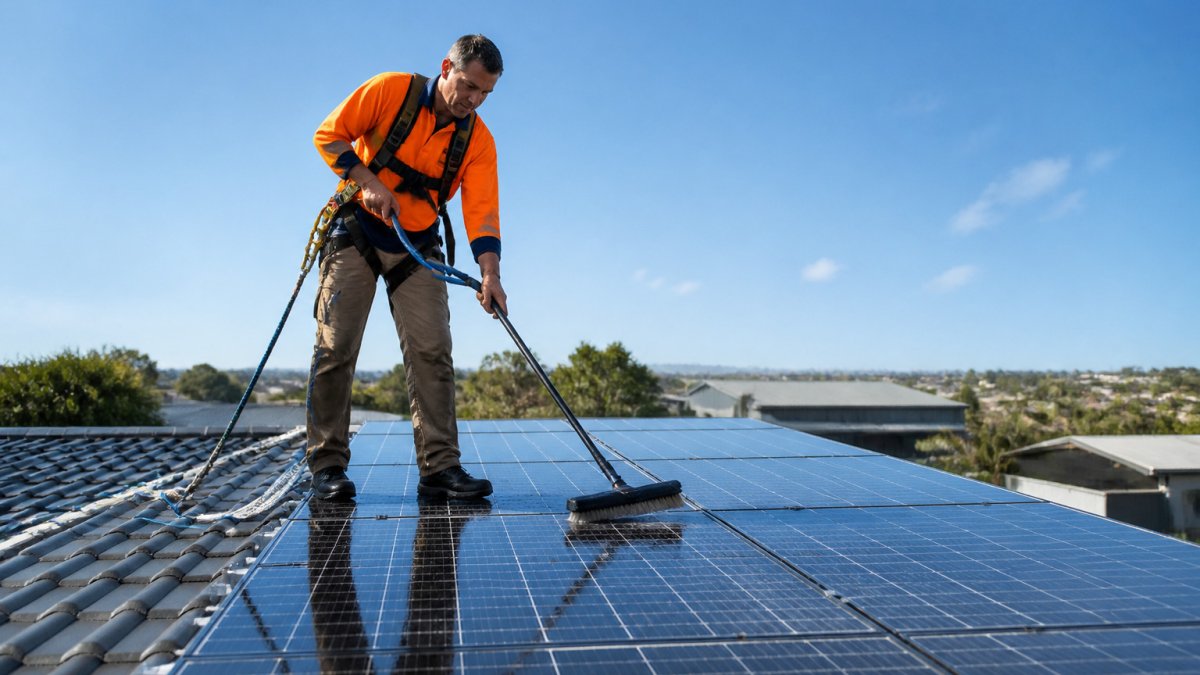
Cleaning is the maintenance task homeowners ask about most, and the answer depends on several factors rather than a single figure. Our guide on what happens if solar panels aren’t cleaned shows how uncleaned panels affect energy output and performance. Solazone Australia does not publish fixed cleaning rates, because the cost varies with the property and the job. Your quote will normally reflect the factors below.
- Roof access and pitch: steep, single-storey, or difficult-to-reach roofs take longer and may require safety equipment.
- Array size: the number of panels directly affects labour time.
- Local environment: coastal salt, bird activity, and dust from nearby roads or building sites increase how often cleaning is needed. This matters on the Sunshine Coast in particular.
- Water and equipment: whether the provider uses purified water, which avoids mineral spotting, or a standard hose.
- Bundled services: cleaning combined with a health check is often better value than booking them separately.
Many households find that a clean array recovers a noticeable share of lost output, particularly after a dry, dusty season. Cleaning is worth budgeting for, but it is rarely urgent unless output has visibly dropped.
When you are comparing quotes, ask whether the price includes a visual inspection and a written note of any issues found. A cheap clean that misses a cracked panel is poor value.
Clean Energy Council Solar Maintenance Guidelines and What They Mean for Your Budget
The Clean Energy Council (CEC) sets industry expectations for installers in Australia, and its accreditation framework is the most useful reference point when you are judging whether a maintenance provider is competent. Accredited installers are trained to a recognised standard, and their work is more likely to meet the requirements that protect your warranties.
For budgeting, the practical implication is this: choosing an accredited provider for servicing and repairs usually costs a little more up front, but reduces the risk of voided warranties and substandard work. Ask any provider to confirm their accreditation and the scope of their insurance before work begins.
We recommend checking the current CEC guidance directly rather than relying on older summaries, since requirements are updated over time. The CEC website is the authoritative source for accreditation details and consumer resources.
Does Australian-Made Equipment Cost Less to Maintain Than Imports?
This is one of the more contested questions in the market, and the honest answer is that origin alone rarely determines maintenance cost. Our analysis of how maintenance costs affect solar payback explains how upkeep spending feeds into the overall return. What matters more is component quality, warranty terms, the availability of local support, and how easily parts can be sourced when something fails.
Local manufacture is often promoted for its support networks and accountability, and that can shorten the time a system spends out of service. Read about the long-term durability of Australian solar panels to compare how local equipment holds up over time. Imported equipment from reputable manufacturers can be just as reliable, and it is often priced competitively. The useful comparison is not “local versus imported” but “which manufacturer’s warranty, parts supply, and service network will you rely on for the next ten years.”
Ask any supplier three specific questions: how long the warranty runs and what it excludes, where replacement parts are stocked, and whether they offer ongoing servicing or only installation. The answers will tell you more about long-term cost than the country of manufacture.
Solar System Health Check Price and What the Inspection Covers
A health check is the single most valuable maintenance spend for most systems, because it catches problems before they become expensive. Pricing varies by provider and system size, so we do not quote a figure here. Contact Solazone Australia for a current quote tailored to your property.
A thorough inspection typically covers:
- Visual inspection of panels, frames, and roof penetrations for damage
- Electrical checks of connections, isolators, and cabling
- Inverter status and error log review
- Performance comparison against expected output for the season
- Battery health, where a battery is installed
- A written report noting any items to monitor or repair
Planning Your Next Maintenance Budget Before Problems Start
The most cost-effective approach is to plan rather than wait for something to fail. A simple annual budget covers cleaning, one health check, and a reserve for repairs. Reserves are the part most people skip, and they are the reason an unexpected inverter replacement becomes a financial shock rather than an expected expense.
Set aside a fixed amount each year, review your monitoring data monthly, and book professional attention when the numbers or the physical checks suggest it. Keep every service record in one place, because it supports warranty claims and makes resale easier.
If you are weighing up a system or planning upgrades, Solazone Australia can help you map out the likely costs for your specific property. Contact the team for a current quote, and use it as the basis for your budget.
Frequently Asked Questions
Do Australian-made solar panels require more maintenance than imports?
Not necessarily. Maintenance needs depend more on the installation quality, the site (dust, salt air, shading, bird activity) and how the system is monitored than on where the panels were made. Australian-made equipment can make it easier to source replacement parts and get local technical support, which can shorten repair times. Ask any supplier for the warranty terms, the parts availability and the recommended service interval for the specific model before you buy.
What is the average annual cost to service a solar power system?
Pricing depends on system size, roof access, location and what is included, so there is no single figure that applies to every home. Routine work such as a basic inspection and cleaning is usually far cheaper than a repair involving inverters or batteries. For a current price for your system, contact Solazone Australia through its website for a quote tailored to your installation.
Are maintenance costs covered under standard solar warranties?
Most manufacturer warranties cover defects in materials and workmanship, but they rarely cover routine cleaning, servicing or damage caused by poor site conditions. Product warranties and workmanship warranties are separate, and each has its own term and conditions. Read both carefully, keep your installation records and ask your installer which maintenance visits are required to keep the warranty valid.
How often should I have my solar panels professionally cleaned and inspected?
Many homes in dry or dusty areas benefit from cleaning once or twice a year, while homes with regular rainfall may need it less often. A professional inspection every one to two years is a sensible starting point, with more frequent checks for systems near the coast or under trees. Your installer or the system documentation can confirm the recommended schedule for your setup.
