
Table of Contents
- The Impact of Dirt, Dust, and Grime on Energy Output
- How Often Should Solar Panels Be Cleaned
- Signs That Your Solar Panels Need Cleaning
- How to Clean Solar Panels Safely
- Environmental Factors Affecting Solar Panel Cleanliness
- When to Hire a Professional vs DIY Cleaning
- Cost of Professional Solar Cleaning and Warranty Implications
- Conclusion
Last Updated: August 26, 2026
The Impact of Dirt, Dust, and Grime on Energy Output
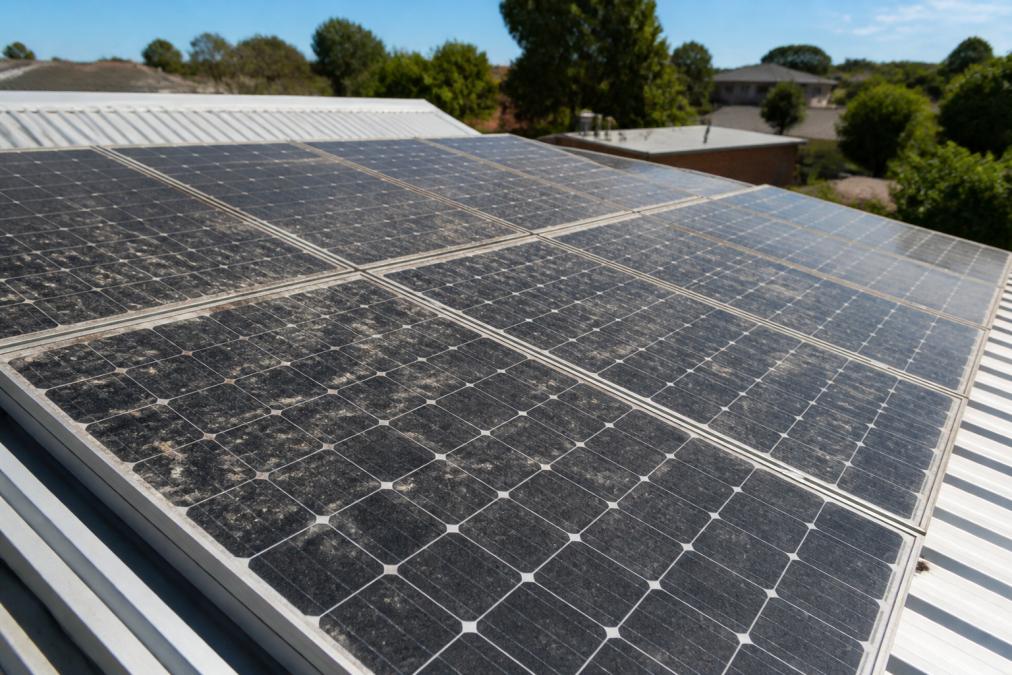
Dirt, dust, and grime on solar panels block photons from reaching photovoltaic cells, directly reducing energy output. Fine dust causes moderate efficiency loss, while bird droppings and salt spray create localized hot spots that can damage cells and trigger thermal shock. Environmental debris accumulates unevenly, forcing the inverter to work harder and reducing overall system performance.
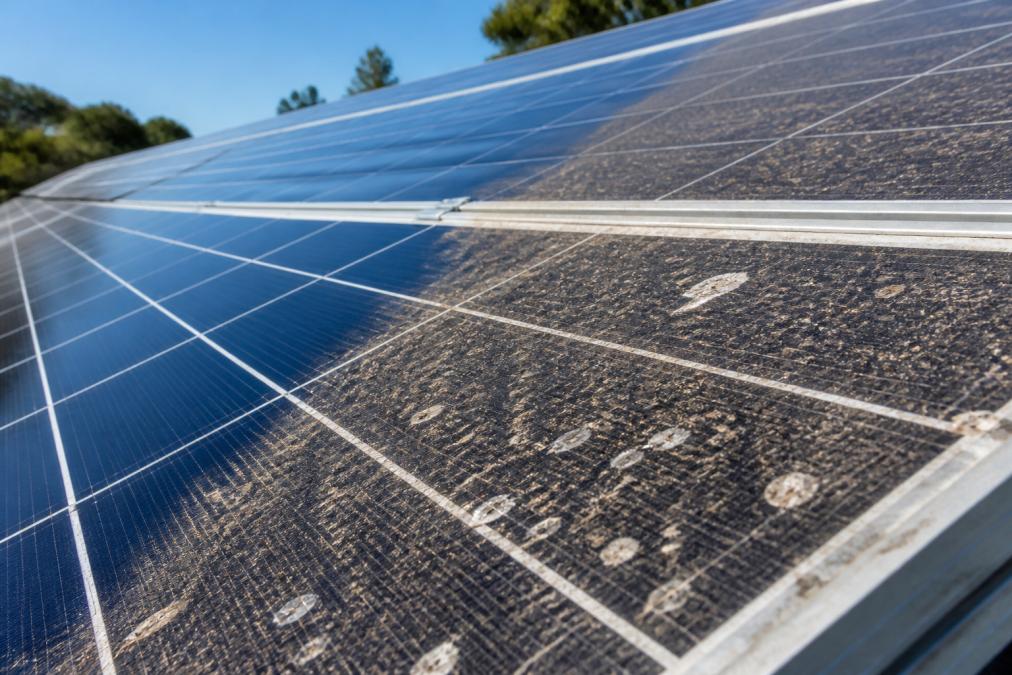
Within weeks of exposure to dust or pollution, panels begin losing efficiency. After months without cleaning, kilowatt-hour yield drops noticeably. Corrosive substances like salt spray accelerate this process, creating micro-cracks in the glass that compound the problem. Prolonged soiling can cause permanent damage to the glass surface and cells themselves, making cleanliness essential to protecting your investment.
How Often Should Solar Panels Be Cleaned
Clean solar panels typically require maintenance every three to six months, depending on your location and environmental conditions. Dusty areas, high bird activity, or coastal proximity may require cleaning every two to three months.
Monitor your system’s performance using your inverter or monitoring app. If kilowatt-hour yield drops unexpectedly without weather changes, soiling is likely the culprit. Seasonal factors matter significantly, spring pollen peaks require more attention, while areas with regular rainfall may need less frequent manual cleaning.
A practical maintenance schedule involves monthly visual inspections, cleaning every three to six months as baseline, additional cleaning after severe weather, and more frequent attention in high-soiling environments near farms, construction sites, or the coast. Professional cleaning services often recommend annual inspections to assess whether your specific situation warrants more or less frequent maintenance.
Signs That Your Solar Panels Need Cleaning
Your monitoring system is your first alert. A noticeable drop in energy output when weather conditions haven’t changed indicates soiling loss. If your system typically generates 20 kilowatt-hours on a clear day and suddenly produces only 15, dirt accumulation is the likely cause.
Visual inspection reveals the second set of signals. Look for visible dust, bird droppings, leaves, or discoloration on the glass surface. Salt spray creates a hazy film that’s harder to spot but equally damaging. Tree sap and pollen leave sticky residue that traps additional dust.
Performance anomalies in your inverter monitoring are critical. If one panel or string significantly underperforms compared to others in similar conditions, localized soiling is the problem. Trust your data over assumptions, when monitoring shows consistent reduced performance, that’s your signal to clean.
How to Clean Solar Panels Safely
Safety comes first when cleaning solar panels. Working on a roof involves real hazards including falls, electrical shock, and thermal shock. Proper precautions prevent injury and protect your equipment.
Turn off your system at the inverter before beginning any work. Wear appropriate safety gear: non-slip footwear, a safety harness attached to a secure anchor point, and eye protection. Use only non-abrasive materials like soft brushes or microfibre cloths to prevent micro-cracks in the glass. Avoid pressure washers, scouring pads, or abrasive materials.
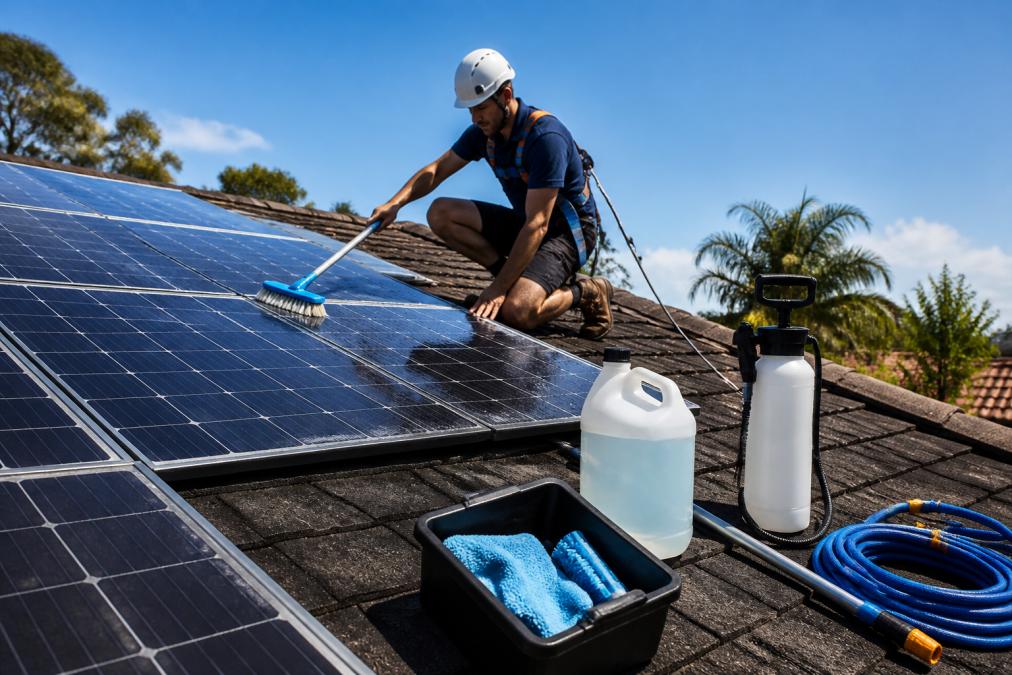
Deionized water is essential, tap water leaves mineral deposits that reduce efficiency. Work during cooler parts of the day, early morning or late afternoon. Cleaning hot panels with cold water causes thermal shock, which can crack the glass. Rinse gently with deionized water, use a soft brush to remove stubborn debris, rinse again thoroughly, and allow to air dry.
Many homeowners find DIY cleaning works well for ground-level or low-pitched roofs. If your system sits on a steep roof, requires a harness, or involves complex roof geometry, professional maintenance becomes the safer choice.
Environmental Factors Affecting Solar Panel Cleanliness
Your location determines how quickly soiling accumulates and what type of contamination you’ll face.
Coastal environments experience salt spray corrosion, the most aggressive soiling factor. Salt-laden air deposits sodium chloride crystals on glass surfaces, creating a haze that reduces light transmission by 10-20% within weeks (peer-reviewed research). Properties within 2 kilometres of the ocean typically require cleaning every 6-8 weeks during summer and every 8-12 weeks in winter. Deionised water becomes essential, tap water minerals compound salt residue and accelerate glass degradation.
Arid and semi-arid regions face rapid dust accumulation with minimal natural rainfall. Areas receiving less than 400 mm annual rainfall typically see dust buildup within 3-4 weeks. Fine dust is less damaging than salt or bird droppings but accumulates predictably, making scheduled cleaning every 4-6 weeks practical in high-dust zones. durable solar panels.
Urban and industrial proximity introduces pollution particulates and vehicle emissions. Properties within 1 kilometre of major roads experience soiling rates 30-50% faster than suburban areas (peer-reviewed research). Urban tree coverage compounds the problem, pollen, leaf debris, and tree sap create sticky residue that traps additional particulates.
Rainfall patterns significantly affect natural cleaning. Areas receiving regular rainfall benefit from natural precipitation that removes loose dust, though rainfall alone is insufficient for complete cleaning.
Tree coverage creates multiple problems. Leaves and pollen accumulate directly on panels, blocking sunlight and creating localised shading. Tree sap leaves sticky residue that traps additional dust. Properties with significant tree coverage typically require cleaning every 4-6 weeks during spring and autumn.
Bird activity varies by region and season. Bird droppings are acidic and corrosive; they damage the glass surface and create localised hot spots that stress photovoltaic cells. A single large bird dropping can reduce output from an affected panel by 15-25% (peer-reviewed research). High-bird-activity zones may require cleaning every 2-4 weeks during nesting seasons.
To determine your specific cleaning frequency, identify your distance from the coast, assess local rainfall patterns, note tree coverage and bird activity, and consider industrial or agricultural proximity. Your inverter monitoring system provides the final data point, track actual energy output patterns across seasons to validate whether your predicted cleaning frequency matches real-world performance.
When to Hire a Professional vs DIY Cleaning
DIY cleaning works well when your system sits on a low-pitched roof and is easily accessible. Professional cleaning becomes necessary when your roof is steep, high, or has complex geometry that makes safe access difficult. A licenced electrician or professional solar cleaning service has harnesses, fall protection equipment, and training to work safely at height.
Cost considerations favour DIY for simple, accessible systems. Professional cleaning costs depend on system size, roof complexity, and location. However, professional services often include system inspection, identifying potential issues like micro-cracks or loose connections.
Check your warranty documentation before deciding on DIY cleaning. Some solar system warranties require professional maintenance or inspection at specified intervals. Improper cleaning can void coverage, making professional service the safer choice if warranty compliance is required.
Many homeowners adopt a hybrid approach: perform basic visual inspections and light cleaning on accessible panels themselves, then hire professionals annually for comprehensive inspection and thorough cleaning.
Cost of Professional Solar Cleaning and Warranty Implications
Professional solar cleaning costs vary based on system size, roof pitch, accessibility, and location. Contact local providers for quotes tailored to your property.
Warranty implications are critical. Before cleaning your system yourself or hiring a service, review your panel and inverter warranty documentation. Most solar panel warranties cover manufacturing defects but explicitly exclude damage from improper maintenance.
Specific warranty risks from DIY cleaning: Using abrasive materials can create micro-cracks in the glass or damage the anti-reflective coating. Once compromised, moisture penetrates the glass-cell interface, causing internal corrosion and cell failure. Using tap water instead of deionised water leaves mineral deposits; whilst not warranty-voiding, it demonstrates poor maintenance. Temperature shock from cleaning hot panels with cold water can crack cells. Some solar system warranties require documented professional maintenance or inspection at specified intervals.
Cost-benefit analysis framework:
-
Establish your baseline energy output using your monitoring system over 2-4 weeks on clear days with no soiling.
-
Measure soiling loss by recording energy output on a clear day when panels are visibly dirty. The difference is your efficiency loss.
-
Calculate annual soiling cost. Multiply daily loss by 365 days and your electricity rate.
-
Factor in warranty protection. If professional cleaning is required by your warranty, the cost is non-negotiable. If not required but you’re concerned about coverage, professional records provide documentation that you maintained the system properly.
Practical cost-benefit scenarios:
Small residential system (3 kW) in low-soiling suburban area: Soiling loss is typically 5-10% annually. Annual soiling cost is $50-$150. Professional cleaning every 12 months. DIY cleaning on accessible panels is justified, with professional service only if warranty requires it.
Medium residential system (5 kW) in coastal area: Soiling loss from salt spray is 15-25% annually. Annual soiling cost is $300-$600. Professional cleaning every 6-8 weeks. Professional maintenance is justified and likely required by warranty.
Large commercial system (50 kW) in arid region: Soiling loss from dust is 20-30% annually. Annual soiling cost is $3,000-$5,000. Professional cleaning every 4-6 weeks. The investment protects both energy output and warranty coverage.
Many homeowners adopt a practical middle ground, perform basic visual inspections and light cleaning on accessible panels themselves, then hire professionals annually for comprehensive inspection and thorough cleaning. This balances cost with safety, warranty protection, and optimal system performance.
Frequently Asked Questions
Q: Do you really need to clean solar panels?
A: Yes, regular cleaning improves photovoltaic performance and energy output. While natural precipitation helps, accumulated dust, salt spray, bird droppings, and environmental debris reduce efficiency over time. The amount of benefit depends on your local climate and environmental factors. Most systems see noticeable gains from cleaning every 6-12 months, particularly in areas with low rainfall or high dust exposure.
Q: How often should solar panels be cleaned?
A: Cleaning frequency depends on your environment. Coastal areas with salt spray and dusty regions may need cleaning every 3-6 months, while areas with regular rainfall might only need annual cleaning. Monitor your inverter's kilowatt-hour yield data to track performance changes. If output drops significantly without explanation, it's time to inspect and clean. Establish a maintenance schedule based on your specific location's environmental debris patterns.
Q: How much does professional solar panel cleaning cost?
A: Pricing depends on system size, roof access difficulty, and your location. Professional cleaning services typically charge based on panel quantity and roof safety requirements. For an accurate quote tailored to your installation, contact a licensed electrician or solar maintenance provider. Consider the cost against potential energy output gains, many systems recover cleaning costs through improved efficiency within months.
Q: Can dirty solar panels cause permanent damage?
A: Dirty panels don't cause permanent damage, but prolonged soiling can contribute to system degradation and micro-cracks if combined with thermal shock from temperature extremes. Regular maintenance prevents this issue. However, using abrasive materials or harsh cleaning methods can damage the glass surface and void your warranty. Always use soft non-abrasive brushes and deionized water, and follow your system's warranty compliance requirements for professional maintenance.
This article was written using GrandRanker