
Table of Contents
- Solar Battery Comparison Table
- How Solar Batteries Work and Why They Matter
- Top Solar Battery Options for Your Home
- Tesla Powerwall 2: High Capacity, Integrated Design
- Alpha ESS SMILE5: Modular Power with Smart Control
- Sungrow SBR Premium Series: Scalable and Safe
- LG Chem RESU Prime 16H: Maximum Output for High Demand
- RedEarth DropBear: Australian-Made Alternative
- VARTA Pulse Neo: Compact and Efficient
- Enphase Encharge 3: Modular AC-Coupled System
- Solar Battery Cost in Queensland: What to Expect
- Solar Battery Warranty Comparison: Coverage and Peace of Mind
- Hybrid Solar Inverter vs Battery: Understanding the Difference
- Backup Power and Grid Independence on the Sunshine Coast
- Key Factors for Choosing the Right Solar Battery
Last Updated: August 14, 2026
Solar Battery Comparison Table
Choosing the right solar battery depends on your energy needs, available space, and budget. The table below compares key specifications across leading options for Sunshine Coast homeowners.
| Battery | Usable Capacity | Chemistry | Depth of Discharge | Best For | Key Advantage |
|---|---|---|---|---|---|
| Tesla Powerwall 2 | 13.5 kWh | Lithium-ion | ~100% | High-capacity needs | Integrated inverter, established brand |
| Alpha ESS SMILE5 | 10.1 kWh (expandable) | LFP | 96-100% | Modular systems | All-in-one design, rapid backup |
| Sungrow SBR Premium | 6.4-25.6 kWh | LFP | 100% | Flexible scaling | Modular, safe chemistry |
| LG Chem RESU Prime 16H | 16 kWh | Lithium-ion | ~100% | High power demand | Largest capacity, 7 kW continuous |
| RedEarth DropBear | 24.6-57.4 kWh | Lithium | 100% | Off-grid systems | Australian-made, micro-grid capable |
| VARTA Pulse Neo | 3-6.5 kWh | Lithium | High efficiency | Space-constrained homes | Compact wall-mount, low standby loss |
| Enphase Encharge 3 | 3.36 kWh | Lithium | ~100% | Modular expansion | AC-coupled, grid-forming microinverters |
How Solar Batteries Work and Why They Matter
A solar battery stores excess energy from your photovoltaic panels during the day for use when you need it most. During evening peak hours when solar production has stopped, the battery discharges to power your home.
The core advantage is load shifting: moving consumption away from expensive peak-rate periods. Most networks charge higher rates during evening peak demand (typically 4-9 p.m.). By storing solar generation and using it during these hours, you avoid premium grid rates. For households consuming 20-30 kWh daily, a well-sized battery can eliminate or dramatically reduce peak-period charges.
Batteries also provide energy independence and backup power during grid failures, keeping essential circuits running. On the Sunshine Coast, where summer storms occasionally cause outages, this resilience matters.
Most homeowners undersize their battery on the first attempt. Aim for capacity covering 4-6 hours of typical evening consumption rather than buying under 5 kWh expecting it to handle peak demand.
Chemistry matters significantly. Lithium iron phosphate (LFP) batteries tolerate deeper discharge cycles and higher temperatures than traditional lithium-ion, extending lifespan and improving safety. Depth of discharge (DoD) describes the percentage of stored energy you can safely use. LFP batteries often achieve 95-100% DoD, directly affecting usable capacity and long-term value.
Top Solar Battery Options for Your Home
1. Tesla Powerwall 2: High Capacity, Integrated Design
The Tesla Powerwall 2 offers 13.5 kWh of usable capacity in a single integrated unit with built-in inverter. For homes with moderate to high daily consumption (20-30 kWh), this capacity effectively bridges daytime solar generation and evening demand.
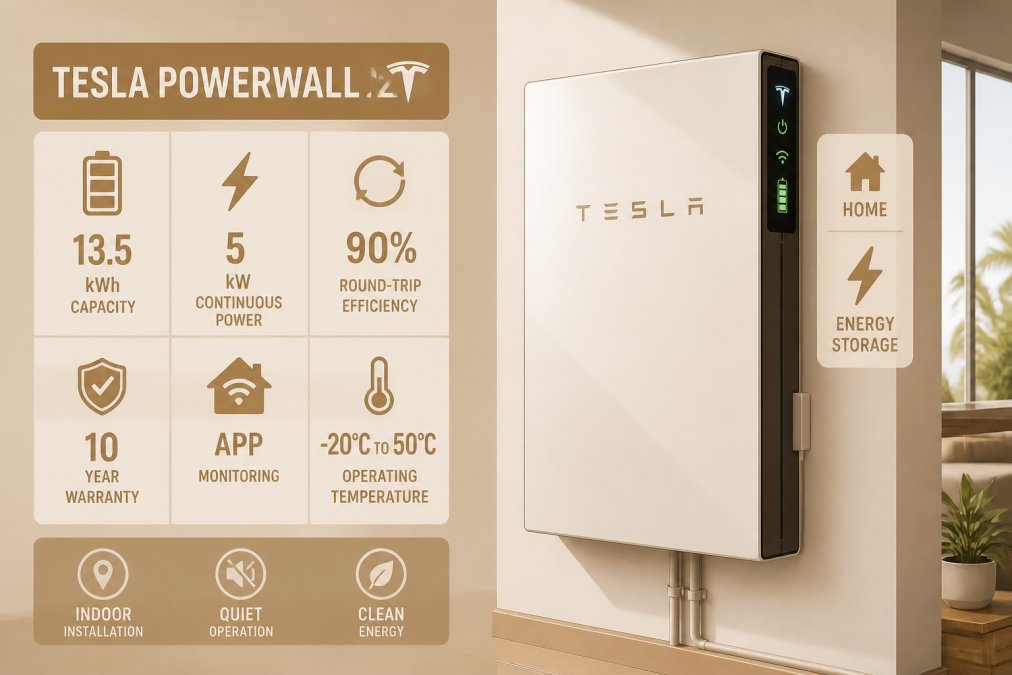
The liquid-cooled system maintains optimal operating temperature in tropical climates, benefiting Sunshine Coast installations where temperatures regularly exceed 30°C. Tesla’s monitoring app provides real-time visibility into charge status and system health. Multiple units can be stacked to increase capacity.
Pros: High 13.5 kWh capacity, integrated inverter, liquid cooling for warm climates, established brand
Cons: Cannot charge from solar during grid outage without specific inverter configuration, higher upfront cost
Best for: Homeowners prioritising capacity and brand recognition.
2. Alpha ESS SMILE5: Modular Power with Smart Control
The Alpha ESS SMILE5 delivers 10.1 kWh with genuine modularity, expand in 10.1 kWh increments up to 60.6 kWh total. The integrated hybrid inverter eliminates separate conversion equipment. LFP chemistry achieves 96-100% depth of discharge with round-trip efficiency around 85-90%.
The smart energy management system learns consumption patterns and optimises charging automatically. Rapid backup switchover (under 20 milliseconds) protects sensitive electronics during grid events.
Pros: All-in-one design, expandable capacity, LFP chemistry, smart energy management
Cons: Higher initial investment for larger capacities
Best for: Medium to large homes seeking expandable capacity and integrated simplicity.
3. Sungrow SBR Premium Series: Scalable and Safe
Sungrow’s modular approach offers flexibility from 6.4 kWh to 25.6 kWh by combining 3.2 kWh modules. LFP chemistry delivers 100% depth of discharge. IP55 protection permits outdoor installation in weatherproof enclosures. Lightweight modules simplify mounting and reduce structural load concerns.
Pros: Flexible modular capacity, 100% depth of discharge, lightweight design, LFP safety profile
Cons: Requires compatible Sungrow hybrid inverter
Best for: Homeowners wanting scalable capacity and planning future solar expansion.
4. LG Chem RESU Prime 16H: Maximum Output for High Demand
The LG Chem RESU Prime 16H leads the market at 16 kWh usable capacity with exceptional 7 kW continuous power output and 11 kW peak output. This suits homes running multiple high-demand appliances simultaneously or electric vehicle chargers.
Round-trip efficiency exceeds 90%, yielding approximately 14.4+ kWh of usable output. Stackable design allows up to 32 kWh total capacity. The integrated battery management system monitors individual cell health, extending lifespan.
Pros: Largest capacity at 16 kWh, exceptional 7 kW continuous power, stackable to 32 kWh, over 90% efficiency
Cons: Premium pricing
Best for: High-consumption homes prioritising maximum grid independence.
If considering older LG Chem RESU models (not Prime 16H), research the specific model year. Earlier versions had thermal management concerns. The Prime 16H incorporates design improvements addressing these issues.
5. RedEarth DropBear: Australian-Made Alternative
RedEarth’s DropBear is Australian-designed and assembled in Brisbane. Modular capacity ranges from 24.6 kWh to 57.4 kWh using 4.1 kWh modules with no external PV inverters required. Micro-grid functionality enables blackout power and frequency control, ideal for off-grid installations or extended outage resilience.
Pros: Australian-made, modular capacity for large homes, integrated inverter and MPPT, micro-grid capability
Cons: Indoor installation recommended, higher capacity models command premium pricing
Best for: Homeowners prioritising Australian manufacturing and off-grid systems.
6. VARTA Pulse Neo: Compact and Efficient
The VARTA Pulse Neo delivers space-saving performance in wall-mounted form. Available in 3 kWh or 6.5 kWh (expandable to 39 kWh across six units), it suits homes with limited space. Battery efficiency reaches 97.8% with ultra-low standby consumption of 2 watts.
The integrated battery inverter handles AC coupling, compatible with existing grid-tied solar systems without equipment replacement.
Pros: Compact wall-mounted design, 97.8% efficiency, minimal standby drain, expandable to 39 kWh
Cons: Smaller individual capacity requires multiple units for large homes
Best for: Apartments, townhouses, and space-constrained homes.
7. Enphase Encharge 3: Modular AC-Coupled System
Enphase Encharge 3 uses AC coupling, connecting to existing solar systems without inverter replacement. Each unit stores 3.36 kWh with four embedded grid-forming microinverters. Multiple units stack for larger systems; three units deliver 10.08 kWh total capacity.
Grid-forming capability provides backup power during grid outages. The ecosystem integrates seamlessly with existing Enphase microinverters.
Pros: AC-coupled design works with existing systems, grid-forming microinverters enable backup, modular expansion
Cons: Requires Enphase IQ System Controller for full backup, lower individual capacity
Best for: Existing Enphase solar system owners prioritising modular expansion.
Solar Battery Cost in Queensland: What to Expect
Solar battery pricing varies by capacity, chemistry, inverter integration, and installation complexity. Quality residential systems typically range from mid-five figures to low six figures installed.
Capacity is the primary cost driver. However, cost per kilowatt-hour often decreases at larger capacities, a 16 kWh battery might cost only 30-40% more than a 10 kWh option, making per-unit cost more attractive.
Inverter integration affects pricing. All-in-one systems cost more upfront but eliminate separate conversion equipment purchase and installation. For homes without existing solar, integrated systems often prove more economical overall.
Installation complexity varies by home age and electrical configuration. Older homes may require switchboard upgrades before battery installation. Professional installers ensure compliance and safety.
Solazone Australia can assess your situation and provide transparent quotes based on actual needs rather than generic pricing. With over 40 years of technical expertise, the team understands variables affecting cost and recommends options delivering genuine value.
The cheapest battery upfront isn’t always the best investment. A slightly higher-cost option with superior efficiency, longer warranty, or better integration often delivers better long-term value. Calculate total cost of ownership over 10-15 years, not just purchase price.
Solar Battery Warranty Comparison: Coverage and Peace of Mind
Warranty terms vary substantially across manufacturers. Most reputable batteries offer 10-year manufacturer warranties covering defects and performance degradation.
Tesla Powerwall 2 includes 10-year warranty guaranteeing 70% capacity retention after 10 years. Alpha ESS SMILE5, LG Chem RESU Prime 16H, and RedEarth DropBear offer similar 10-year coverage with capacity retention guarantees. Sungrow SBR Premium batteries offer a 10-year warranty, guaranteeing at least 60% of original usable capacity. VARTA Pulse Neo batteries offer a 10-year warranty for battery modules or 4,000 cycles, whichever comes first, with a total system warranty of 5 years for offline devices and 10 years for online devices upon online registration. Enphase Encharge 3 batteries come with a 10-year limited warranty, with an option to purchase an additional 5-year extended warranty.
Warranty terms typically exclude damage from improper installation, environmental extremes, or user misuse. Professional installation through accredited installers ensures warranty validity. Some providers offer extended 15-year coverage, providing peace of mind for systems expected to operate 20+ years.
Hybrid Solar Inverter vs Battery: Understanding the Difference
A hybrid solar inverter converts direct current (DC) from solar panels into alternating current (AC) for household use and manages battery charging and discharging. It acts as the system’s "brain," making real-time decisions about energy flows.
A solar battery is the storage device itself, holding electrical energy chemically. Without an inverter, the battery cannot deliver usable power. The inverter is essential for safe, efficient energy conversion and system management.
Some systems integrate both into a single unit (Tesla Powerwall 2, Alpha ESS SMILE5). Others keep them separate, requiring purchase and installation of both components.
For new installations, integrated all-in-one systems typically simplify design and reduce cost. If you already have a solar inverter, adding a battery-only unit paired with your existing inverter may be more economical, provided the inverter supports battery integration.
The hybrid inverter’s intelligence determines system performance. Quality inverters optimise charge timing, manage backup power seamlessly, and communicate with monitoring systems.
Backup Power and Grid Independence on the Sunshine Coast
Backup power capability transforms a battery from a cost-reduction tool into a resilience asset. During grid outages, a battery with backup functionality keeps essential circuits running, refrigeration, lighting, communications, medical equipment.
Some batteries cannot discharge during grid outages unless specifically configured with backup circuits and system controllers. Others, particularly grid-forming batteries like Enphase Encharge 3 or systems with integrated backup capability, automatically transition to island mode.
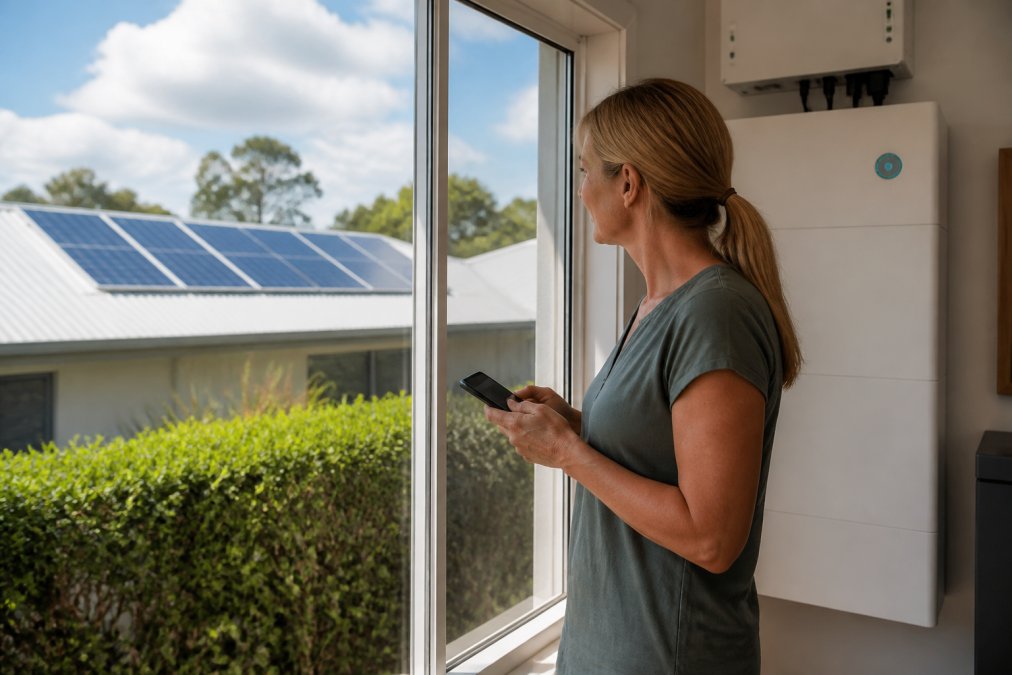
On the Sunshine Coast, where summer storms occasionally cause outages lasting hours or days, backup capability provides genuine value. A 10-15 kWh battery can power essential loads for 12-24 hours depending on consumption.
Grid independence means operating entirely off-grid without utility networks. This requires larger batteries (typically 20+ kWh), sufficient solar generation to recharge daily, and often backup generation. Most Sunshine Coast homes benefit more from grid-connected batteries optimising self-consumption and providing backup capability rather than pursuing complete grid independence.
Feed-in tariffs affect battery sizing strategy. If your tariff is generous (above 8-10 cents per kilowatt-hour), exporting excess solar may be more valuable than storing it. If tariffs are poor, maximising self-consumption through battery storage becomes more attractive.
Key Factors for Choosing the Right Solar Battery
Energy consumption profile: Analyse actual electricity usage patterns. How much do you consume during peak evening hours? A 5 kWh battery suits light users (under 10 kWh daily), while 15+ kWh suits heavy users or those with electric vehicles.
Available space: Monolithic batteries require dedicated wall or floor space. Modular systems allow distributed placement. Compact options like VARTA Pulse Neo suit space-constrained homes.
Existing solar equipment: Check compatibility with your current panels and inverter before choosing a battery. This affects total system cost and installation complexity.
Climate performance: Tropical climates mean high ambient temperatures. Batteries with active cooling or LFP chemistry perform better in heat. Verify temperature ratings match local conditions.
Backup requirements: Do you need backup power during outages? Ensure your chosen battery supports backup mode with necessary system controllers.
Scalability: Will you expand capacity later? Modular systems allow incremental growth; monolithic batteries require replacement to increase capacity.
Warranty and support: Longer warranties and local support availability matter for long-term peace of mind. Australian-made options may offer simpler warranty administration.
Budget: Establish total investment capacity upfront. Premium batteries offer better efficiency and longevity; budget options deliver acceptable performance at lower cost.
Choosing the best solar battery for your Sunshine Coast home requires matching your specific energy needs, space constraints, and backup requirements with the right technology. Each option above delivers genuine value for different circumstances.
Solazone Australia’s 40+ years of technical expertise means the team understands these trade-offs intimately. Rather than pushing the most expensive option, they assess your actual consumption patterns, roof configuration, and long-term goals to recommend a system delivering genuine value. Contact Solazone Australia for a personalised assessment and transparent quote tailored to your specific situation.
Frequently Asked Questions
Which solar battery brand is best for homes on the Sunshine Coast?
The best solar battery depends on your energy needs, budget, and system setup. Tesla Powerwall 2 suits high-capacity requirements with integrated inverters. Alpha ESS SMILE5 offers modular expansion and smart management. RedEarth DropBear is ideal if you prioritise Australian-made systems. For high-demand homes, LG Chem RESU Prime 16H delivers maximum output. Each excels in different scenarios, so assess your household's kilowatt-hour consumption and backup power needs before deciding.
How much does a solar battery cost in Queensland?
Solar battery costs vary significantly based on capacity, chemistry, and inverter integration. Smaller systems (3-6 kWh) typically cost less than larger units (10-16 kWh). Additional factors include installation complexity, site conditions, and whether the battery includes an integrated inverter. For accurate pricing tailored to your property and requirements, contact Solazone Australia or other installers for a detailed quote. Many systems also qualify for rebates, which can reduce your net investment.
What's the difference between a hybrid solar inverter and a battery?
A hybrid solar inverter manages power flow between solar panels, the battery, the grid, and your home. It converts DC power from panels to AC power for household use and controls charging and discharging. A battery stores energy as lithium-ion or other chemistry. The inverter is the 'brain' controlling when to use solar, stored, or grid power. Some batteries include integrated inverters (all-in-one systems), while others require a separate hybrid inverter. Understanding this distinction helps you choose the right system configuration for your needs.
How long do solar batteries last and what warranty should I expect?
Most residential lithium-ion batteries last 10-15 years or longer, with cycle life warranties covering 10,000 to 20,000+ cycles. Warranties typically guarantee capacity retention (often 70-80% after the warranty period). Some manufacturers offer 10-year warranties on capacity and performance. Battery chemistry matters: lithium iron phosphate (LFP) systems often outlast standard lithium-ion. Always compare warranty terms, including coverage for degradation, defects, and labour. Solazone Australia can explain warranty details for each system option.
Is adding solar battery storage worth the investment?
Solar battery storage delivers value if you experience frequent power outages, have high peak-demand electricity charges, or aim for energy independence. On the Sunshine Coast, batteries reduce reliance on grid power and protect against supply interruptions. The payback period depends on your current electricity costs, solar system size, and battery capacity. If you already have solar panels, adding storage increases self-consumption of your generated power, lowering bills. For off-grid or hybrid setups, batteries are essential. Request a personalised ROI analysis from Solazone Australia based on your specific usage patterns and tariff.
This article was written using GrandRanker