
Table of Contents
- How Solar Batteries Work and What They Deliver
- Solar Battery Payback Period: What the Numbers Show
- Grid Independence vs. Backup Power: Which Matters for Your Home
- Solar Battery Cost Per kWh and Total System Investment
- Real-World Pros and Cons of Battery Storage
- Incentives, Rebates, and Time-of-Use Rate Optimisation
- Is Solar Battery Backup Worth It for Your Situation
Last Updated: August 13, 2026
How Solar Batteries Work and What They Deliver
Is solar battery backup worth it? The answer depends entirely on what you’re trying to achieve. A solar battery system stores excess energy your panels generate during the day, releasing it when you need it most, evening peak hours, cloudy days, or during a grid outage.
Solar batteries work by capturing kilowatt-hours of energy that would otherwise feed back to the grid. When your panels produce more power than your home consumes, the inverter directs that surplus into the battery instead of exporting it. At night or during low-production periods, the battery supplies power to your appliances, reducing grid draw. The depth of discharge, how much of the battery’s total capacity you can safely use, determines usable energy. Most lithium-ion batteries allow 80-90% depth of discharge, meaning a 10 kWh battery might only deliver 8-9 kWh of practical storage.
Round-trip efficiency matters significantly. A battery with 90% round-trip efficiency loses 10% of stored energy to heat and conversion processes. Thermal management systems keep batteries within their optimal operating range, making quality installation and battery chemistry choice critical to long-term performance.
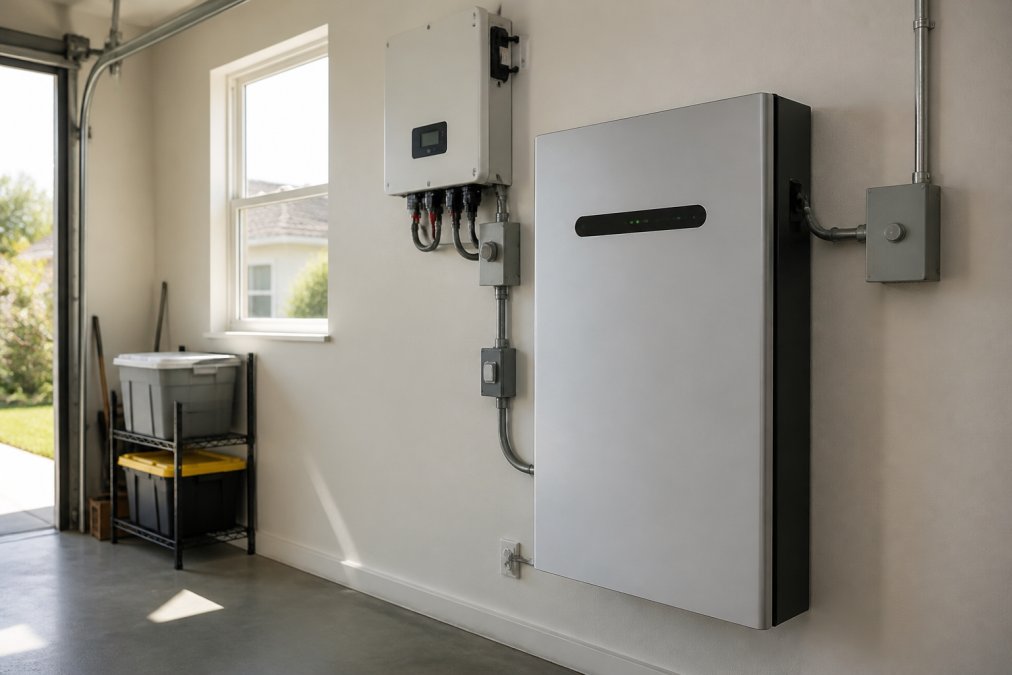
At Solazone Australia, the systems that deliver the best results combine proper sizing with realistic expectations about what backup power means. A battery extends how long you can run essential loads when the grid fails, but doesn’t make your home immune to outages.
The real value of a battery emerges when you understand your home’s actual load profile. Peak usage times, seasonal patterns, and your willingness to shift consumption to lower-cost periods all influence whether a battery investment makes financial sense for your situation.
Solar Battery Payback Period: What the Numbers Show
The solar battery payback period depends on four factors: system size, electricity rates, self-consumption patterns, and available incentives. Most households see payback periods ranging from 7 to 15 years for battery-only systems, though this varies dramatically.
A household that shifts consumption to time-of-use (TOU) off-peak periods might achieve payback in 8 years. A household with minimal load shifting might take 12 years or longer. Payback calculations must account for degradation, battery capacity typically declines 0.5-1% per year for quality lithium-ion systems. After 10 years, expect 95-105% of original capacity remaining.
The solar battery cost per kWh varies by system size and chemistry. Smaller systems (5 kWh) cost more per kWh than larger systems (15 kWh) due to economies of scale. Lithium-ion batteries cost more upfront but last longer and deliver better performance than lead-acid alternatives. Calculate total cost per usable kWh over the battery’s expected lifespan, not just the purchase price.
Real payback periods emerge only after you map your actual electricity usage, local rate structure, and available incentives. Generic payback claims ignore the specifics that determine whether a battery investment makes financial sense for your home.
Grid Independence vs. Backup Power: Which Matters for Your Home
Most Australian homeowners confuse grid independence with blackout protection. They’re different things, and the distinction shapes which battery system makes sense.
Grid independence means your home runs entirely off-grid, relying only on solar generation and battery storage. Achieving true grid independence requires oversizing both solar panels and batteries to handle seasonal variations. This approach typically costs significantly more because you need enough storage to bridge multi-day periods of low generation.
Backup power means your home remains grid-connected but can run essential loads during a grid outage. When the grid fails, your battery supplies power to critical circuits while the rest of your home goes without. This approach costs less because you only need enough storage for a few hours of essential load, not days of full-home consumption.
For most Australian homeowners, backup power delivers better value. You maintain grid connection for reliability and cost savings, but gain protection against outages lasting hours or days. Grid-tied systems also allow you to take advantage of feed-in tariffs, payments from your utility for excess solar energy exported to the grid.
However, the choice depends on your location and outage patterns. Properties in regional areas experience more frequent outages than metropolitan areas. If you’re in a high-outage area, backup power becomes more valuable.
Battery backup does NOT protect you during an extended grid outage if your solar panels cannot recharge the battery. At night or during cloudy days, a depleted battery leaves you without power. Plan your essential loads accordingly and consider a backup generator for extended outages.
Solar Battery Cost Per kWh and Total System Investment
Understanding battery cost requires separating the battery itself from the complete installed system. The battery module is only one component. Installation labour, inverter, wiring, safety equipment, and integration with your existing solar system add substantial cost.
A 10 kWh battery system might cost significantly more per kWh than a 15 kWh system due to fixed installation costs spread across more capacity. System sizing directly impacts cost efficiency. A battery sized too small requires frequent charging cycles, accelerating degradation. A battery sized too large sits underutilised, meaning you pay for unused capacity. The optimal size balances your actual usage patterns against cost per kWh.
Quality matters in ways that don’t show up in upfront pricing. Reputable brands typically include better thermal management, longer warranties, and more reliable customer support. A cheaper battery that fails after five years costs far more than a premium battery lasting 12 years. When comparing total system investment, request itemised quotes showing battery cost, inverter cost, installation labour, and additional equipment. Solazone Australia provides detailed quotes that break down each component, making it clear what you’re paying for and why.
Real-World Pros and Cons of Battery Storage
Battery backup delivers genuine benefits for certain households, but it comes with real limitations worth understanding.
Pros of battery storage:
Self-consumption increases when you store solar energy for evening use rather than exporting it to the grid. Time-of-use rate optimisation becomes possible; you can use stored energy during peak-rate periods. Peak shaving reduces your peak demand charges by drawing from the battery instead of the grid during expensive peak hours.
Backup power during outages provides genuine peace of mind. You maintain essential services when the grid fails. For households with medical equipment or refrigeration needs, this backup capability justifies the investment alone.
Cons of battery storage:
Cost remains the primary barrier. Battery systems represent substantial capital investment with payback periods of 7-15 years or longer. For households with short ownership timelines, the investment may not make financial sense.
Cycle life and degradation mean your battery loses capacity over time. Most quality lithium-ion batteries retain 80% capacity after 10 years, but degradation accelerates with intensive use.
Grid outage protection has real limitations. Your battery cannot recharge at night or during extended cloudy periods without grid power. A multi-day outage during winter depletes your battery quickly. You cannot run high-demand loads like electric heating or air conditioning on battery alone.
Installation complexity varies by property. Older homes with complicated roof layouts or unfavourable shading may require expensive customisation, which may eliminate the financial case for battery backup.
Incentives, Rebates, and Time-of-Use Rate Optimisation
Rebate programs significantly improve battery payback economics, but eligibility varies by state and changes frequently. As of 2026, several Australian states offer battery rebates or incentives, though program details shift year to year.
Check your state’s current programs through official government energy websites. Some programs provide direct rebates on battery purchase; others offer tax credits or concessional loans. Eligibility often depends on system size, battery type, or installation timing. Solazone Australia’s installers meet accreditation requirements across multiple states.
Time-of-use (TOU) rate plans charge different prices for electricity consumed during different times of day. Off-peak hours typically cost significantly less than peak hours. If your utility offers TOU rates, battery storage becomes more valuable because you can charge during off-peak periods and use that energy during peak periods.
However, TOU rate optimisation requires active participation. You need to understand your rate structure and monitor consumption patterns. Automated systems can help, smart controllers that charge your battery during off-peak windows and discharge during peak windows without manual intervention. The financial benefit depends on how effectively your system captures these rate differences.
Clean Energy Regulator guidance on solar battery incentives
Australian Energy Market Operator information on time-of-use pricing
Is Solar Battery Backup Worth It for Your Situation
The honest answer depends on five specific factors.
1. Your outage risk and tolerance for power loss. If you’re in a high-outage area or have critical loads, backup power justifies battery investment. If outages are rare, the investment is harder to justify financially.
2. Your electricity rates and consumption patterns. High peak-rate charges and high evening consumption make battery storage more valuable. Time-of-use plans create opportunities for rate arbitrage that flat-rate plans don’t offer.
3. Your available incentives. State rebates can reduce payback periods by 2-3 years. Check what programs apply to your location before making your decision.
4. Your time horizon. If you plan to stay in your home for 10+ years, battery payback becomes more likely. If you’re moving within 5 years, the investment may not recoup before you leave.
5. Your financial capacity. Battery systems require substantial upfront capital. If you can afford the investment and the payback timeline works for your situation, battery storage makes sense.
For most Australian homeowners, solar battery backup delivers value when paired with high self-consumption, time-of-use rate optimisation, and realistic expectations about backup power limitations. The financial case strengthens significantly with available rebates and state incentives.
Solazone Australia has helped thousands of customers evaluate whether battery backup makes sense for their specific situation. Our team analyses your consumption patterns, electricity rates, and local incentive programs to provide personalised recommendations. Rather than assuming all batteries make sense, we identify whether battery investment actually improves your financial position and energy resilience. Get in touch for a detailed assessment of your home’s solar battery potential.
The real question isn’t whether solar battery backup is worth it in general, it’s whether it’s worth it for your specific circumstances. A battery that delivers excellent returns for one household might make no financial sense for another. The best approach is to understand how your home actually uses electricity, what incentives apply to your location, and whether backup power addresses a genuine need. With that clarity, you can make a decision based on your actual situation rather than generic advice.
Frequently Asked Questions
What are the main downsides of solar battery backup?
The primary drawbacks are upfront cost, limited cycle life (typically 10-15 years), and degradation over time that reduces usable capacity. Batteries also require ongoing maintenance, add complexity to your system, and may not provide full blackout protection if your inverter loses power. Round-trip efficiency losses mean some energy is lost during the charge-discharge cycle. For grid-tied systems, battery backup may not pay for itself unless you experience frequent outages or have high time-of-use rate differentials.
How does solar battery payback period compare to solar panels alone?
Solar panels typically pay for themselves in 4-6 years through utility bill reduction. Adding battery storage extends payback significantly, often 10-15 years or longer, because batteries cost more and degrade faster than panels. However, payback improves if you use time-of-use rates effectively (charging during cheap off-peak hours, discharging during peak), experience frequent outages, or qualify for rebates. The payback period is highly individual and depends on your electricity usage patterns, local tariffs, and system size.
Is adding battery backup to an existing solar system worth the cost?
It depends on your priorities. If your main goal is maximising bill savings, retrofit batteries often struggle to justify their cost unless you have favourable time-of-use rates or frequent blackouts. If you need blackout protection or energy independence, the non-financial benefits may outweigh the expense. Retrofitting is typically more expensive than installing batteries with a new system because of additional wiring, inverter upgrades, and labour. Request a personalised analysis showing your specific payback timeline before committing.
How does solar battery cost per kWh affect overall system value?
Solar battery cost per kWh typically ranges depending on chemistry and system size, but what matters is total installed cost relative to your energy needs and usage patterns. A smaller, cheaper battery may not store enough for your peak demand, while an oversized system wastes money. The real value comes from matching battery capacity to your actual consumption during peak hours and your willingness to shift loads to cheaper time periods. A professional assessment calculates the cost per kWh against your specific tariff structure and outage risk.
This article was written using GrandRanker