
Table of Contents
- What Is a Solatube and Why Homeowners Look for Alternatives
- Traditional Skylights vs Solar Tubes: Key Differences
- Top Solatube Alternatives for Daylighting
- Energy Efficient Natural Lighting: Thermal Performance Comparison
- Skylight Installation Costs and Feasibility for Different Roof Types
- Retrofitting Challenges and Smart Integration Options
- Durability, Maintenance and Long-Term Value
- Which Alternative Is Right for Your Home
Last Updated: August 20, 2026
What Is a Solatube and Why Homeowners Look for Alternatives
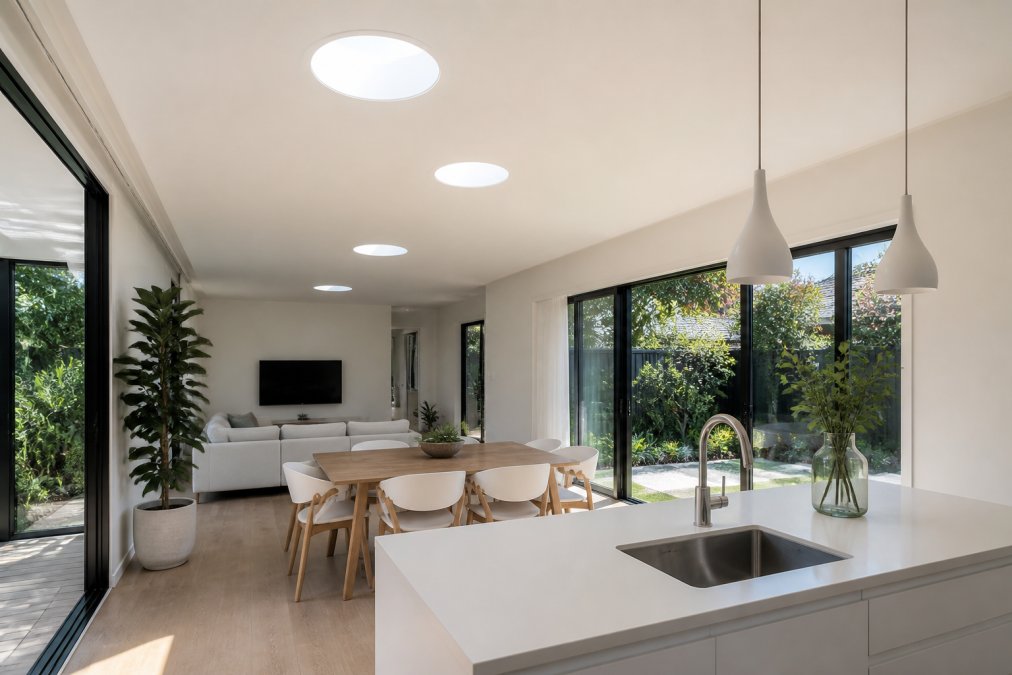
A Solatube is a tubular skylight system that captures sunlight on a roof and channels it through a reflective tube into interior spaces, providing natural illumination without traditional skylights. Homeowners seek solatube alternatives for natural light due to upfront cost, difficult roof configurations, concerns about roof penetration and leaks, or a preference for solutions offering ventilation alongside light. This guide examines the main alternatives to Solatube systems, comparing how they perform across energy efficiency, installation feasibility, and overall value.
Traditional Skylights vs Solar Tubes: Key Differences
Traditional skylights are fixed or operable window-like structures installed directly into the roof, providing unobstructed views of the sky and allowing direct sunlight to enter. When operable, they permit ventilation, reducing cooling load during summer. Solar tubes capture sunlight through a dome on the roof and channel it down a reflective tube to a ceiling diffuser that scatters light evenly, reducing glare but eliminating direct sky views.
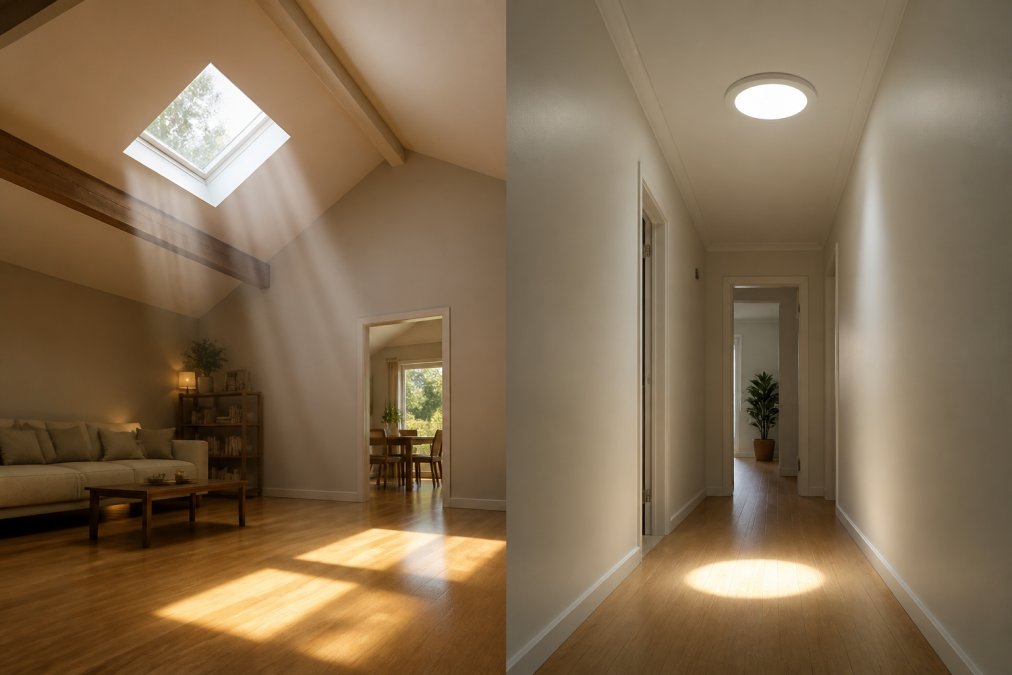
A traditional skylight in a kitchen or living area creates visual connection to outdoors and improves perceived spaciousness. A solar tube works better in hallways, bathrooms, or internal spaces where light is needed without a view. Traditional skylights require careful summer shading to prevent heat buildup; solar tubes inherently transfer less heat because the reflective tube acts as a barrier.
Installation differs significantly. Traditional skylights require structural work, cutting through the roof deck, installing flashing, and ensuring proper weatherproofing. Solar tubes still require roof penetration but involve less structural modification since the opening is smaller. Both demand professional installation to prevent leaks.
Modern traditional skylights use double or triple glazing with low-emissivity coatings to reduce heat loss in winter and heat gain in summer. Solar tubes with reflective aluminum tubing perform well thermally but cannot match the insulation value of a well-designed glazed skylight. In cooler climates, traditional skylights may perform better; in hot climates, solar tubes’ lower heat transfer becomes an advantage.
Top Solatube Alternatives for Daylighting
The alternatives to Solatube fall into three broad categories: traditional skylights providing natural light and ventilation, Australian-made tubular systems with specialized features, and solar-powered LED systems that eliminate roof penetration entirely.
VELUX Skylights: Full Natural Light and Ventilation
VELUX manufactures a comprehensive range of traditional skylights suitable for pitched roofs, including fixed units, manually operable models, and electrically operated skylights with integrated controls. Many models include flyscreens, high-performance double glazing, and compatibility with the VELUX ACTIVE system for automated ventilation control.
The key advantage is genuine natural light combined with passive or active ventilation. In summer, an operable VELUX skylight allows hot air to escape, reducing air conditioning reliance. Rain sensors on some models trigger automatic closing during showers. Installation requires structural modifications to accommodate the larger opening, and professional installation is essential to prevent leaks and ensure proper insulation.
Best suited for living areas, kitchens, and bedrooms where natural light, views, and ventilation all add value.
Skydome Skylights: Australian-Made Tubular and Traditional Options
Skydome manufactures both traditional and tubular skylight systems engineered for Australian climate conditions. Their traditional skylights suit corrugated metal roofs, tile roofs, and metal deck installations. The Skytube range offers tubular options in 250mm and 400mm diameters for smaller spaces or areas where traditional skylights aren’t practical.
Skyguard technology blocks 99% of harmful UV rays while maintaining visible light transmission, protecting interior furnishings from fading. Glass Skydome options incorporate improved thermal properties with thicker glass and specialized coatings that keep interiors cooler in summer and warmer in winter. Flashing kits are engineered for Australian roof types and weather patterns, addressing common issues like water pooling on corrugated roofs.
Best for homeowners seeking locally made solutions with proven performance in Australian conditions.
Redilight Solar LED Systems: No Roof Penetration Required
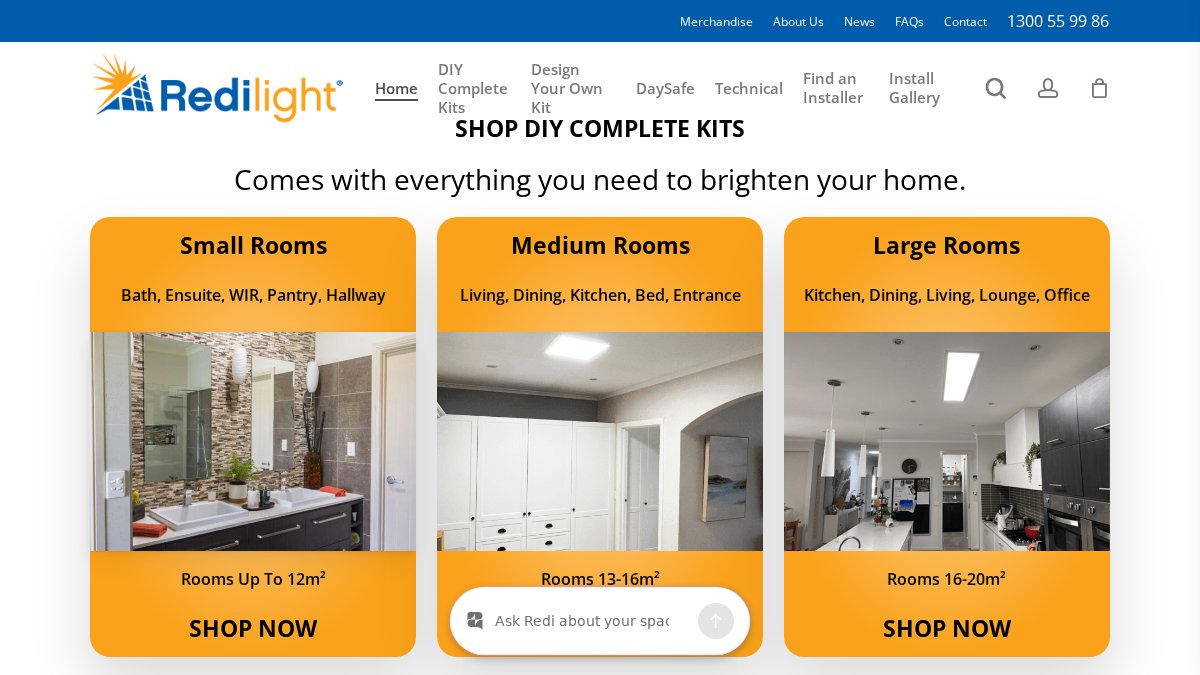
Redilight offers a fundamentally different approach: solar-powered LED light fixtures that simulate natural daylight without requiring roof penetration. The system consists of a solar panel mounted on the roof, electrical wiring, and LED fixtures (called Skyfixtures) installed in ceilings, available in round and square shapes with 6W and 24W output options in warm white (3000K) and daylight (5000K).
The primary advantage is installation flexibility. Because no roof opening is required, Redilight works where traditional skylights or solar tubes cannot be installed and can be retrofitted to existing homes without major structural work. The LED fixtures produce light mimicking natural daylight spectrum, reducing harsh artificial quality. Heat transfer is minimal because the system doesn’t create a roof opening.
The trade-off is that Redilight provides illumination without true natural light or ventilation. Best for dark internal spaces (bathrooms, hallways, laundries) where natural light access is impossible, or for homeowners prioritizing minimal roof disruption and thermal control.
Energy Efficient Natural Lighting: Thermal Performance Comparison
Thermal performance determines how much heat a daylighting system allows into or out of your home, directly affecting heating and cooling costs.
Traditional skylights with high-performance glazing allow significant light transmission but also permit solar heat gain. In summer, this can increase cooling load unless shaded with blinds or external awnings. In winter, the glazing retains interior heat reasonably well, though some thermal loss occurs through the window area.
Solar tubes with reflective aluminum piping minimize direct solar heat transfer. The tube acts as a thermal barrier; sunlight is reflected down the tube, but the reflective surface doesn’t conduct heat efficiently into the home, making solar tubes inherently more thermally efficient than traditional skylights in hot climates.
Redilight’s solar LED systems produce the lowest heat transfer because there’s no opening in the roof envelope. For spaces where thermal control is critical, this is a significant advantage.
Skylight Installation Costs and Feasibility for Different Roof Types
Installation feasibility and cost vary dramatically based on your roof type, structural condition, and the system you choose.
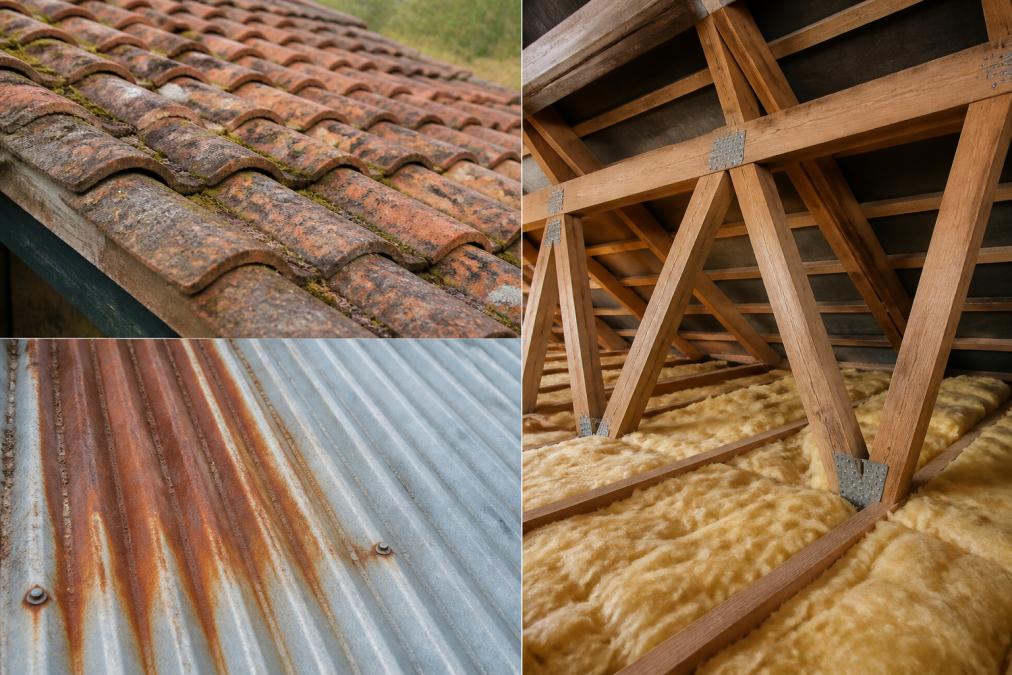
Corrugated metal roofs generally accommodate all skylight types, with installation typically taking 1-2 days for a single unit. Tile roofs present more complexity; removing tiles, modifying the roof structure, and reinstalling tiles around flashing requires skilled work. Redilight avoids this problem entirely by not penetrating the roof.
Pitched roofs with timber trusses work well for traditional skylights and solar tubes, provided the truss spacing allows installation. Structural reinforcement may be needed if the skylight opening aligns with a load-bearing member. Redilight bypasses this concern completely.
Complex roof geometries, multiple pitches, dormers, and valleys complicate traditional skylight and solar tube installation. Redilight’s flexibility shines here: if roof penetration is impractical, LED fixtures can be installed in almost any ceiling configuration.
Cost varies by system and installation complexity. Traditional skylights typically require the largest upfront investment due to product cost and installation labour. On difficult roof types, the installation labour for traditional skylights or solar tubes can exceed the product cost itself, making Redilight’s no-penetration approach more economical.
Retrofitting Challenges and Smart Integration Options
Retrofitting an existing home introduces constraints that new construction doesn’t face. Roof access, existing insulation, structural limitations, and integration with smart home systems all influence feasibility and cost.
Accessing the roof from inside an occupied home is the first challenge. Attic space must be navigated, and installation creates dust and disruption. If the attic is finished space, roof access becomes significantly harder and more expensive.
Existing roof condition affects retrofit viability. A roof with 5-10 years of remaining life can accommodate a new skylight or solar tube installation. A roof nearing replacement is risky; penetrating it may trigger leaks. In these cases, Redilight’s non-penetrating approach is safer.
Structural surprises occur during retrofit. A load-bearing member may sit exactly where you want to install a skylight opening. Professional assessment before committing to installation is essential.
Smart home integration is emerging as a consideration. VELUX’s ACTIVE system coordinates skylight opening with weather data and interior temperature sensors, automating ventilation. Redilight’s LED fixtures can be integrated into broader smart home ecosystems, allowing scheduling and colour temperature adjustment.
Durability, Maintenance and Long-Term Value
Traditional skylights with quality glazing and flashing typically last 20-30 years. Seals around the frame can degrade over time, particularly in climates with large temperature swings. Annual maintenance involves checking seals, cleaning glass, and ensuring drainage pathways around the flashing are clear.
Solar tubes with reflective aluminum piping and quality diffusers last 20-25 years. Annual maintenance is minimal; occasional exterior cleaning of the dome and checking for debris. Interior cleaning of the diffuser lens takes minutes.
Redilight’s solar LED fixtures have a lifespan of 25,000-50,000 hours depending on the specific LED module, translating to 10-20 years of typical daily use. The solar panel degrades slowly (typically 0.5% per year). Maintenance is minimal: occasional cleaning of the solar panel and checking electrical connections.
Long-term value depends on how long you plan to stay in the home. Modern materials resist yellowing better than older products, though some degradation occurs over time, particularly in high-UV climates. Skydome’s Skyguard technology addresses this by blocking 99% of UV rays at the dome.
Which Alternative Is Right for Your Home
Choose traditional skylights (VELUX or Skydome) if:
- You want genuine natural light and views of the sky
- Ventilation is important for warm-climate homes
- Your roof type accommodates installation without major structural work
- You’re willing to manage summer heat gain through shading
- You plan to stay in the home long-term
Choose tubular skylights (Skydome Skytube) if:
- You need light in smaller spaces (hallways, bathrooms, laundries)
- Heat gain concerns you, particularly in hot climates
- Your roof type is suitable but structural modifications should be minimized
- You prefer lower maintenance than traditional skylights
Choose solar LED systems (Redilight) if:
- Your roof type makes penetration impractical or risky
- You need light in internal spaces without ventilation requirements
- Thermal control is critical
- You prefer minimal roof disruption and maintenance
The decision process should include a professional roof assessment. Solazone Australia’s team evaluates your specific roof type, structural condition, climate zone, and the spaces you want to illuminate. This assessment identifies constraints, estimates installation complexity, and recommends the solution that delivers the best balance of performance, cost, and long-term value for your situation.
Natural lighting solutions have evolved significantly beyond the original Solatube concept. Traditional skylights, Australian-made tubular systems, and solar LED alternatives each address different priorities and constraints. The right choice depends on your roof type, climate, and whether you value ventilation and views alongside illumination. Solazone Australia’s 40+ years of technical expertise and commitment to personalized customer service means your assessment considers your specific roof configuration, structural requirements, and long-term comfort goals. Get in touch with Solazone Australia to discuss which daylighting solution works best for your home.
Frequently Asked Questions
What can I use instead of a Solatube or traditional skylight?
Your main alternatives are traditional skylights (VELUX, Skydome), tubular skylights for smaller spaces, and solar-powered LED systems like Redilight that don't require roof penetration. The best choice depends on your roof type, space size, and whether you want genuine natural light or efficient artificial light that mimics daylight. Traditional skylights provide full-spectrum light and ventilation but involve roof work. Tubular skylights suit hallways and bathrooms. Solar LED systems work anywhere but don't offer the same psychological benefit of genuine natural light.
How do traditional skylights compare to solar tubes for natural light?
Traditional skylights deliver genuine, full-spectrum natural light and can provide passive ventilation, making them ideal for living areas and kitchens. Solar tubes (tubular skylights) concentrate light through reflective tubing and work well for smaller, darker spaces like bathrooms and hallways, though they may perform less effectively during early or late afternoon. Traditional skylights create a stronger sense of connection to outdoors but require more complex installation and carry greater heat gain risk in summer. Solar tubes have less aesthetic impact but are simpler to install in tight spaces.
Are there energy-efficient natural lighting alternatives to standard skylights?
Yes. High-performance traditional skylights with double glazing and thermal controls (like VELUX models) reduce heat transfer while maintaining natural light. Tubular skylights with reflective tubing minimise heat gain compared to large traditional skylights. Solar LED systems like Redilight eliminate heat gain entirely while providing daylight-spectrum illumination. For maximum energy efficiency, pair any natural light solution with external shading, thermal insulation around the installation, and consider models with UV protection to prevent solar heat buildup.
What should I consider when choosing a natural lighting system for my home?
Evaluate your roof type and pitch (corrugated, tile, metal deck), the space you're lighting (kitchen, hallway, bathroom), your climate's seasonal heat gain, and whether you need ventilation alongside light. Check installation complexity and cost for your specific roof structure. Consider durability and yellowing resistance in long-term UV exposure, maintenance requirements, and whether you want genuine natural light or artificial daylight simulation. For commercial or older homes with complicated roof layouts, retrofitting feasibility and structural compatibility are critical. Get a professional assessment of your roof's condition before deciding.
Can solar-powered lighting systems replace traditional skylights?
Solar LED systems like Redilight can replace skylights functionally by providing daylight-spectrum illumination without roof penetration, making them ideal where traditional skylights aren't feasible. However, they don't offer true natural light, ventilation, or the psychological benefit of a direct connection to the outdoors. They work best for hallways, bathrooms, and utility areas rather than primary living spaces. If natural light and ventilation matter, traditional skylights remain superior. If you prioritise avoiding roof work, heat control, and flexible placement, solar LED systems are an excellent alternative.
This article was written using GrandRanker