
Table of Contents
- Why Your Attic Turns Into an Oven in Summer
- Diagnose the Main Source of Attic Heat Before You Spend a Cent
- Attic Insulation for Summer Heat: Stop Heat Entering From Above
- Attic Ventilation for Heat: Let the Hot Air Out
- Solar Attic Fan: Powered Ventilation That Works in Peak Heat
- Seal Air Leaks and Shade the Roof
- How to Cool an Attic Room You Actually Use
- Costs, Payback and What to Fix First
- Frequently Asked Questions
Last Updated: October 18, 2026
Why Your Attic Turns Into an Oven in Summer
A roof space can sit 20 to 30 degrees warmer than the air outside on a clear summer day. That trapped attic heat then radiates down into your living areas, and your air conditioner works harder to fight it.
The cause is simple. Sun hits the roof, the roofing material absorbs solar heat gain, and that heat passes into the roof space below. With nowhere to go, it builds up.
How Heat Transfer Works in a Roof Space
Three things move heat into and around your attic:
- Radiant heat: the sun heats the roof surface, which then radiates warmth downward.
- Conduction: heat travels through the roof and ceiling materials themselves.
- Convection: hot air rises and collects at the highest point, where it sits if airflow is poor.
Most homes deal with all three at once. That matters because fixing only one rarely solves the problem.
Diagnose the Main Source of Attic Heat Before You Spend a Cent
Find the dominant heat path first, then spend. A common mistake is buying a fan or a radiant barrier before checking whether the real issue is missing ceiling insulation or leaky ducts. Ten minutes of checking saves you from wasting money.
A Simple Diagnostic Sequence
Work through these checks in order:
- Feel the ceiling on a hot afternoon. A warm ceiling points to poor roof insulation or thermal insulation above.
- Look for gaps around downlights, pipes and the hatch. These air leaks let hot air pour in.
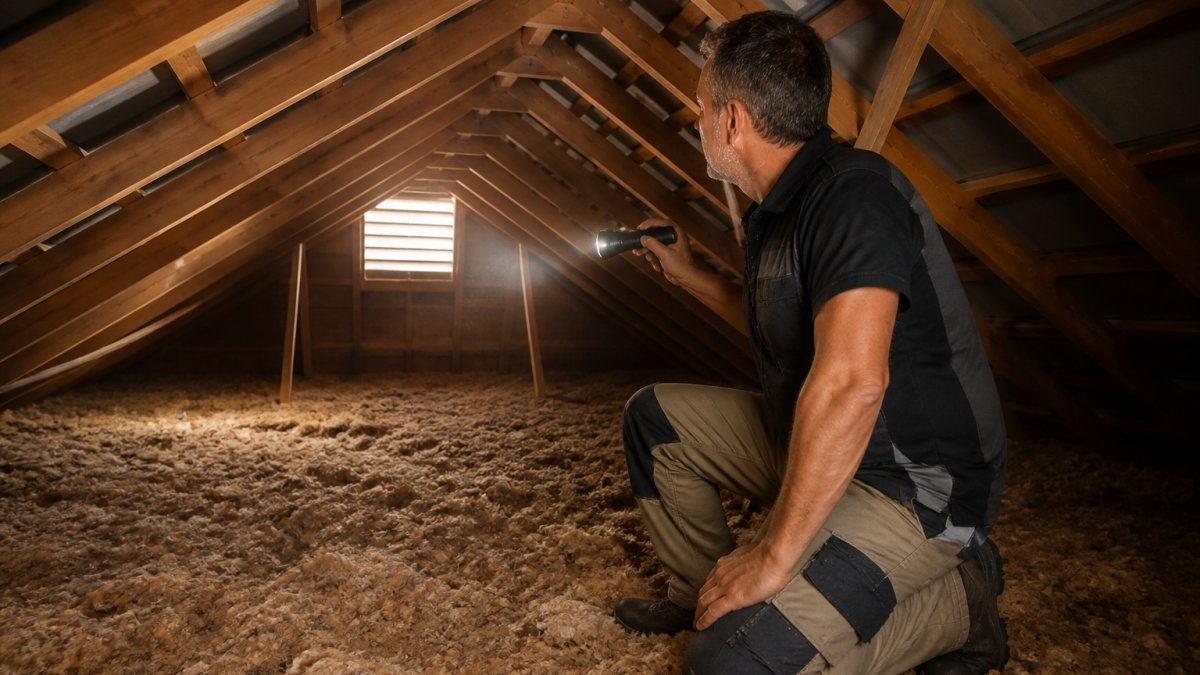
- Check the insulation depth and condition. Sagging, compressed or damp batts lose insulation performance.
- Inspect vents and eaves. Blocked ventilation openings trap hot air.
- Check ducts and equipment in the roof space. Leaky air-conditioning ductwork is a hidden culprit.
Do your checks early morning or late afternoon. A roof space can reach unsafe temperatures in the middle of the day, and you will get a clearer comparison of conditions.
Attic Insulation for Summer Heat: Stop Heat Entering From Above
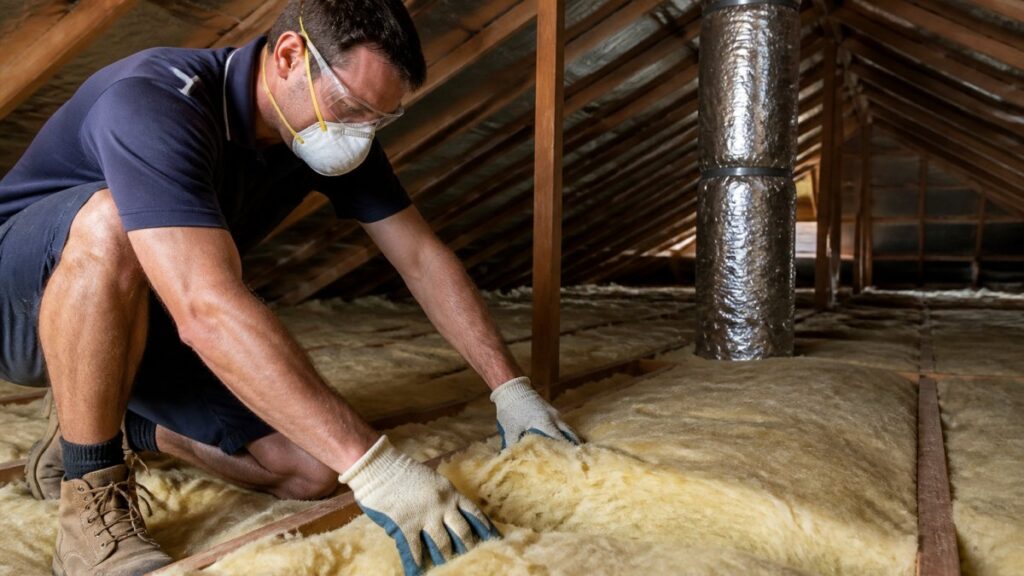
Insulation is the highest-value fix in most homes. Attic insulation for summer heat slows heat transfer into your rooms, and it works in winter too by holding warmth in. Good roof insulation and ceiling insulation are the base layer of any plan.
What to prioritise:
- Top up ceiling insulation to a healthy depth and keep it evenly spread.
- Seal gaps first, then insulate over them.
- Choose a product rated for your climate, since hot climates ask more of thermal insulation.
The Australian Government’s Your Home guide explains insulation ratings and climate zones in plain terms. If your home is older, expect this to be the single biggest gain.
Attic Ventilation for Heat: Let the Hot Air Out
Ventilation lets hot air escape and cooler air enter, but only if the roof space is designed to move air in a controlled path. Attic ventilation for heat works best with a balanced system: low-level inlets at the eaves and high-level outlets near the ridge, sized so the outlet can handle what the inlet admits. Without a matched outlet, hot air has nowhere to go and the inlet does little.
First, Decide Whether Your Roof Space Should Be Vented at All
This is the step most guides skip, and it changes everything:
- Vented roof space: common in older homes with eaves vents, gable vents or ridge vents. The goal is steady airflow from low to high, with insulation separating the roof space from the ceiling below.
- Unvented or sealed roof space: common in newer construction and in homes with a conditioned attic or a roof-line insulation system. Here you do not add vents; you keep the roof space sealed and rely on insulation at the roof slope and airtightness at the ceiling line.
- Mixed or unclear: if you are unsure, treat it as vented only after checking that the ceiling is insulated and sealed. Adding vents to a space that should be sealed can pull conditioned air out of the house.
If your home has a sealed roof space, skip the vent work below and focus on insulation and air sealing instead.
How Much Ventilation Is Enough
There is no single number that suits every roof, but a common rule of thumb in Australian practice is a 1:150 ratio of free vent area to roof space floor area for balanced low and high vents, or 1:300 where inlet and outlet are roughly equal and well distributed. Treat that as a starting point, not a guarantee, roof geometry, pitch, ceiling penetrations and local wind exposure all affect real performance.
What matters more than the exact ratio:
- Balance: inlet free area should roughly match outlet free area. A big ridge vent with blocked eaves is a bottleneck.
- Distribution: vents spread across the roof perform better than one large vent at one end.
- Clear path: insulation, stored boxes and debris must not block the airflow path between inlet and outlet.
Practical Steps
- Clear blocked eaves, gable and ridge vents, and check that mesh is intact rather than painted over.
- Add matched inlet and outlet vents so airflow moves through the whole roof space, not just one corner.
- Keep vents clear of insulation and stored boxes.
Never cover eaves vents with insulation batts or board. Doing so traps heat buildup and can also trap moisture, which leads to condensation and eventually mould growth. If you are topping up insulation, fit vent baffles to keep the airflow path open.
Check ventilation on a still, hot afternoon rather than a windy day. If the roof space feels stagnant when there is no breeze, your passive system is undersized or blocked, and powered ventilation may be worth considering.
Solar Attic Fan: Powered Ventilation That Works in Peak Heat
A solar attic fan runs on its own panel, so it moves air hardest when the sun is strongest. That timing is the point.
What to look for:
- A fan sized to your roof space volume, not just the roof area.
- Weatherproof flashing and a clean install around the roof covering.
- A thermostat or controller so it runs when the attic temperature climbs.
This is where a specialist helps. Solazone Australia supplies solar ventilators and can match a unit to your roof type and climate. The Australian Building Codes Board sets out the standards installers must work to, so ask any installer how they comply.
Seal Air Leaks and Shade the Roof
Air sealing is cheap and often overlooked. Hot air finds every gap, so sealing first makes insulation and ventilation work better. Pair it with shading to cut solar heat gain at the source.
Quick wins:
- Seal around the attic hatch with weatherstrip and a latch that pulls tight.
- Close gaps around pipes, cables and downlights with suitable sealant.
- Fit external shutters, awnings or blackout blinds on roof windows and skylights.
A reflective barrier or radiant barrier fixed under the roof can cut radiant heat, but it works best after sealing and insulation. Treat it as a support act, not the headline.
How to Cool an Attic Room You Actually Use
An attic bedroom needs a different plan from an empty roof space. How to cool an attic room comes down to stopping heat at the roof, then removing what gets in. Insulate the roof slope, seal the room, and shade the windows.
Then add cooling:
- A solar attic fan or exhaust fan to flush hot air.
- A small air conditioner sized for the room, not the whole house.
- External shutters or blackout blinds on any roof windows.
For a lived-in attic, insulation and shading do more than any fan. Cooling equipment only removes heat that got in, so stop it first.
Costs, Payback and What to Fix First
Spend in the order that gives the best return, and set expectations before you buy. Exact costs vary by roof size, access, product choice and whether you DIY or use a tradesperson, so the figures below are indicative ranges to help you compare quotes, not fixed prices. Always get a written quote in AUD for your own home.
Indicative Cost Ranges
| Fix | Typical indicative cost (AUD) | What it does | Effort |
|---|---|---|---|
| Air sealing (hatch, pipes, downlights) | $100-$500 in materials, or $300-$900 installed | Stops hot air leaking in | Low |
| Ceiling insulation top-up | $1,200-$4,000 installed, depending on area and product | Slows heat transfer | Medium |
| Ventilation inlets and outlets | $300-$1,500 depending on number and roof type | Expels hot air | Medium |
| Shading and roof-window treatments | $200-$1,500 depending on product | Cuts solar heat gain | Low |
| Solar attic fan | $600-$1,800 installed | Powered exhaust in peak heat | Medium |
| Radiant barrier | $1,000-$3,000 installed | Reflects radiant heat | Medium |
These ranges are broad on purpose. A single-storey home with good access sits at the low end; a complex roof, tight access or a two-storey home pushes toward the high end. Ask each installer what is included, removal of old insulation, disposal, baffles, and making good are common extras.
What Realistic Results Look Like
Be sceptical of any claim of a fixed temperature drop. A common pattern reported by practitioners is that a well-sealed, well-insulated and adequately ventilated roof space runs noticeably cooler than an untreated one, and that the ceiling surface below feels cooler to the touch. The indoor benefit is usually felt most in rooms directly under the roof, and the energy benefit shows up as the air conditioner running less often rather than a dramatic bill cut.
What affects the result:
- How many fixes you do together. Sealing alone helps; sealing plus insulation plus ventilation helps more. One measure rarely transforms a hot roof space.
- Roof colour and material. A dark roof absorbs more solar heat gain than a light one, so the same insulation performs differently under each.
- Roof geometry and pitch. Complex roofs with valleys and multiple planes trap heat differently from a simple gable.
A Practical Order of Operations
- Diagnose first. Use the diagnostic sequence earlier in this guide to find the dominant heat path before spending.
- Seal air leaks. Cheapest fix, and it makes everything after it work better.
- Top up ceiling insulation. Usually the biggest comfort gain per dollar in an older home.
- Fix ventilation. Clear and balance existing vents before adding new ones.
- Shade the roof and windows. Low effort, and it cuts heat at the source.
- Add powered ventilation such as a solar attic fan if passive ventilation stalls in peak heat.
- Consider a radiant barrier last, as a support measure after sealing and insulation.
When Not to Spend
- If the roof space is sealed and already well insulated, adding powered cooling may cost more than it saves. Fix the ceiling below instead.
- If ducts in the roof space are leaking, sealing and insulating them can deliver more comfort than another layer of ceiling insulation.
- If the problem is really a hot room rather than a hot roof space, shading and room-level cooling may be the better spend.
For current pricing on solar ventilators and systems, check with Solazone Australia for a tailored quote.
Spend in order: diagnose, seal, insulate, ventilate, shade, then add powered cooling. Do several fixes together rather than one big one, and treat any temperature claim as a range, not a promise.
Frequently Asked Questions
How do I keep my attic from getting so hot?
Start by finding where the heat is coming from. In most homes the biggest gains come from ceiling insulation that meets current levels, sealing gaps around downlights and ceiling penetrations, and balanced ventilation that lets hot air escape. Reflective barriers and roof shading help where radiant heat is the main problem. Fixing these in order, rather than buying equipment first, gives the largest temperature reduction for the money and takes pressure off your air conditioner.
Does attic ventilation for heat actually reduce summer temperatures?
Ventilation removes hot air that has built up in the roof space, which lowers attic temperature and reduces how much heat transfers into the ceiling below. It works best when intake and exhaust openings are balanced and insulation is already adequate. On its own, ventilation will not fix an under-insulated ceiling. Combine it with insulation and air sealing for the biggest reduction in cooling costs and indoor comfort.
Are solar attic fans effective in summer?
A solar attic fan runs during the hottest part of the day when the sun is strongest, which is exactly when the roof space needs exhausting. It uses no grid electricity, so running costs are minimal. Effectiveness depends on the fan being sized to the roof space volume and having adequate intake air. In a sealed roof space with no intake vents, even a good fan will struggle, so check airflow paths before installing one.
How to cool an attic room in summer?
Treat the attic room as two problems: heat entering through the roof and heat trapped inside. Insulate the roof slope or ceiling above the room, add shading such as external blinds or a reflective coating, and ventilate the space in the evening when outside air is cooler. Seal gaps around windows and skylights. If the room is used daily, a small air conditioner or a ducted zone may be worth the running cost, but only after insulation and shading are sorted.
Summer heat will always find your roof. The question is how much of it reaches your rooms. Solazone Australia has spent over 40 years helping homes and businesses cut cooling costs and improve indoor comfort with solar ventilators, solar power systems and battery backup. Our experienced installation teams and personalised service make the fix straightforward. Get started with Solazone Australia and take control of your attic heat this summer.