
Last Updated: November 4, 2026
Quick Summary
Solar self-consumption is the share of the electricity your panels make that you use at home instead of exporting to the grid. To maximise it with a home battery, store the midday surplus, set the battery to discharge into your evening use or peak tariff window, and shift big appliance loads to sunny hours.
- Set the battery to discharge into your plan’s peak window, not simply at sunset.
- Keep a reserve of around 20% so you have some backup without losing much saving.
- Run dishwashers, washing machines and pool pumps during peak sun to cut storage needs.
- Track your self-consumption percentage for a few weeks and compare it with your pre-battery figure.
- Check your battery’s rated cycle count before setting an aggressive daily discharge schedule.
Table of Contents
- What Solar Self-Consumption Means and Why It Matters
- Calculating Your Solar Self-Consumption Percentage
- Step 1: Check Your Battery Capacity and Inverter Setup
- Step 2: Configure Your Solar Battery Discharge Settings
- Step 3: Use Load Shifting for Solar Efficiency
- Step 4: Automate With Timers, Smart Plugs and an Energy Management System
- Protecting Battery Life While Maximising Self-Consumption
- Set Up Your Battery Settings and Track the Results
- Frequently Asked Questions
What Solar Self-Consumption Means and Why It Matters
Here is the basic problem. Panels make the most power around midday, but most households use the most power in the morning and evening.
A home battery changes that. It stores the surplus you would otherwise export and releases it when the sun goes down.
- Self-consumption is energy you use directly from your panels
- Exports are energy sent to the grid, usually for a low credit
- Imports are power you buy back from the grid, usually at a much higher rate
Feed-in credits vary by retailer and state, so check your own plan before you assume the numbers.
Calculating Your Solar Self-Consumption Percentage
Your self-consumption percentage is simple to work out. Divide the solar energy you use at home by the total solar energy your system produces, then multiply by 100.
For example, if your panels produced 20 kWh in a day and you used 12 kWh of it at home, your self-consumption is 60%.
Most people find their numbers on their monthly bill or in their inverter app. If you are unsure where each figure sits, learn how to read your solar power bill, including feed-in credits and usage charges. Look for:
- Total solar generation for the period
- Energy exported to the grid
- Energy imported from the grid
Solar self-consumption is the figure to track after you add a battery. A household without storage may see a lower self-consumption figure than one with a battery.
Step 1: Check Your Battery Capacity and Inverter Setup
Before you touch any settings, confirm your hardware works together. Compare current solar battery storage costs and typical sizes before you decide on a setup. Your battery capacity and inverter type set the limits for everything else.
What to check:
- Battery usable capacity in kWh
- Whether your inverter is a hybrid model that can charge and discharge a battery
- Maximum charge and discharge rates
A battery that is too small will empty by late evening. One that is too large may take years to pay back. Match the size to your typical evening use.
If you are unsure whether your inverter supports storage, Clean Energy Council guidance on solar and battery installation outlines the approved equipment standards to look for. You can also compare string and microinverters and hybrid-capable options to find one that suits your home.
Step 2: Configure Your Solar Battery Discharge Settings
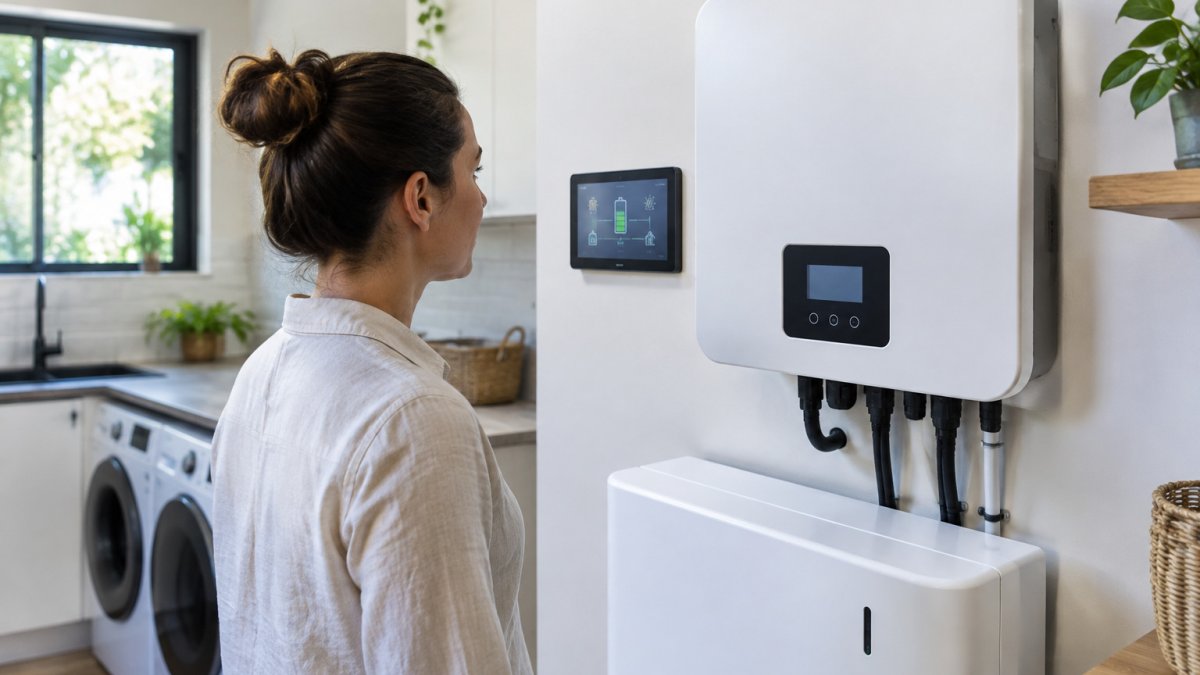
Most batteries let you control when and how fast they release stored power. Getting these right is what turns a battery from a store into a money saver. The settings that matter are the reserve state of charge, the discharge window, the discharge rate limit and the export limit. Set them in that order.
Choosing a Reserve State of Charge
The reserve state of charge is the minimum level your battery keeps in reserve. A higher reserve gives you backup during a power cut. A lower reserve lets the battery supply more of your evening use.
A common approach is to keep a modest reserve, around 20%, so you have some backup without losing much saving. If outages are common where you live, a higher reserve may be worth the trade-off.
Matching Settings to Your Tariff Structure
Your retail plan decides when power is cheap and when it is expensive. See how using more solar at home, storing daytime power and choosing the right retailer plan work together to maximise savings. Your battery settings should follow that pattern. The table below is the logic most installers apply, but confirm the exact windows on your own plan first.
- Flat tariff: Discharge to cover evening use as soon as the sun sets. There is no price signal to wait for, so the goal is simply to avoid importing after dark.
- Time-of-use tariff: Hold charge through the shoulder period, then discharge hard into the peak window. Set the discharge window to start at the peak start time, not at sunset, or you will have nothing left when power is dearest.
- Feed-in tariff with a low credit: Store as much surplus as possible and avoid exporting. Set an export limit if your inverter allows it, so midday surplus charges the battery before any spills to the grid.
The Dynamic Pricing and VPP Layer Most Guides Skip
Fixed peak and off-peak windows are only half the picture.
- Dynamic pricing: If your plan exposes you to wholesale prices, a battery can charge when prices are low or negative and discharge when they spike. This needs an energy management system or a retailer app that can act on price signals, because manual scheduling cannot keep up.
- VPP participation: A VPP typically pays you for allowing the operator to discharge your battery during grid events, often in exchange for a reduced feed-in rate or an annual credit. The trade-off is that VPP events can eat into the charge you had planned for your own evening use, so check how many events per year the offer allows and whether you can opt out.
- What to ask before joining: the event frequency cap, the minimum reserve the operator will leave you, the notice period, and whether participation affects your battery warranty. These terms vary widely between providers.
Watch out: a schedule that looks perfect on a flat tariff can cost you money on a time-of-use or dynamic plan, because the battery discharges into the shoulder period and has nothing left for the peak.
Check your plan’s peak and off-peak times, then set the battery to discharge into those windows. Mistakes here are common, and they can cost more than the battery saves.
The table below sums up how to match your battery discharge settings to your tariff.
| Tariff type | Discharge approach | Watch out for |
|---|---|---|
| Flat tariff | Discharge to cover evening use once the sun sets | No price signal to wait for |
| Time-of-use tariff | Hold charge, then discharge into the peak window | Start discharge at peak start, not sunset |
| Feed-in tariff with low credit | Store surplus and limit exports | Set an export limit if available |
| Two-way or buy-back tariff | Export from battery during the higher-paying window | Run the numbers on both options first |
Step 3: Use Load Shifting for Solar Efficiency
Load shifting means moving big power jobs to the middle of the day, when your panels are working hardest. It works alongside the battery, not instead of it.
Good candidates include:
- Dishwashers and washing machines
- Pool pumps
- Hot water systems with a timer or solar diverter
Running these during peak sun cuts the amount you need to store. That leaves more room in the battery for the evening, and it lifts your self-consumption figure quickly.
Step 4: Automate With Timers, Smart Plugs and an Energy Management System
You do not need to remember every appliance. Automation does the work for you.
Simple options:
- Smart plugs with timers for appliances you run on a schedule
- Timers on pool pumps and water heaters
- Your inverter’s built-in scheduling for battery charge and discharge
Advanced option:
- An energy management system that reads solar output and household use in real time, then runs appliances when surplus is high
A common mistake is buying an advanced system before you have measured your baseline. Start with timers and track results for a month first.
Protecting Battery Life While Maximising Self-Consumption
Batteries wear over time, and the way you cycle them affects their life. Pushing a battery to maximise self-consumption every single day will lift your savings figure, but it also lifts the number of cycles and can bring the warranty threshold forward. The right setting is a balance, not a maximum.
The Cycle-Life Trade-Off
Lithium home batteries are typically rated for a fixed number of cycles or a throughput figure over a warranty period, so check the rating for your model.
- Shallow daily cycling (for example, staying between 30% and 90%) generally extends the calendar life of the cells but leaves some evening load to the grid.
- Deep daily cycling (down to a 10% or 20% floor) captures more self-consumption but uses up the rated cycle count faster.
- The practical middle for most households is a floor around 20% and a ceiling the manufacturer sets, with the battery doing one full cycle a day rather than several partial ones.
Households that push for every last percentage point of self-consumption can use up warranty throughput sooner, so check the cycle limit before setting an aggressive schedule. Check the rated cycle count and throughput limit on your model before you set an aggressive schedule.
Temperature and Placement
Heat is the other big wear factor, and it is often overlooked because it is a siting issue rather than a settings issue. A battery in a hot garage or on a west-facing wall in full afternoon sun will run warmer and degrade faster than one in a shaded, ventilated position. Keep the unit within the manufacturer’s ambient temperature range and out of direct sun where the installation allows it.
What the Warranty Actually Covers
Battery warranties usually depend on how the unit is operated and maintained, and the terms are more specific than most owners expect. Look for:
- The rated cycle count or throughput limit, and what happens when you reach it
- The minimum and maximum state of charge the warranty assumes
- Whether VPP participation or exporting from the battery voids or limits cover
Read the terms before you change settings aggressively. Check what your specific battery’s warranty covers before you start. A schedule that saves a few dollars a week is not worth a warranty claim being refused.
Set Up Your Battery Settings and Track the Results
Work through the steps in order: confirm your hardware, set a sensible reserve, match discharge to your tariff, shift big loads to midday, and automate what you can.
Then track your self-consumption percentage for a few weeks. Compare it with your figure before the battery. If the number is not climbing, check your discharge window first, since that is where most setups go wrong.
Solazone Australia offers battery systems and professional installation for homes and businesses. If you want help matching a battery to your roof and usage, Solazone Australia’s battery back-up range is a good place to start, and you can also book a quote with Solazone Australia’s team for a tailored estimate.
Frequently Asked Questions
What is solar self-consumption and why does it matter?
Solar self-consumption is the share of the electricity your panels generate that your home uses directly, rather than exporting to the grid. It matters because the feed-in tariff paid for exported power is typically much lower than the retail rate you pay to buy electricity back. Every kilowatt-hour you use on site avoids a purchase from the grid, so a higher self-consumption rate generally means lower bills. A home battery stores surplus daytime generation so it can be used in the evening, which is the main way to lift this figure beyond what daytime appliance use alone can achieve.
How does a home battery improve solar self-consumption rates?
Without storage, solar power that is not used during the day is exported to the grid. A home battery captures that surplus and releases it when the panels are not producing, such as after sunset or on cloudy mornings. The battery therefore covers a larger share of your household load from your own generation. How much it adds depends on battery capacity relative to your daily consumption, the discharge settings you choose and how your household uses power across the day and evening.
How do I calculate my current solar self-consumption rate?
Divide the solar energy your home uses directly, plus any energy drawn from the battery, by the total solar energy generated over the same period, then multiply by 100. For example, if your panels produced 20 kWh in a day and your home used 12 kWh directly while the battery supplied 3 kWh of stored solar, your self-consumption rate is 75 per cent. Most inverter monitoring apps report generation, export and import, which lets you estimate the figure with a simple monthly or weekly calculation.
Are there smart home technologies that help with battery optimisation?
Yes. Smart plugs and timers can schedule appliances such as dishwashers, pool pumps and water heaters for the hours when solar output is highest. Energy management systems can read generation and consumption data and adjust battery charge and discharge automatically. Some systems also respond to time-of-use tariffs or virtual power plant programmes. Check that any device you add is compatible with your inverter and battery before purchasing, and contact Solazone Australia for current pricing or a quote on a suitable setup.
