
Table of Contents
- Is Home Battery Storage Worth It? The Core Question
- How Home Battery Storage Works with Solar
- Solar Battery Payback Period: What You’ll Actually Recoup
- Cost of 10kWh Solar Battery Installation and What Affects Pricing
- Benefits of Solar Battery Backup for Energy Independence
- Government Rebates, Feed-In Tariffs, and Financial Incentives
- When Home Battery Storage Isn’t Worth It
- Conclusion: Making the Right Decision for Your Household
Last Updated: August 22, 2026
Is Home Battery Storage Worth It? The Core Question
Whether home battery storage is worth it depends on your electricity tariff, grid reliability, energy consumption patterns, and access to government rebates. For households with high peak-demand charges or frequent power outages, a solar battery system can deliver measurable savings. For others on flat-rate tariffs with reliable grid supply, the payback period may stretch beyond 10 years, making the investment less attractive.
The core question isn’t whether battery storage works, it does. The question is whether it makes financial sense for your specific situation. At Solazone Australia, we’ve helped thousands of households evaluate this decision by looking at their actual usage data, local electricity rates, and available incentives rather than generic assumptions.
This guide breaks down the real economics of home battery storage, explores when it genuinely saves money, and identifies the scenarios where it doesn’t. We’ll cover payback periods, installation costs, government support, and the emerging technologies that are changing the value proposition.
How Home Battery Storage Works with Solar
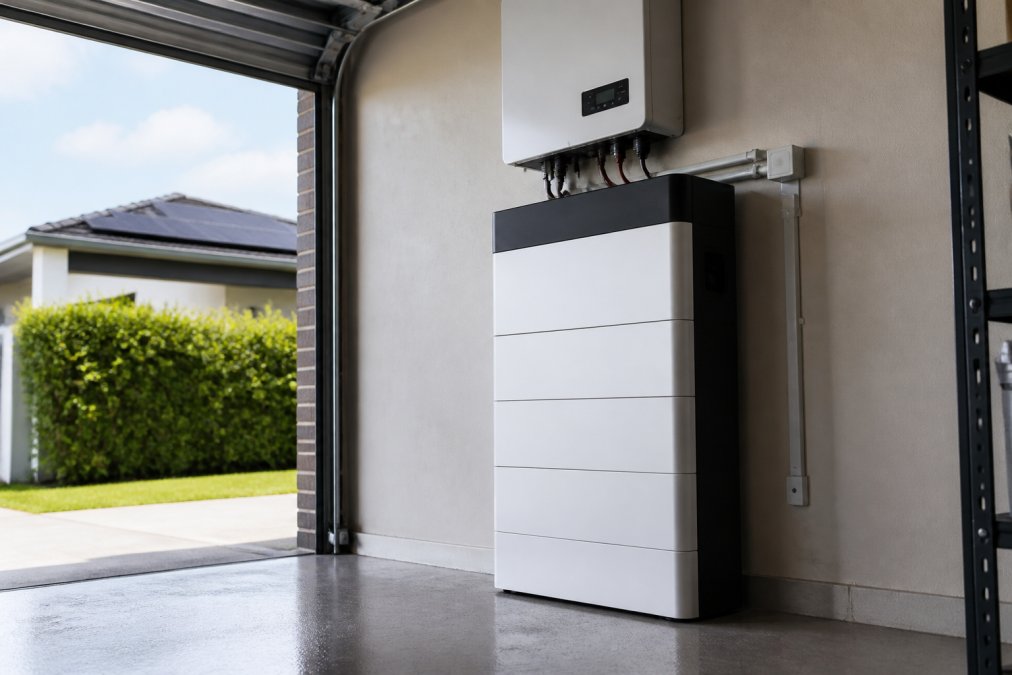
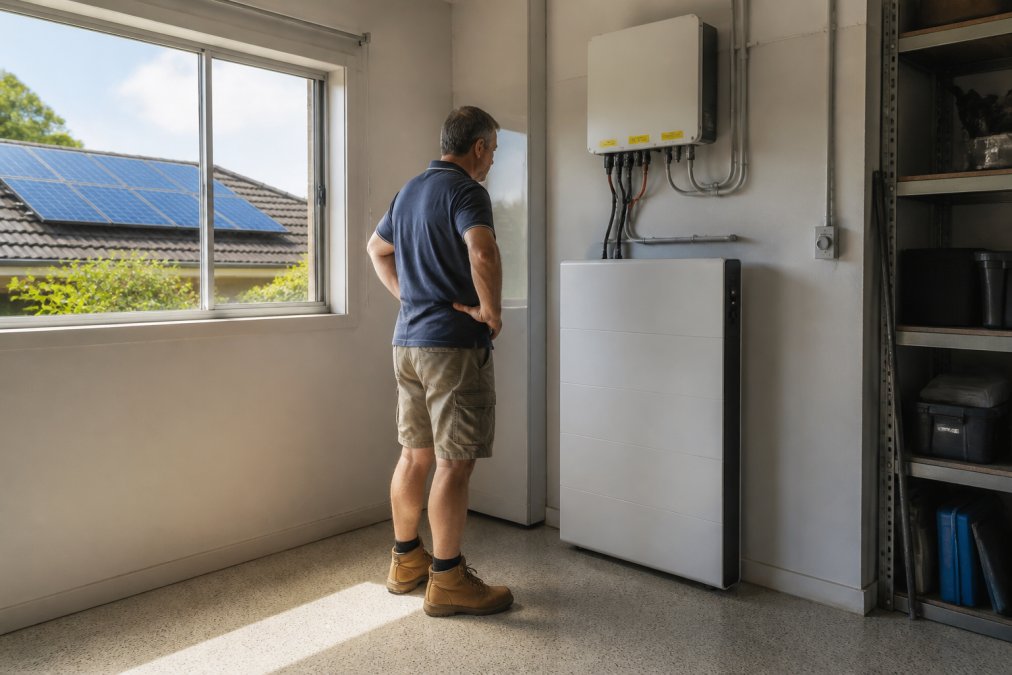
A home battery storage system captures excess solar energy during the day and releases it when you need it most, typically during evening peak-demand hours or when the grid fails. The battery sits between your solar inverter and your home’s electrical panel, automatically managing the flow of power.
Here’s the basic sequence: your solar panels generate kilowatt-hours during daylight. If you’re using that energy immediately, it powers your home directly. Any surplus charges your battery. Once the battery reaches full capacity, excess energy either feeds back to the grid (if you’re on a feed-in tariff scheme) or is simply unused. At night or during cloudy periods, your home draws power from the battery first, then from the grid once the battery depletes.
The efficiency of this process matters. Most lithium-ion batteries achieve round-trip efficiency of 85-95%, meaning some energy is lost during the charge-discharge cycle (peer-reviewed research). Older lead-acid systems are less efficient but cheaper upfront. The depth of discharge, how much of the battery’s capacity you can safely use, varies by chemistry. Lithium systems typically allow 80-90% depth of discharge, while other chemistries are more conservative.
The real value of battery storage isn’t in the energy it stores, it’s in the timing of when you use that energy. A battery that shifts your consumption away from peak-demand periods can cut your electricity bill even if the total kilowatt-hours remain the same.
The system includes an energy management system that learns your household consumption patterns and optimises charging and discharging automatically. Modern systems can be monitored via smartphone app, showing real-time battery charge, solar generation, and grid draw.
Solar Battery Payback Period: What You’ll Actually Recoup
The payback period, how long until your battery saves enough on electricity bills to cover its cost, is the most critical number for most homeowners. It’s also the most misunderstood.
A typical payback calculation looks like this: divide your total installed system cost by your annual electricity savings. If your system costs $15,000 and saves $1,500 per year, the payback period is 10 years. But this ignores several real-world factors that shift the timeline.
Your feed-in tariff structure matters enormously. If your electricity provider pays you a high rate for surplus solar energy fed back to the grid, a battery becomes less attractive because you’re already getting paid for that excess. Conversely, if feed-in tariffs are low (or nonexistent), a battery that stores that energy for evening use becomes far more valuable. Time-of-use tariffs, where peak-demand rates are 3-5 times higher than off-peak rates, make batteries extremely attractive because they allow you to use cheaper off-peak power and avoid peak-period charges.
Self-consumption rates also determine payback. If you’re home during the day and use 60% of your solar generation immediately, you have less surplus to store. If you work away from home and generate excess solar all day, a larger battery makes sense.
Government rebates and incentives can dramatically shorten payback periods. Many states offer rebate schemes that reduce upfront costs by 20-40%, effectively cutting years off your payback timeline.
A realistic payback period for most Australian households with battery storage ranges from 8-15 years, depending on tariff structure, household consumption, and available rebates. Payback periods under 8 years typically require high peak-demand charges or significant government incentives.
Battery degradation also affects the calculation. Most lithium-ion batteries retain 80% of their capacity after 10 years of daily cycling (peer-reviewed research). This means your savings gradually decline over time. A battery that saves $1,500 in year one might save $1,200 by year ten due to reduced capacity.
Cost of 10kWh Solar Battery Installation and What Affects Pricing
A 10-kilowatt-hour battery system is a common mid-range size for Australian households. Installation costs vary significantly based on several factors, and pricing depends on your specific situation, location, and chosen components.
The total cost typically includes the battery hardware itself, the inverter (if not already present), installation labour, electrical work, permits, and system integration. Some systems require a new inverter; others integrate with your existing solar inverter. Older homes with complicated roof layouts or structural quirks may need additional electrical work, pushing costs higher.
Key factors affecting your final price include battery chemistry (lithium-ion costs more upfront but lasts longer than lead-acid), system capacity (larger systems cost more per kilowatt-hour), inverter type (hybrid inverters cost more than basic models), installation complexity (simple roof-mounted systems cost less than ground-mounted or integrated designs), and your location (regional areas may have higher labour costs).
Rather than guessing at generic pricing, Solazone Australia recommends getting a personalised quote based on your actual roof layout, existing electrical setup, and local conditions. Your quote will account for factors that generic price guides simply cannot predict.
Beware of quotes that seem significantly cheaper than others without explaining why. Installation quality, warranty coverage, and long-term support vary dramatically. A cut-rate installer may use inferior components or skip essential safety compliance steps, leaving you with an unreliable system.
The Australian government’s Small-scale Renewable Energy Scheme (SRES) creates Small-scale Technology Certificates (STCs) for solar installations, which reduce your net cost. Battery-only systems don’t currently qualify for STCs, but combined solar-plus-battery systems do. This means the effective cost of adding a battery to an existing solar system is lower than installing battery alone.
Benefits of Solar Battery Backup for Energy Independence

Energy independence, the ability to power your home without relying on the grid, is the most compelling reason many households choose battery storage. This goes beyond simple cost savings.
For households in areas prone to power cuts (particularly coastal regions), battery backup provides genuine peace of mind. A fully charged 10kWh battery can power essential loads, lighting, refrigeration, water heating, communications, for 12-24 hours depending on usage. This isn’t enough to power air conditioning or electric heating, but it covers the basics until grid power returns.
Load shifting is another key benefit. By storing cheap off-peak solar energy and using it during expensive peak-demand periods, you reduce your reliance on grid power when rates are highest. Over a year, this compounds into meaningful bill reductions, especially for households with high peak-demand charges. sustainable home tech.
Peak shaving, using stored battery power to reduce your maximum grid draw during expensive peak periods, can lower demand charges significantly. Some electricity plans charge based on your highest single hour of consumption; a battery that smooths out consumption spikes directly reduces these charges.
Virtual Power Plants (VPPs) are an emerging benefit in some regions. These programs aggregate household batteries across a network, allowing them to collectively support grid stability during peak periods. Participants receive payments for allowing their battery to discharge when the grid needs support, creating an additional revenue stream.
Self-consumption increases with battery storage. Instead of exporting solar energy to the grid at low feed-in rates, you store it and use it at home, effectively "buying" that energy at zero cost during evening hours when you’d otherwise pay retail rates.
Battery systems also enable true off-grid operation if you pair them with sufficient solar capacity. This appeals to remote properties or households seeking complete energy independence, though it requires oversizing your solar array and battery to handle cloudy periods.
Government Rebates, Feed-In Tariffs, and Financial Incentives
Government support for battery storage varies by state and changes annually, making it essential to check current schemes before calculating payback periods.
The Small-scale Renewable Energy Scheme (SRES) provides STCs for solar systems, including those with battery storage. These certificates reduce your net installation cost. The number of STCs you receive depends on your system size and location (zones determine solar irradiance). Current STC values fluctuate, but they typically reduce system costs by 20-30%.
Some states offer additional rebate programs specifically for battery storage. These schemes often target low-income households or specific postcodes, providing upfront grants that reduce your out-of-pocket cost. Check your state government’s energy website for current offers.
Feed-in tariffs, the rates you’re paid for exporting surplus solar energy to the grid, directly impact battery value. Higher feed-in tariffs make batteries less attractive because you’re already compensated for excess energy. Lower feed-in tariffs make batteries more valuable because storing energy for home use beats exporting it cheaply.
Time-of-use tariffs create the strongest case for batteries. If your electricity provider charges 3-4 times more during peak hours (typically 5-9 PM) than during off-peak hours, a battery that shifts your consumption away from peak periods delivers substantial savings.
Some retailers offer battery-specific incentives, including discounted electricity rates for battery owners or rebates on battery hardware. These are usually temporary promotions, so timing matters.
Before committing to a battery system, request a detailed comparison showing your electricity costs with and without battery storage under your current tariff. This personalised analysis beats generic payback calculations because it reflects your actual usage patterns and local rates.
Virtual Power Plant programs in some regions pay households for allowing their batteries to discharge during grid peak periods. These payments vary but can contribute 5-15% of annual battery savings for active participants.
When Home Battery Storage Isn’t Worth It
Battery storage makes sense for many households, but it’s genuinely not the right choice for others. Understanding when to skip the battery is as important as knowing when to install one.
If you’re on a flat-rate electricity plan with no peak-demand charges, a battery provides minimal financial benefit. Shifting consumption from one hour to another saves nothing if rates are identical all day. You’d be paying for storage infrastructure to avoid costs that don’t actually exist.
Households with very low electricity consumption may struggle to achieve reasonable payback periods. If your annual bill is under $800-1,000, even substantial bill reductions won’t justify a $15,000+ system cost. The savings simply aren’t large enough.
If your grid supply is highly reliable and you experience power cuts rarely or never, the backup power benefit disappears. Battery storage then becomes purely a financial play, and if your tariff doesn’t support strong economics, the investment doesn’t stack up.
Renters and households planning to move within 8-10 years face challenges. Batteries are long-term investments, and their value is realised over a decade or more. If you’re moving before payback is achieved, you’re unlikely to recover your investment.
Homes with shading issues that significantly reduce solar generation may not produce enough excess energy to justify battery storage. A battery only saves money if you have surplus energy to store. If your solar system barely covers your daytime consumption, there’s nothing to store.
Households with very old electrical infrastructure requiring extensive rewiring may find installation costs so high that payback becomes impractical. This is particularly true for older homes with complex roof layouts or structural limitations.
If your current solar system is undersized relative to your consumption, adding a battery won’t solve the underlying problem. You need sufficient solar generation first; battery storage amplifies the benefit of good solar, but doesn’t replace it.
Don’t let marketing claims override the maths. A battery that delivers 15-year payback isn’t “[worth it](/is-solar-battery-backup-worth-it/)” just because it’s technically profitable. Opportunity cost matters, that $15,000 could be invested elsewhere, earning returns or reducing other debts. The payback period needs to be short enough to justify tying up capital for a decade.
Conclusion: Making the Right Decision for Your Household
Home battery storage is worth it when three conditions align: your electricity tariff rewards storage economics (high peak-demand charges or low feed-in tariffs), your household generates sufficient solar surplus to justify the system size, and your payback period falls within 8-12 years. It’s not worth it when any of these conditions are weak.
The decision requires personalised analysis of your specific tariff, consumption patterns, solar generation, and local incentives. Solazone Australia has helped thousands of households navigate this decision by providing detailed quotes and transparent payback calculations tailored to each home’s unique situation. Our 40+ years of technical expertise means we understand the real-world factors, roof orientation, shading, electrical complexity, local regulations, that generic online calculators miss.
If you’re genuinely interested in exploring whether battery storage makes sense for your home, start with a detailed energy audit and a personalised quote that shows your actual savings under your current tariff. That analysis beats any general guide, because it reflects your reality rather than an industry average.
Frequently Asked Questions
What is the typical payback period for a solar battery system?
Payback periods vary based on your electricity usage, feed-in tariff rates, and system size, but typically range from 7 to 15 years. The payback period shortens if you have high peak-demand rates, use most of your solar energy during peak hours, or benefit from government rebate schemes. A 10kWh battery paired with a solar array in a household with above-average consumption may achieve payback faster than a smaller system in a low-usage home.
Is home battery storage worth it without solar panels?
Battery storage alone, without solar, is rarely financially viable for most households. You would charge the battery from the grid during off-peak rates and use it during peak hours, but the round-trip efficiency losses and battery degradation mean savings are minimal. Battery backup is most valuable when paired with solar panels, where you store excess solar energy and avoid peak tariffs. If your primary need is backup power during outages, the value depends on outage frequency and duration in your area.
How do government rebates affect the cost of 10kWh solar battery installation?
Several government schemes can reduce battery storage costs. The Small-scale Technology Certificates (STCs) scheme applies to battery systems under 10kWh in most cases, and various state-based rebate programs offer additional support. For example, some states provide battery rebates as part of broader renewable energy incentives. Rebates can offset 20-40% of installation costs depending on your location and system size. Check your state's current rebate schemes and energy efficiency programs to understand what financial assistance is available for your installation.
How does extreme weather affect battery storage efficiency?
Lithium-ion batteries perform best in moderate temperatures. Extreme heat reduces efficiency and accelerates degradation, while extreme cold temporarily lowers performance. In hot climates, proper ventilation and thermal management in the battery enclosure help maintain efficiency. Most quality battery systems include temperature monitoring and management features to protect performance during weather extremes. If you experience frequent heatwaves or cold snaps, discuss thermal management options with your installer to ensure your battery maintains optimal round-trip efficiency over its lifespan.
This article was written using GrandRanker