
Last Updated: October 25, 2026
Quick Summary
Choosing reliable solar components for homes starts with a year of your own electricity data, not the panel, because system size, inverter type and battery readiness all flow from how much power you use and when. Then verify each solar components item by item, using independent testing, exact model numbers and written warranty terms rather than brand badges or headline efficiency figures.
- Pull twelve months of bills, not three, and check total kilowatt-hours plus the time-of-use split.
- A household using around 15 kWh a day typically starts looking at a 5-6.6 kW system.
- A quote listing brands but not model numbers is not a quote you can compare.
- If a battery is possible within five years, choose a hybrid inverter now.
- Ask for the installer’s Clean Energy Council accreditation number and check it on the public register.
Table of Contents
- Start With Your Household Electricity Use, Not the Panel
- How to Choose a Solar Inverter That Matches Your Array
- Reliability Checks for Solar Panels and Solar Components
- Solar Panel and Inverter Warranties: Read the Fine Print
- Solar Battery Options for Homes and Future Expansion
- Questions to Ask a Solar Installer Before Signing
- Book a Roof Assessment and Component Review
- Frequently Asked Questions
Start With Your Household Electricity Use, Not the Panel
Most solar quotes begin with a panel. That is backwards. Choosing reliable solar components for homes starts with a year of your own electricity data, because system size, inverter type and even battery readiness all flow from how much power you actually use and when.
At Solazone Australia, we have spent more than 40 years watching homeowners buy oversized arrays and undersized inverters because nobody read the bills first. Here is how to avoid that.
Reading a Year of Bills and Interval Data
Pull twelve months of bills, not three. Seasonal swings matter: a Melbourne winter with split-system heating looks nothing like February. Look for two numbers on each bill: total kilowatt-hours consumed and the time-of-use split if you have a smart meter.
Interval data, available from your distributor, shows consumption in 30-minute blocks. That reveals your evening peak, which is exactly when solar stops producing.
Sizing System Capacity to Real Consumption
A common approach is to match system capacity to daytime consumption plus a buffer for future loads. A household using around 15 kWh a day typically starts looking at a 5-6.6 kW system, while a home with pool pumps and ducted cooling may need considerably more.
Watch out: oversizing without export limits or battery storage wastes money, because many networks cap what you can send back to the grid.
| Household Profile | Daily Use | Starting System Size | Inverter Consideration |
|---|---|---|---|
| Small home, two people | Under 10 kWh | 3-5 kW | Single-string |
| Family, daytime cooling | 15-20 kWh | 6.6-10 kW | Hybrid-ready |
| Pool, ducted air, EV | 25 kWh+ | 10 kW+ | Three-phase or hybrid |
How to Choose a Solar Inverter That Matches Your Array
The inverter is the component most likely to fail first, and it is the one homeowners research least. How to choose a solar inverter comes down to three things: array layout, shading, and whether you plan to add a battery.
String, Hybrid or Micro: What the Roof Layout Allows
A string inverter is the simplest and cheapest option, but one shaded panel drags down the whole string. Hybrid inverters include battery inputs, so you can add storage later without replacing hardware.
If your roof has two orientations or a tree casting afternoon shade, ask for a design that accounts for it. For a deeper walkthrough, see our guide on how to choose the right solar inverter for your home.
Reliability Checks for Solar Panels and Solar Components
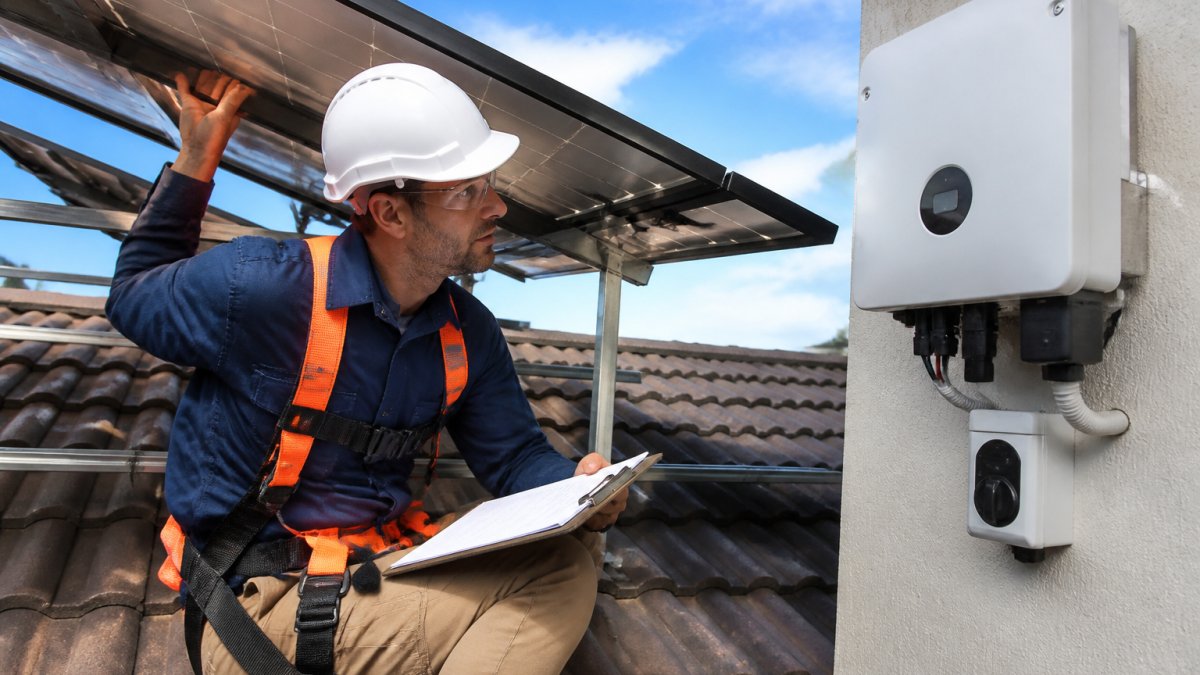
Reliability is not a brand badge. It is the sum of independent testing results, build quality and how well the parts work together.
A Component-by-Component Reliability Checklist
Use this as a due-diligence list when comparing quotes. Ask the installer to show you the evidence for each line, not just assert it.
- Panels: Confirm the product warranty term and who honours it locally, the performance warranty’s annual degradation curve, the junction box and connector ratings, and whether the model appears on the Clean Energy Council’s approved modules list. Ask for the panel’s temperature coefficient and its NMOT (nominal module operating temperature), both tell you how much output is lost on a hot roof.
- Inverter: Check the warranty term, whether service is handled in Australia or requires return overseas, the IP rating for outdoor mounting, and the operating temperature range. Confirm the inverter’s maximum input voltage and MPPT voltage window suit the proposed string design.
- Batteries (if included): Verify the chemistry, usable capacity versus nameplate capacity, round-trip efficiency, warranty cycle count, and whether the warranty is conditional on approved installer commissioning.
A quote that lists brands but not model numbers is not a quote you can compare. Ask for exact model numbers for every component before you sign.
Evidence Beyond Headline Panel Efficiency
Efficiency figures sell panels, but they say little about durability. Three evidence types matter more:
- Independent testing and certification. Look for panels listed on the Clean Energy Council’s approved modules list, which confirms they meet the relevant Australian standards for safety and performance (Products). Certification is a floor, not a guarantee, but an uncertified panel is a red flag.
- Degradation rate and temperature performance. A panel warranted to retain around 80-87% of output after 25 years, with a first-year drop of around 2-3%, is the common range among reputable manufacturers. The temperature coefficient tells you how much output falls per degree above 25°C, panels on a hot roof run well above ambient, and cheap components degrade faster there.
- Failure modes and real-world conditions. Ask what the most common warranty claims are for that model, whether the manufacturer has a local service presence, and how long replacements typically take. A common pattern is that junction box and connector failures, not cell failures, drive many panel claims, which is why build quality at the back of the panel matters as much as the front.
Compatibility Across Panels, Inverter and Mounting
Every solar component in the system must be rated to work together. Panel voltage windows must suit the inverter’s input range, including at the coldest expected morning temperature when voltage is highest. Mounting rails and clamps must be rated for your wind region and roof material. Battery voltage and communication protocols must match the inverter if storage is planned. Mixing brands is fine, but the installer must confirm the numbers match and show the string design and voltage calculations.
An oversized array on an undersized inverter is one of the most common reliability mistakes. Confirm the DC-to-AC ratio is within the inverter manufacturer’s allowed range, not just within the installer’s habit.
Solar Panel and Inverter Warranties: Read the Fine Print
Warranties are where reliability claims get tested. A 25-year panel warranty means little if the manufacturer has no local support presence.
Performance Warranty, Product Warranty and Degradation Rate
A product warranty covers manufacturing defects. A performance warranty guarantees a minimum output over time, expressed as a degradation rate.
Read who honours the claim, where service happens, and what voids cover. Our solar power system warranty guide explains coverage, claims and exclusions in detail, and our breakdown of solar panel degradation rates compares what different panel types deliver over their life.
Solar Battery Options for Homes and Future Expansion
A battery changes the economics of a solar system, storing daytime generation for the evening peak. It also changes the inverter you should buy today.
If a battery is even a possibility within five years, choose a hybrid inverter now. Retrofitting storage to a string system usually means replacing the inverter, which doubles the cost of the decision. Battery capacity should be sized to your evening consumption, not to the array’s output. A battery that fills by midday and empties by 8pm is sized correctly. Weighing grid-tied solar against storage? Our comparison of solar system versus battery backup sets out the trade-offs.
Questions to Ask a Solar Installer Before Signing
The installer determines whether good components perform. A step-by-step due-diligence process is more useful than a scattered list of questions, because it tells you what to verify, in what order, and what a good answer looks like.
Step 1: Verify Accreditation and Licensing
Ask for the installer’s Clean Energy Council accreditation number and check it on the Council’s public register. Accreditation is required for grid-connected design and installation and is a condition of accessing the federal rebate. Also confirm the electrical licence held by the person doing the work, and ask whether the business is a signatory to the Clean Energy Council’s Solar Retailer Code of Conduct, signatories commit to specific after-sales and warranty conduct standards.
Step 2: Check Insurance and Business Standing
Ask for a certificate of currency for public liability insurance and, where relevant, professional indemnity. Check the business’s ABN and how long it has traded. A common pattern is that installers who cannot produce insurance or a trading history are also the least likely to be around when a warranty claim arises.
Step 3: Demand a Written Quote With Model Numbers
A compliant written quote should list exact model numbers for panels, inverter, mounting and any battery, the system size and configuration, the string design, the total price including GST, the rebate amount and how it is applied, the expected completion timeline, and the warranty terms for both product and workmanship. If any of these are missing, ask for a revised quote before comparing prices.
Step 4: Ask What Happens After Installation
- Who handles warranty claims, the installer, the manufacturer, or both?
- What is the response time for a fault call, and is there a local service presence?
- What happens to your warranty if the installer ceases trading? (Ask whether the manufacturer’s warranty is independent of the installer, and whether workmanship cover is insured.)
Step 5: Test the Design, Not Just the Price
Ask the installer to walk you through the string design and voltage calculations, the shading assessment, and how the proposed system matches your interval data. A qualified installer welcomes these questions and can explain the trade-offs. One who dodges them is telling you something.
The strongest signal of a reliable installer is not the lowest price, it is a written quote with model numbers, a verifiable accreditation, insurance on request, and clear answers about who honours the warranty in five years’ time.
For a fuller checklist, read our guide on choosing a residential solar installer.
Book a Roof Assessment and Component Review
The gap between a good solar system and an expensive disappointment is rarely the panel brand. It is whether the components were matched to your roof, your usage and your plans for the next decade.
That is the work Solazone Australia does before quoting.
Get started with Solazone Australia and book a roof assessment that reviews each solar component against your household’s actual needs.
Frequently Asked Questions
What components do you need for a home solar system?
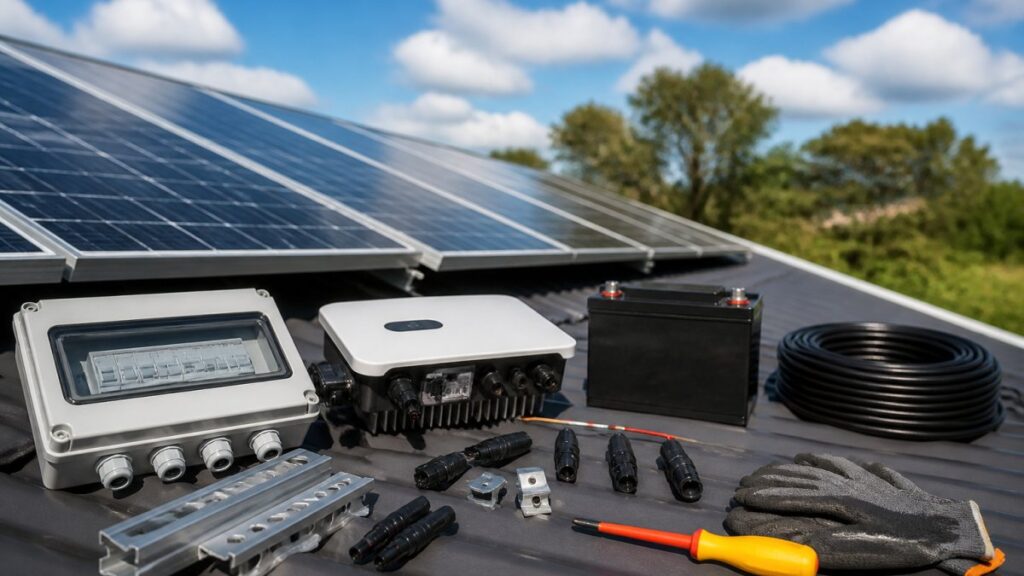
A typical home system includes solar panels, a solar inverter, mounting hardware, DC isolators, cabling and a meter connection to the grid. If you add battery storage, you also need a compatible hybrid or battery inverter and a battery management system. Each part affects solar performance, so ask for the make and model of every component in your quote, not just the panels. Confirm the inverter is listed as compatible with your chosen panels and that the mounting suits your roof type.
How do you choose reliable solar panels for your home?
Look past headline panel efficiency and check independent testing results, the degradation rate stated in the performance warranty, and whether the manufacturer has a local support presence. Ask how long the product warranty runs and who honours it if the manufacturer exits the market. Reliability also depends on installation quality, so confirm your qualified installer follows the mounting and torque specifications. Request a product comparison of two or three panel options with their warranty terms side by side.
What solar panel and inverter warranties should homeowners check?
Check three things: the product warranty on the panels, the performance warranty covering degradation rate, and the inverter warranty length and what it covers, including labour for removal and refitting. Ask whether the warranty is transferable if you sell the house, and whether claims are handled locally or overseas. Get the terms in writing before signing. A long warranty from a company with no local support is worth less than a shorter one backed by an established Australian supplier.
Are solar battery options for homes worth adding to a system?
A battery makes sense if you have evening electricity use that outpaces what your panels generate during the day, or if you experience frequent power cuts and want backup. It rarely pays back on bill savings alone at current prices, so treat it as a comfort and resilience purchase first. If you are unsure, choose a battery-ready hybrid inverter now and add storage later. Ask your installer to show the payback period for your own consumption pattern, not an average.
