
Table of Contents
- How to Choose a Residential Solar Installer: Start With Accreditation
- Solar System Quotes Comparison: What to Look For
- Understanding Solar Panel Installation Cost vs. Value
- Assess Technical Expertise: Panels, Inverters, and Batteries
- Solar Battery Storage Installation: Questions to Ask
- Review Reputation and After-Sales Support
- Conclusion: Your Steps for Choosing an Installer
- Frequently Asked Questions
Choosing the right solar installer is the single most important decision you will make for your home’s energy future, and it determines whether your system performs for 25 years or becomes a costly headache. A residential solar installer does far more than place panels on a roof; they design a system around your home’s specific energy profile, structural quirks, and local conditions. At Solazone Australia, we have spent over 40 years in this industry, and we have seen the difference that proper vetting makes. Below, we will show you exactly how to evaluate installers so you secure a system that is safe, efficient, and built to last, starting with the non-negotiable basics of accreditation.
How to Choose a Residential Solar Installer: Start With Accreditation
The first filter in your search is simple: an installer must hold Clean Energy Council (CEC) accreditation. A CEC accredited solar installer has completed rigorous training and adheres to Australian standards for grid-connected solar photovoltaic systems (cleanenergycouncil.org.au). Without this credential, you cannot access government rebates or feed-in tariffs, and you risk an installation that fails electrical safety compliance standards.
Verify CEC Accreditation and Licenses
Start by checking the installer’s CEC accreditation number against the public register. Accreditation is not a one-time event; it requires ongoing professional development to stay current with compliance standards and inverter technology. You should also verify their electrical licence is valid for your state, as solar installation is regulated electrical work. A common mistake is assuming the salesperson is the person doing the work; confirm that the actual installation team holds the necessary credentials.
Check Business History and Financial Health
Solar equipment carries warranties spanning 10 to 25 years, so you need an installer who will still exist to honour them. Look for a business with a long operating history and a physical address you can visit. Check their business registration and ask about their financial stability. An installer who has traded for decades is far more likely to provide after-sales service than a company that appeared last year. This is a point many guides miss, but it is critical for long-term peace of mind.
Solar System Quotes Comparison: What to Look For
Once you have shortlisted accredited installers, request at least three detailed quotes for a proper solar system quotes comparison. The cheapest quote is rarely the best value, and comparing them effectively requires understanding what each proposal actually includes. A thorough quote should cover system design, component brands, installation timeline, and all applicable warranties.
Compare System Design, Not Just Price
Every home is different, so a good quote starts with a site assessment, not a generic package. The proposal should reflect your energy consumption profile and roof orientation. Compare the technical specifications of each system, not just the dollar figure. A system with higher solar panel efficiency might cost more upfront but deliver better returns over its lifetime.
Review the Fine Print and Contract Red Flags
Read the contract carefully before signing. Watch for vague language about the installation timeline, unclear responsibility for council approvals, or clauses that allow for unlimited delays. A reputable installer will provide a clear scope of work and a realistic schedule. If a contract lacks detail or the salesperson pressures you to sign quickly, treat that as a red flag.
Understanding Solar Panel Installation Cost vs. Value
The solar panel installation cost is a significant investment, but focusing solely on the price tag is a mistake. Value is determined by the quality of components, the design of the system, and the workmanship of the installation. A marginally cheaper system that underperforms or fails early is no bargain at all.
Evaluate Component Quality and Warranties
Ask which brands of panels, inverters, and mounting hardware are specified. Reputable manufacturers offer component warranties of 10 to 25 years, and the installer should provide a separate workmanship warranty covering their installation labour. Clarify what each warranty covers and who you contact if something fails. For example, a workmanship warranty typically covers roof penetrations and wiring, while the component warranty covers the hardware itself. Make sure you understand the difference and get both in writing.
Assess Technical Expertise: Panels, Inverters, and Batteries
Technical expertise separates a system that merely works from one that is optimised for your home. A skilled installer conducts a thorough site assessment, evaluating roof orientation, pitch, and structural integrity before recommending equipment. But how do you assess their expertise during the quoting process? It comes down to the specific questions you ask and the detail they provide in response.
Site Assessment: Roof Orientation and Shading
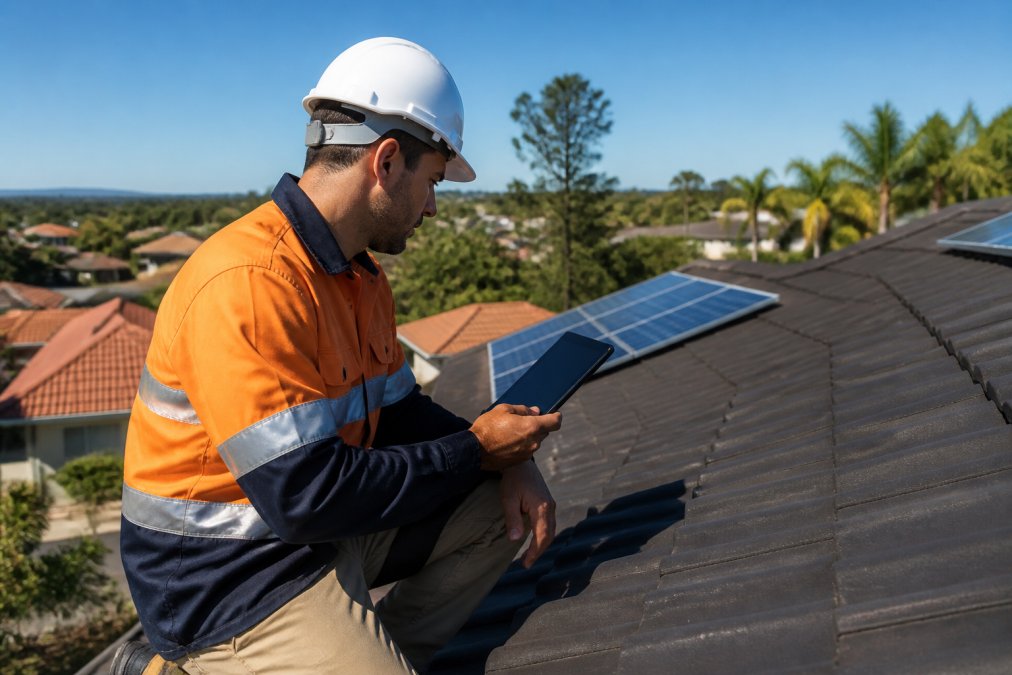
A proper site assessment includes a shading analysis to identify obstructions like trees or chimneys that could reduce output. Partial shading on one panel can disproportionately affect the whole array unless the system design accounts for it with optimisers or micro-inverters. Ask the installer how they handle shading and whether they use monitoring data to validate performance after installation. This level of detail indicates genuine technical competence rather than a sales pitch.
Panel Technology: Beyond the Brand Name
When discussing panels, don’t just ask which brand they use, ask which specific model and why. A reputable installer should be able to explain the trade-offs between different panel tiers. For example, they should discuss the difference between polycrystalline and monocrystalline panels, and why they have chosen a particular efficiency rating for your roof space. Ask about the temperature coefficient, which indicates how much output drops in extreme heat, a critical factor in Australian summers. A panel with a lower temperature coefficient (around -0.35%/°C) will outperform one with a higher coefficient (around -0.45%/°C) on a 40°C day (energy.gov). Also, ask about the panel’s degradation rate; most quality panels degrade at about 0.5% per year, but premium options may offer a slower rate of 0.25%.
Inverter Selection: String, Micro, or Optimisers
The inverter is the brain of your system, and the choice between a string inverter, micro-inverters, or power optimisers is a key technical decision. A string inverter is typically the most cost-effective solution for a simple, unshaded roof. However, if your roof has multiple orientations or experiences partial shading, micro-inverters or optimisers may be a better choice. Ask the installer to justify their recommendation based on your specific roof layout. Also, ask about the inverter’s efficiency rating (most are above 97%) and its warranty terms. A good installer will explain that while micro-inverters cost more upfront, they can increase overall system yield in complex installations. local electrical contractors.
Battery-Ready and Load Management
If you are not installing a battery now, ask whether the system is ‘battery-ready’. This means the inverter is compatible with AC-coupled batteries, or the system has been designed with the necessary wiring and capacity for a future upgrade. A technically proficient installer will also discuss load management, how your major appliances (like air conditioning and electric hot water systems) draw power and how the system can be configured to maximise self-consumption. They should be able to explain how a smart meter or energy monitoring system can help you shift usage to daylight hours. This forward-looking approach shows they are thinking about your energy needs for the next decade, not just the immediate installation.
Solar Battery Storage Installation: Questions to Ask
If you are considering a solar battery storage installation, ask direct questions about capacity, chemistry, and expected lifespan. Battery storage integration adds complexity, so the installer must understand load analysis and how the battery interacts with your grid connection. Ask how the system handles a blackout, what the round-trip efficiency is, and what the warranty covers in terms of capacity degradation over time. A battery is a long-term investment, and the answers to these questions will determine whether it delivers value.
Review Reputation and After-Sales Support
A solar system is a decades-long relationship, so after-sales support matters as much as the initial installation. Research customer testimonials and look for patterns in feedback about communication and problem resolution. An installer with thousands of satisfied customers and a long history of support is a safer bet than one with no track record.
Check Testimonials and Installation Timeline
Ask for the expected installation timeline in writing and confirm who performs the work. Some companies subcontract installation, which can affect accountability. Clarity around the timeline and process is essential; you should not be left waiting months with no updates. A professional installer provides a clear schedule and communicates proactively if dates shift.
The Post-Installation Maintenance Expectation Gap
Most guides stop at the sale, but a solar system is a piece of machinery that requires ongoing attention. The critical question is not just ‘will they fix a fault?’ but ‘will they help you maintain performance over 25 years?’. This is where you can separate a true long-term partner from a company that just wants the installation signed off.
Ask the installer directly about their maintenance service offerings. Do they offer an annual system health check? What does it include, visual inspection of the array, checking torque on mounting bolts, verifying the inverter’s cooling fans are clean, and reviewing the monitoring data for any string-level underperformance? A system that is never serviced can lose 5-10% of its output due to accumulated dirt, micro-cracks, or loose connections that go undetected.
Also, ask about their response protocol for performance alerts. If their monitoring platform flags a drop in output, what happens next? Do they proactively contact you, or do you have to notice the issue and call them? The best installers have a service desk that monitors system health and reaches out to schedule a service visit when they see anomalies. This is a significant point of differentiation.
The Financial Health Check: Ensuring They Last as Long as the Warranty
A 25-year panel warranty is only as good as the company that backs it. While you can check business history, you also need to assess financial stability. Ask the installer if they are a member of the Clean Energy Council’s Approved Solar Retailer program, which requires them to meet standards of conduct and financial transparency (cleanenergycouncil.org.au). You can also check the Australian Securities and Investments Commission (ASIC) business register to see how long the company has been registered and whether there are any signs of financial distress, such as a change of directorship or recent wind-ups of related entities. A company that has been operating for a decade and has a physical showroom or office you can visit is a stronger bet than a virtual operation that may be a fly-by-night operation. Ask for references from customers whose systems are 5-10 years old and who have needed warranty support, this is the most reliable indicator of how they will treat you in year 8 when your inverter fails.
Conclusion: Your Steps for Choosing an Installer
Choosing a solar installer requires checking accreditation, comparing detailed quotes, and verifying the long-term health of the business. Prioritise technical expertise, clear communication, and strong warranties over the lowest price. Solazone Australia combines over 40 years of technical expertise with a commitment to Australian-made systems and personalised customer service. Our experienced teams have trained more than 200 staff and supported thousands of satisfied customers. Get started with Solazone Australia and secure a solar system designed for your home, your budget, and your long-term energy independence.
Frequently Asked Questions
What accreditations should a solar installer hold?
Look for a CEC accredited solar installer. This means they are approved by the Clean Energy Council and meet Australian installation standards. They should also employ licensed electricians who are qualified to work on solar photovoltaic systems. You can verify their accreditation on the CEC website.
How do I compare solar installation quotes effectively?
A solar system quotes comparison should go beyond the bottom line. Check the specific brands and models of panels, inverters, and batteries proposed. Compare the total system size in kW, the type of mounting system, and the workmanship warranty. Ensure each quote is based on a similar site assessment for a fair comparison.
What are the red flags to watch out for when choosing a solar installer?
Be wary of quotes that seem significantly lower than others, high-pressure sales tactics, demands for full payment upfront, and vague contract terms. A lack of CEC accreditation or an unwillingness to provide local references are also warning signs. A professional installer will offer a clear contract, a detailed timeline, and transparent warranties.
How much should I pay for a 6.6 kW solar system?
The solar panel installation cost for a 6.6 kW system varies depending on component quality, installer, and your roof’s complexity. Rather than focusing on a specific price, get quotes from multiple CEC accredited solar installers. Compare the value offered, including the brand of panels and inverter, warranty terms, and after-sales support to understand the true cost.
This article was written using GrandRanker