
Table of Contents
- What Is an Off-Grid Solar Kit?
- Quick Comparison: Top Off-Grid Solar Kits
- Essential Components of an Off-Grid Solar Kit
- Off-Grid Solar Battery Storage Capacity: Sizing for Your Needs
- Energy Load Calculation: Finding Your System Size
- CEC Accredited Solar Installer vs. DIY Installation
- DIY Solar Power System Requirements and Compliance
- Which Off-Grid Solar Kit Should You Choose?
Last Updated: August 16, 2026
What Is an Off-Grid Solar Kit?
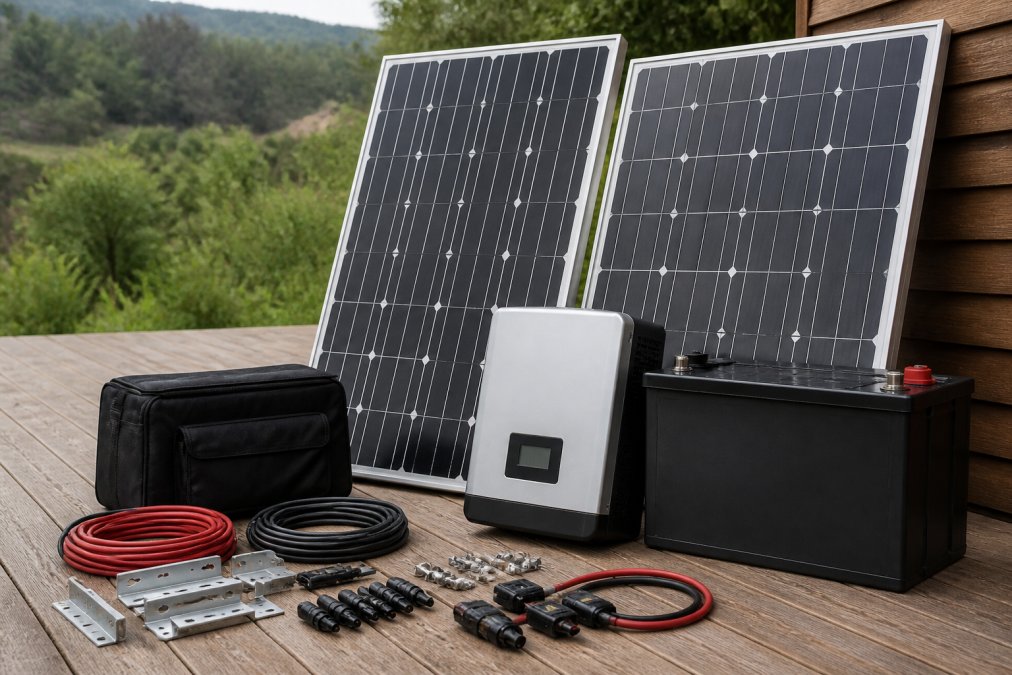
An off-grid solar kit is a complete power system designed to generate, store, and distribute electricity independently from the mains grid. It combines photovoltaic panels, battery storage, an inverter-charger, and a charge controller into one integrated solution. These kits enable homes, farms, caravans, and remote properties to achieve energy independence without relying on grid connection.
Off-grid systems must balance generation with consumption, making sizing critical. Get it wrong and you’re either without power or throwing away money on oversized components. They’re particularly valuable in areas where grid connection is unreliable, expensive, or unavailable. The core difference from grid-tied systems lies in battery storage and charge control, off-grid systems must be entirely self-sufficient.
Quick Comparison: Top Off-Grid Solar Kits
| Kit Name | Battery Capacity | Inverter Size | Starting Price | Best For |
|---|---|---|---|---|
| LiFePO4 OZ Off Grid System | 5.12-16.07 kWh | 5-16.07 kW | AUD $7,106 | Tiny homes, small farms, DIY installers |
| Aus Solar Kits Deye 5kW Kit | 10 kWh | 5 kW | AUD $6,351 | Small homes, cabins, essential loads only |
| RedEarth BlackMax Kit | Scalable (multiple options) | Varies | AUD $11,060 | Customisable systems, farms, remote locations |
| Self Sufficient Australia Victron Kit | 10 kWh | 5 kVA | AUD $13,640 | High-quality components, easy installation |
| Solar Battery Warehouse Steca Kit | 5.12 kWh | 5 kW | Contact for pricing | Remote properties, pre-wired simplicity |
Essential Components of an Off-Grid Solar Kit
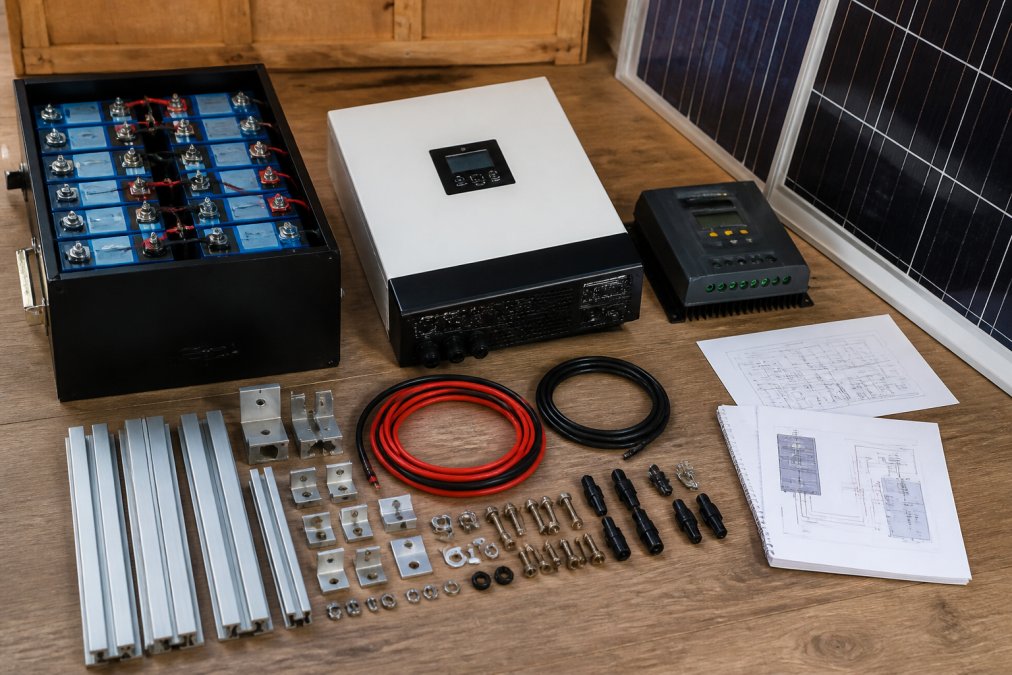
A functioning off-grid solar kit contains five critical components working together. Skip or undersize any one, and the entire system underperforms.
Photovoltaic Panels and Solar Arrays
Photovoltaic panels convert sunlight directly into electricity. Modern off-grid kits typically use monocrystalline panels rated between 400-550 watts each. A small system might include 4-6 panels (1.6-3.3 kW total), while larger installations could have 12-20 panels (5-10 kW).
Peak sun hours matter more than raw panel count. A location receiving 4 peak sun hours daily generates significantly more power than one with 3 hours, even with identical panels. Properties on the Sunshine Coast benefit from higher average peak sun hours than southern Melbourne locations.
Panel mounting hardware must withstand Australian wind and weather conditions. Ground-mounted arrays offer easier maintenance and better cooling, but require more space.
Partial shading from trees or structures can reduce panel output by 25-40%. If your site has shading concerns, discuss microinverters or power optimisers with your installer, they allow individual panels to operate independently rather than reducing the entire array’s output.
Inverter-Charger and Charge Controllers
The inverter-charger is the brain of your off-grid system. It converts DC power from batteries into AC power for household appliances, regulates charging from the solar array, and manages the relationship between generation and consumption. Off-grid inverters differ fundamentally from grid-tied models because they must maintain voltage and frequency stability without a grid reference point.
The charge controller sits between the solar array and batteries, regulating current flow to prevent overcharging and protect battery lifespan. Modern systems use MPPT (maximum power point tracking) controllers, which continuously adjust voltage to extract maximum power from panels under varying light conditions. MPPT controllers recover 15-30% more energy than older PWM designs.
Matching inverter size to your loads is essential. A 5 kW inverter can run most household appliances simultaneously, but a 3 kW unit will struggle if you try to run an electric kettle, oven, and air-conditioning at once.
Battery Management Systems
Lithium-ion batteries (specifically LiFePO4 chemistry) have become the standard for modern off-grid systems. They’re lighter, more efficient, and longer-lasting than lead-acid alternatives, lasting 10-15 years with proper management.
Battery management systems (BMS) monitor individual cells within the battery pack, preventing overcharging, over-discharging, and temperature extremes. Battery capacity is measured in kilowatt-hours (kWh). The depth of discharge (DoD) determines usable capacity, most lithium systems allow 80-90% DoD, meaning a 10 kWh battery with 90% DoD gives you 9 kWh of usable storage.
If your household uses 20 kWh per day and you have a 10 kWh battery, you’re relying entirely on solar generation during daylight hours. Cloudy days or winter months become problematic. Oversizing battery capacity is expensive but necessary for reliable off-grid living in variable climates.
Off-Grid Solar Battery Storage Capacity: Sizing for Your Needs
Battery size is the most critical decision in off-grid system design. The right size depends on daily energy consumption, days of autonomy, and your location’s seasonal variation.
Days of autonomy is how many consecutive days your batteries can power your home without solar generation. Most off-grid systems aim for 3-5 days of autonomy, accounting for cloudy weather or equipment maintenance. A household consuming 20 kWh daily with a target of 4 days autonomy needs 80 kWh of usable storage. With 90% DoD, that’s roughly 90 kWh of installed battery capacity.
Seasonal variation is where many off-grid designs fail. Winter generation can be 50-70% lower than summer in southern regions. If you size your system for average annual consumption, you’ll have power shortages every winter. The solution is either oversizing the battery or adding a backup generator.
Discharging lithium batteries below 20% depth of discharge repeatedly damages them and shortens lifespan significantly. Never design a system where daily consumption regularly exceeds 80% of your battery capacity.
Energy Load Calculation: Finding Your System Size
Before purchasing any kit, you must understand your actual energy consumption through calculation, not guesswork.
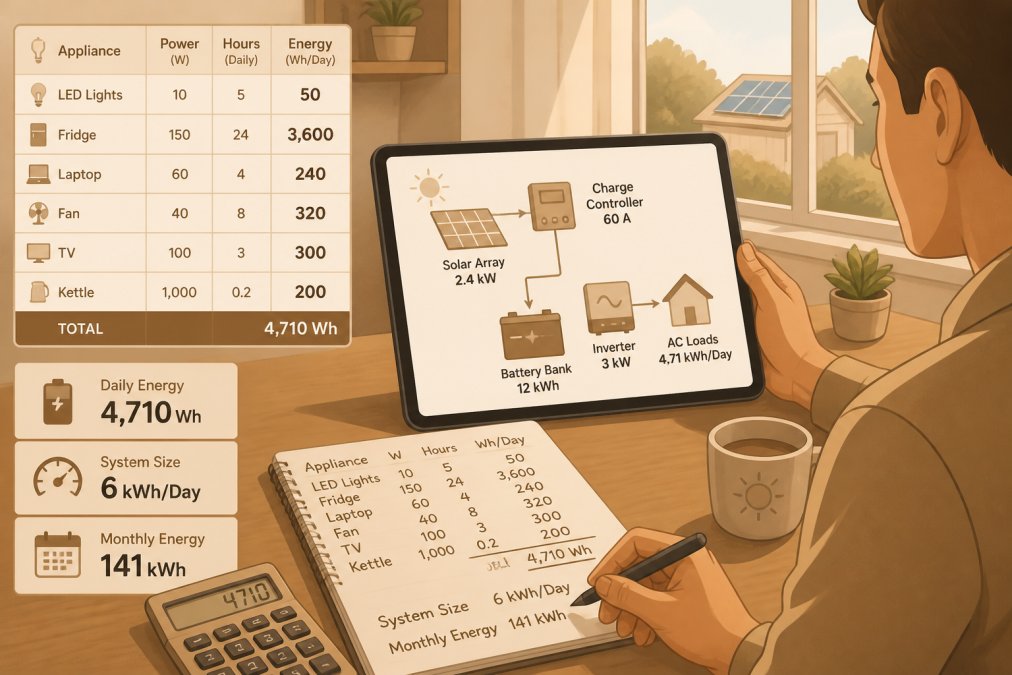
Start by listing every appliance you’ll use with its power rating in watts and estimated daily usage hours. A refrigerator rated 150W running 24 hours daily = 3.6 kWh. A kettle rated 3,000W running 1 hour daily = 3 kWh. An air-conditioning unit rated 2,500W running 6 hours daily = 15 kWh. Add these together to get total daily consumption.
Many people underestimate consumption initially. A household that thinks it uses 15 kWh daily often discovers it’s actually 25 kWh once all devices are accounted for.
Peak load is the total wattage of all appliances running simultaneously at maximum capacity. If your peak load is 8 kW, your inverter must be rated at least 8 kW. Most households don’t run everything simultaneously, so actual peak load is typically 60-70% of theoretical maximum. Calculate it by adding your highest-demand appliances: kettle (3 kW) + oven (3 kW) + air-conditioning (2.5 kW) = 8.5 kW peak load.
Once you have daily consumption and peak load, you can right-size your inverter and battery. A system with 25 kWh daily consumption and 8.5 kW peak load needs at least an 8.5 kW inverter and probably 50-75 kWh of battery capacity.
CEC Accredited Solar Installer vs. DIY Installation
A CEC accredited solar installer holds certification from the Clean Energy Council, Australia’s peak body for renewable energy professionals. They’ve completed formal training, passed competency assessments, and maintain ongoing professional standards. Using an accredited installer ensures your system meets electrical standards, building codes, and warranty requirements.
Professional installation costs more upfront but provides liability insurance, workmanship guarantees, and regulatory compliance. If something fails within the warranty period, you have recourse.
DIY installation appeals to technically skilled owners and those in remote areas where professional services are limited or expensive. It’s possible but carries real risks. Improper installation can damage equipment, create fire hazards, or void warranties.
The decision between professional and DIY installation often comes down to complexity and risk tolerance. A small 5 kWh system with straightforward roof mounting is more manageable for DIY. A 20 kWh system with complex roof layout, generator backup, and grid-tie capability is better left to professionals.
DIY Solar Power System Requirements and Compliance
If you’re installing off-grid solar yourself, compliance with Australian Standards is non-negotiable. The relevant standards are AS/NZS 3000 (electrical installation) and AS/NZS 4777 (grid connection, if applicable).
Key compliance requirements include proper earthing and bonding of all metal components, correctly sized circuit breakers and surge protection, and proper cable sizing to prevent voltage drop and fire risk. Battery systems require proper ventilation if using older lead-acid chemistry (though lithium systems don’t produce hydrogen gas). Lithium systems still need temperature monitoring, performing best between 0°C and 40°C.
Labelling and documentation are critical. Every circuit should be clearly labelled. Maintain a system diagram showing all connections, component specifications, and maintenance records. Check with your insurer before installation, many standard home insurance policies exclude off-grid systems or require additional coverage.
Generator backup, if included, must integrate safely with your inverter-charger. Improper integration can damage equipment. This is an area where professional guidance is valuable, even if you’re handling other aspects yourself.
Which Off-Grid Solar Kit Should You Choose?
Selecting the right kit depends on your location, daily energy consumption, budget, and whether you want DIY installation or professional setup.
For small homes, tiny houses, and granny flats: The LiFePO4 OZ Off Grid System or Aus Solar Kits Deye 5kW Kit offer excellent value. Both include everything needed for basic off-grid living and are appropriate for DIY installers with some electrical knowledge.
For farms and larger properties: The RedEarth BlackMax Kit provides customisable battery storage and is designed specifically for Australian conditions. It’s ideal if your energy requirements might grow or if you need specific battery chemistry.
For professional installation with premium components: The Self Sufficient Australia Victron Kit uses industry-leading components. The pre-wired sub-board reduces installation complexity. This is the choice if you want maximum reliability.
For remote locations requiring complete simplicity: The Solar Battery Warehouse Steca Kit comes fully tested and pre-assembled. It’s the most plug-and-play option, minimising installation risk.
The common thread across all quality kits is LiFePO4 battery chemistry, MPPT charge controllers, and modern inverter-chargers. Avoid any kit using older lead-acid batteries or PWM charge controllers.
Solazone Australia can help you evaluate which kit suits your specific property and energy needs. With over 40 years of technical expertise and a commitment to Australian-made systems, they provide personalised guidance for both professional installation and DIY approaches. Their experience across Melbourne and the Sunshine Coast means they understand regional climate variation and can recommend systems that perform reliably in your location.
Choosing an off-grid solar kit is a significant investment in energy independence. The right system delivers decades of reliable power; the wrong one creates frustration and expense. Work through your energy load calculation carefully, understand your location’s seasonal variation, and don’t compromise on battery quality or inverter sizing. Contact Solazone Australia for a personalised assessment of your property, their team can walk you through sizing, component selection, and installation options tailored to your specific needs and budget.
Frequently Asked Questions
Do I need a CEC-accredited installer for off-grid solar in Australia?
CEC accreditation is not legally mandatory for off-grid systems, but hiring a CEC accredited solar installer offers significant advantages. They understand Australian Standards, ensure electrical safety compliance, and can guide you through any local council requirements. If your system connects to the grid or requires council approval, accreditation becomes essential. For pure off-grid installations on remote properties, accreditation is optional but highly recommended for warranty protection and system reliability.
What size off-grid solar battery storage capacity do I need?
Battery storage capacity depends on your daily energy consumption and days of autonomy (how many days the system must run without solar input). Calculate your daily kilowatt-hour usage, then multiply by the number of autonomous days you want. For example, if you use 10 kWh daily and want 3 days of backup, you need 30 kWh of storage. Most off-grid kits range from 5 kWh to 16 kWh. Factor in depth of discharge limits (typically 80% for lithium batteries) when sizing.
Can I install my own off-grid solar system in Australia?
DIY installation is possible for off-grid systems, especially on remote properties without grid connection requirements. However, you must comply with Australian Standards (AS/NZS 4777.2 for off-grid systems), ensure proper electrical safety, and meet any local council building codes. Pre-wired kits simplify the process, but you need basic electrical knowledge and understanding of system configuration. For complex installations or properties requiring council approval, professional installation is safer and ensures warranty validity.
What are the main benefits of an off-grid solar kit?
Off-grid solar kits provide energy independence, eliminate grid electricity bills, and offer reliable power in remote locations. They support renewable energy goals and reduce your carbon footprint. Unlike grid-tied systems, off-grid kits include battery storage for 24/7 power availability, making them ideal for properties without grid access, backup power during outages, or complete energy autonomy. System scalability means you can expand capacity as energy needs grow.
What's the difference between lithium-ion and lead-acid batteries for off-grid systems?
Lithium-ion batteries (LiFePO4) offer longer lifespan (10-15 years), higher depth of discharge (typically 80-100%), faster charging, and require minimal maintenance. Lead-acid batteries cost less upfront but last 3-7 years, require regular maintenance, and typically allow only 50% depth of discharge, reducing usable capacity. For off-grid systems requiring reliability and minimal maintenance, lithium-ion is the modern standard, though it carries higher initial cost. Most new off-grid kits now use lithium technology.
This article was written using GrandRanker