
Table of Contents
- Why Older Tile Roofs Suit Solar Panels
- The Roof Inspection Before Solar Installation: A Step-by-Step Checklist
- Replacing Roof Tiles Before Solar Panels: Repair or Replace?
- Mounting Hardware, Flashing and Waterproofing on Tile Roofs
- Solar Panel Removal and Reinstallation for Roof Repairs
- Lifecycle Costs: Keeping, Repairing or Replacing an Older Tile Roof
- Warranty, Insurance and Responsibility for Tile Damage
- Conclusion: Making the Call on Your Older Tile Roof
- Frequently Asked Questions
Last Updated: October 11, 2026
Why Older Tile Roofs Suit Solar Panels
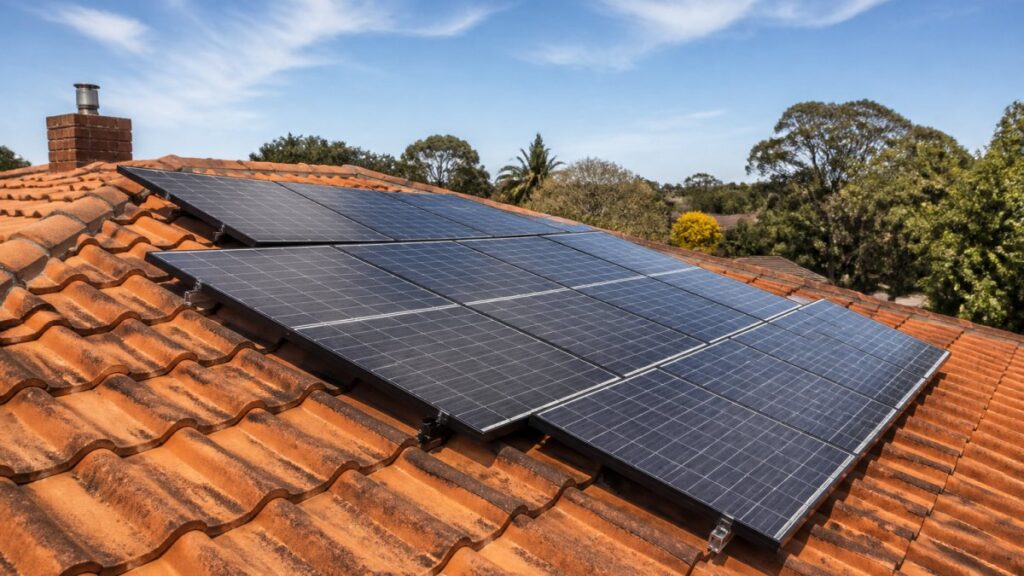
Older solar tile roofs are often better suited to solar than homeowners expect: tiles handle heat well, and the framing underneath is usually stronger than modern lightweight roofing. We have worked on tile roofs for more than 40 years, and the pattern is consistent.
Terracotta and concrete tiles have been the default roof across much of the country for a century. That history matters when you bolt a solar array onto one.
Thermal Mass and Heat Resistance
Tile is a poor conductor of heat compared with metal sheeting. It absorbs warmth slowly and releases it slowly, keeping the roof cavity cooler during summer.
That thermal mass does two useful things for a solar system:
- It reduces heat stress on the panels from below
- It smooths out temperature swings across the day
- It keeps the roof space cooler, which helps any inverter mounted there
Metal roofs radiate heat straight into the cavity. Tile holds it back. For an older home without ceiling insulation, that difference shows up in comfort.
Structural Strength of Tile Roof Framing
Tile is heavy. A tiled roof carries far more dead load than corrugated steel, so the framing beneath was built to take weight.
That is good news for solar. Panels and mounting rails add a modest load by comparison.
The catch is condition, not capacity. Old timber battens and fixings can weaken. That is why an inspection comes before any quote is finalised.
The Roof Inspection Before Solar Installation: A Step-by-Step Checklist
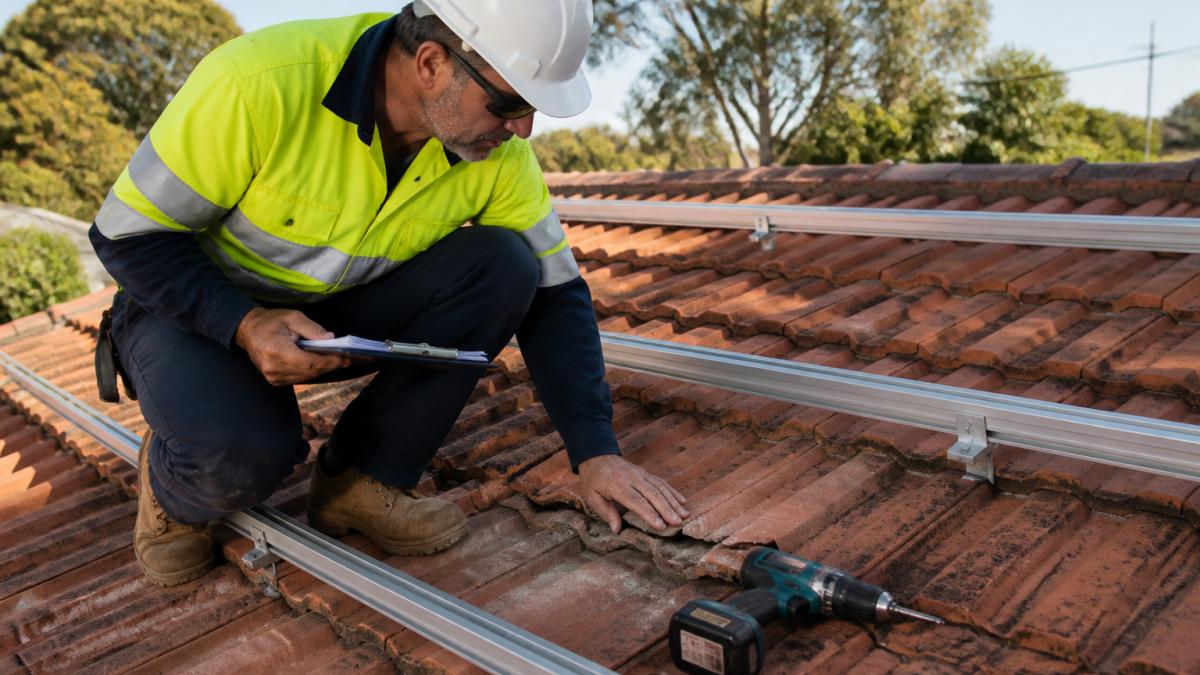
A roof inspection before solar installation is not optional on a tiled roof. It decides whether the job goes ahead, gets repaired first, or gets quoted differently. Most installers do a free visual check; a proper assessment including the roof space is worth considering on a roof older than about 20 years.
Here is the checklist we work through, and how to read the results.
What Inspectors Look For
From the roof surface:
- Cracked, chipped or drummy tiles across the whole array zone
- Slipped or missing tiles, especially near ridges and hips
- Sagging roof lines that suggest failed battens
From inside the roof space (the step most quotes skip):
- Timber battens for softness, splitting or evidence of previous water staining
- Rafters and trusses for sag, insect damage or previous cutting
- Sarking for tears, sagging or disintegration, sarking that has perished offers no secondary barrier
How to Read the Results: A Decision Framework
An inspection is only useful if it produces a decision. Sort findings into three buckets.
Proceed as planned, the roof is structurally sound, tiles are intact or have only isolated damage, sarking is intact, and at least 15 years of life remain.
Repair first, then install, isolated cracked or drummy tiles, loose ridge caps, or a few failed flashings.
Replace the roof first, brittle tiles that shatter under light foot traffic, failed or soft battens, perished sarking, multiple active leaks, or a roof past its service life.
Red Flags That Delay Installation
- Multiple cracked tiles in the array zone. These need replacing before rails go down.
- Soft or springy roof framing. This needs a builder or engineer, not a solar installer.
- Active leaks. Fix the leak first, panels over a wet roof hide the problem.
Never let an installer skip the inspection to “save time”. If tiles crack after the array is up, panel removal and reinstallation for roof repairs becomes far more expensive than fixing the roof first.
Replacing Roof Tiles Before Solar Panels: Repair or Replace?
Replacing roof tiles before solar panels go on is usually the smarter call: once the array is mounted, every tile underneath becomes hard to reach.
Repair makes sense when the roof is otherwise sound: replace damaged tiles, re-bed loose ridge caps, reseal, then install.
Full roof replacement makes sense when:
- Tiles are brittle and breaking under light foot traffic
- Battens or sarking have failed
- The roof is already leaking in several places
Doing both jobs at once usually costs less than doing them separately, because scaffolding and labour are shared.
Mounting Hardware, Flashing and Waterproofing on Tile Roofs
Mounting a solar system on solar tile roofs is a different job to mounting on metal.
The standard approach uses roof hooks. A tile is lifted, the hook is fixed to the rafter, and the tile is set back down over a flashed bracket.
Waterproofing is where cheap jobs fail. Every penetration needs proper flashing, not silicone. Silicone dries, cracks and lets water in within a few seasons.
What to check on any tile roof install:
- Roof hooks fixed to structural timber, not just battens
- Flashing dressed correctly around each penetration
- Tiles re-seated flat, with no gaps or lifted edges
Ask your installer how many spare tiles they will leave behind. On an older roof, matching tiles can be hard to source later. A small stack in the garage saves a lot of grief.
Solar Panel Removal and Reinstallation for Roof Repairs
Solar panel removal and reinstallation for roof repairs is a real cost most homeowners never plan for.
The process is straightforward but labour-heavy:
- Isolate and shut down the system
- Disconnect and label the wiring
- Remove panels and store them safely
- Complete the roof repair
- Reinstall panels and reconnect
- Test and recommission the system
This is why roof condition matters so much before installation. A roof with years of life left rarely needs the array touched.
On an older tile roof, the smart play is to fix everything you can before the panels go on, the cheapest insurance you will ever buy.
Lifecycle Costs: Keeping, Repairing or Replacing an Older Tile Roof
Lifecycle cost is the number that actually matters. Not the upfront price of the solar system, but the total spend over the next 20 to 25 years, including the cost of getting the roof wrong.
The three options are not just different prices; they carry different risks, and the risk usually decides the outcome.
The Cost You Are Trying to Avoid
When a roof fails under a solar array, the panels have to come off before anyone can fix it: isolate and shut down the system, disconnect, label and store the panels, complete the roof repair, then reinstall, reconnect, test and recommission.
Most practitioners find this removal-and-reinstall work costs a meaningful fraction of the original installation once labour, scaffolding and electrical work are included. It is not covered by panel warranties, and rarely by home insurance if the cause is wear and tear.
That single risk is what makes the upfront decision so important.
Comparing the Three Options
| Option | Upfront Cost | Risk Over 20 Years | Best For |
|---|---|---|---|
| Keep roof as is | Lowest | High if tiles are brittle or sarking is perished | Sound roofs with 15+ years of expected life |
| Repair damaged tiles | Moderate | Medium, isolated damage only | Roofs with localised damage and sound structure |
| Full roof replacement | Highest | Lowest | Roofs near end of life or with structural issues |
The Mechanism Behind the Numbers
The trap is choosing the cheapest option now and paying for panel removal later. Consider two paths on a roof with eight years of life left:
Path A, install now, repair later. You save the cost of a new roof today. In eight years the roof fails, and you pay for removal and reinstall, the roof replacement, and a second round of scaffolding and trades, while the solar system is eight years closer to the end of its own life.
Path B, replace the roof first, then install. You pay more upfront, but scaffolding, labour and site setup are shared between the two jobs, and the array is installed once, on a roof that will outlast it.
In most cases, Path B ends up cheaper over the full period and removes the risk of an unplanned mid-life removal entirely.
Matching Roof Life to System Life
Solar panels typically carry a 25-year performance warranty. The roof underneath needs to last at least as long, or the economics change.
A simple rule of thumb:
- Roof life remaining > 20 years, install now, no hesitation.
- Roof life remaining 10-20 years, install now, but budget for a roof replacement before the system reaches end of life, and plan for the removal cost.
- Roof life remaining < 10 years, replace the roof first. The maths almost never favours installing on a roof that will fail mid-life.
Before signing anything, ask your installer to state in writing the expected remaining life of your roof and what they would do if it were their own home. If the answer is vague, get a second opinion from a roofing specialist before committing to the solar quote.
What This Means for Your Quote
A good solar quote on an older tile roof should include, in writing: the inspection findings; a clear statement of roof condition and remaining life; whether repair or replacement is recommended before installation; the cost of removal and reinstall if a future roof repair is needed; and who pays for broken tiles during installation. If the quote does not address these, the cheapest number on the page is not the real cost.
Warranty, Insurance and Responsibility for Tile Damage
Tile breakage during installation is the most common dispute on older roofs. Tiles are brittle, and even careful installers crack some.
The key is what your contract says before work starts. A good installer will:
- Note existing cracked tiles during the inspection
- Explain that some breakage is likely on brittle roofs
- State clearly who pays for replacement tiles
Home insurance usually covers storm and impact damage, not wear and tear. If tiles crack because they were already fragile, that is often not a claim.
Panel warranties cover the panels, not the roof. Roof damage from installation is a workmanship issue, and it sits with the installer.
Before signing anything, confirm three things in writing: who pays for broken tiles, how many spares are supplied, and what happens if a leak appears under the array within the warranty period.
Conclusion: Making the Call on Your Older Tile Roof
An older tile roof is often an asset for solar, not a problem: the tiles handle heat, the framing carries weight, and the roof has proven itself over decades.
If your roof is sound, install now; if it is near the end of its life, fix it first.
We bring more than 40 years of technical experience to every job, from inspection through to installation and after-sales support.
Frequently Asked Questions
Can you install solar panels on an older tiled roof?
Yes, provided a qualified installer confirms the tiles and roof framing are structurally sound. Older tile roofs often have strong framing and thermal mass that suit solar installation. The deciding factors are tile condition, remaining roof life and whether the mounting system can be fixed without cracking tiles. A pre-installation inspection identifies any cracked tiles, deteriorated flashing or sagging battens that need attention before panels go on. If the roof needs replacing within a few years, it usually makes sense to re-roof first and install solar once, avoiding the cost of removing and reinstalling panels later.
Do solar installers need to lift or cut tiles when fitting solar panels?
On tiled roofs, installers typically lift tiles to position roof hooks and mounting rails, then replace them around the brackets. Tile replacement rather than cutting is the preferred approach because it preserves the roof’s waterproofing and allows tiles to be reinstalled if repairs are needed. Some systems use tile replacement flashing, which substitutes a purpose-made flashing piece for the tile under each bracket. A careful installer avoids walking directly on brittle tiles, uses crawl boards and replaces any tile that cracks during the work.
Should you replace or repair roof tiles before installing solar panels?
Repair isolated cracked or broken tiles before installation, and replace the whole roof only if the inspection shows widespread deterioration or the roof is near the end of its service life. Replacing tiles under an existing solar array later means paying for solar panel removal and reinstallation on top of the roofing work. If more than a small percentage of tiles are cracked, or if the roof is 25 years or older, a full re-roof before solar is often the cheaper path over the long term. Get a written roof condition report before deciding.
Can solar panels be removed and reinstalled if an older roof needs repairs?
Yes. Solar panels can be removed and reinstalled for roof repairs, but it adds cost and time. The process involves isolating the system, disconnecting and labelling wiring, removing panels and mounting rails, completing the roof work, then reinstalling and recommissioning the array. Because the panels and rails are reused, the main costs are labour, safe disconnection and any replacement flashing or tiles. If your roof is likely to need major repairs within five to ten years, factor this removal and reinstallation cost into your decision before installing solar.