
Table of Contents
- How Roof Type Impacts Solar Installation: A Comparison
- Solar Panel Roof Mounting Systems for Different Roof Types
- Roof Structural Integrity for Solar: What You Need to Know
- Roof Pitch, Orientation, and Shading: Optimising Solar Yield
- Solar Panel Installation Cost by Roof Type
- Hidden Risks: Warranties, Insurance, and Older Roofs
- Conclusion: Choosing the Right Roof for Solar
- Frequently Asked Questions
Last Updated: September 24, 2026
How Roof Type Impacts Solar Installation: A Comparison
The impact of roof type on solar installation is the single most overlooked factor in most quotes homeowners receive. At Solazone Australia, we’ve spent more than 40 years installing photovoltaic systems across wildly different roof constructions, and the pattern is consistent: the roof decides the mounting method, the labour hours, and how well the array performs over decades.
| Roof Type | Mounting Method | Relative Install Complexity | Key Risk |
|---|---|---|---|
| Standing seam metal | Clamp-on, no penetration | Low | Clamp compatibility |
| Corrugated steel | Brackets fixed to crests | Low-medium | Seal degradation over time |
| Terracotta tile | Tile hooks, tiles cut or lifted | High | Cracked tiles, broken seals |
| Concrete tile | Tile hooks or replacement tiles | Medium-high | Weight load per square metre |
| Asphalt shingle | Flashed penetrations | Medium | Shingle degradation at fixings |
| Composite shingle | Flashed penetrations | Medium | Manufacturer warranty conditions |
Metal Roofs: Standing Seam and Corrugated Steel
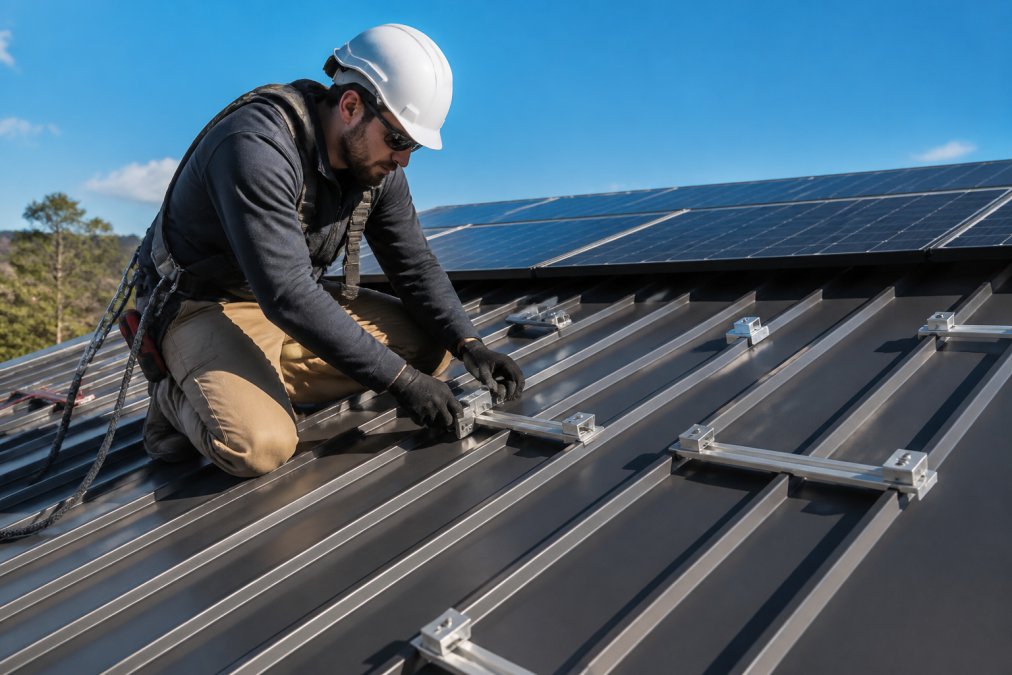
Standing seam metal is the easiest roof to solar-install, full stop. Non-penetrating clamps grip the seam ribs, so the roof membrane stays intact and waterproofing isn’t compromised. Corrugated steel needs brackets fixed to the crests, which means sealed penetrations and a maintenance item.
Tile Roofs: Terracotta and Concrete
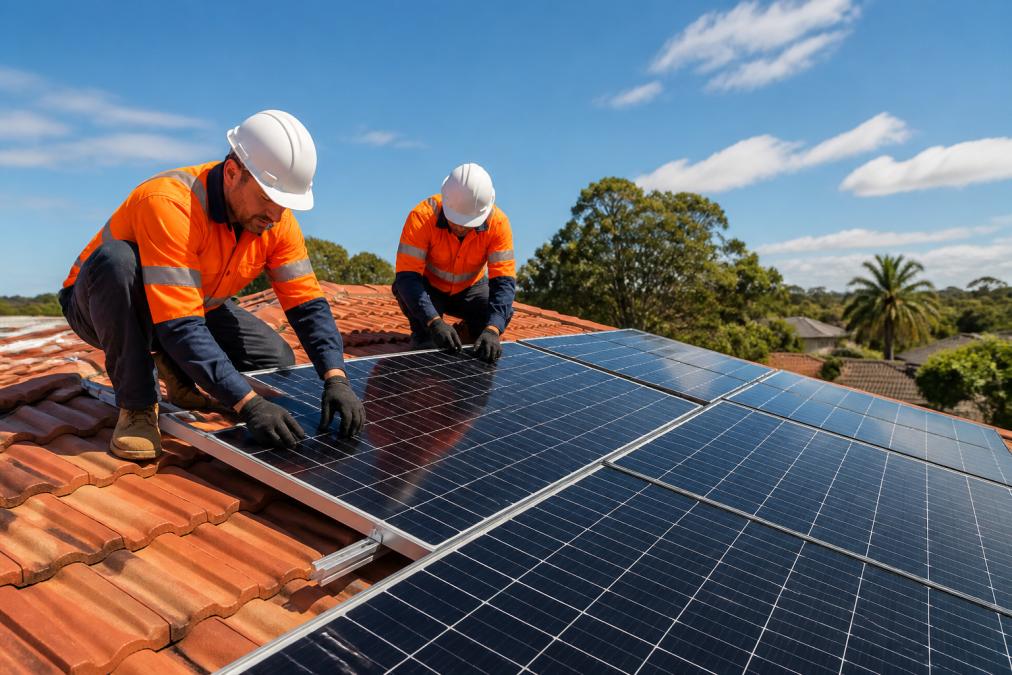
Tile roofs demand the most skill. Installers lift or cut tiles to fit mounting brackets, then flash and reseal around each fixing. Terracotta is brittle and cracks easily under foot traffic; concrete tile is heavier and more forgiving but adds load.
Shingle Roofs: Asphalt and Composite
Shingle roofs use flashed penetrations, and the quality of that flashing decides whether you stay dry. Asphalt and composite shingles also age faster than metal, which matters because your solar array will likely outlast the roof beneath it.
Solar Panel Roof Mounting Systems for Different Roof Types
Solar panel roof mounting systems fall into two families: penetration-free (clamps on standing seam) and penetration-based (brackets, hooks and flashed fixings). The right choice is dictated entirely by your roof material, not by installer preference.
On corrugated steel, specify brackets with EPDM sealing washers and check them at every service. The washer, not the screw, is what keeps water out over 20 years.
Roof Structural Integrity for Solar: What You Need to Know
Roof structural integrity for solar comes down to load capacity: panels, racking and ballast add weight that your roof must carry for decades, plus wind uplift and, in some regions, hail or snow loading. A structural assessment before installation is not optional, it is the difference between a 25-year array and a sagging roof.
The loads you are actually adding
A typical residential array adds roughly 10-15 kg per square metre of dead load once panels, rails and brackets are counted. That sounds modest, but it is permanent, and it sits on the same rafters that already carry your roof covering, ceiling lining and any insulation. The number that matters is not the total weight but the point load at each fixing: a tile hook or bracket concentrates force on a single rafter or batten, and that is where failures start.
What a proper assessment checks
- Rafter spacing and span, common timber framing runs at 450 mm or 600 mm centres, and wider spans need closer attention
- Rafter condition, moisture damage, borer activity or historic termite treatment can quietly reduce capacity
- Batten condition on tile roofs, since hooks often bear on battens rather than rafters
- Roof load capacity against the relevant building regulations and the manufacturer’s span tables
- Wind classification for the site, which drives fixing spacing and anchor specification
- Whether reinforcement, additional rafters, blocking or a purlin upgrade, is needed before any hardware goes on
Older homes are the real test. Timber framing that has been quietly degrading for 50 years will not necessarily take an array without reinforcement, and no reputable installer should quote sight-unseen. If a quote arrives without a roof inspection or a structural note, treat it as a starting point, not a final number.
Reinforcement is not a rare edge case. On older tile and shingle roofs, adding rafters or blocking before installation is a common requirement, and budgeting for it upfront is far cheaper than discovering it after the panels are on.
Why this matters beyond safety
A roof that flexes under load will move the mounting hardware, and moving hardware loosens seals and clamps. That is how a watertight installation becomes a leak two winters later. Structural soundness and waterproofing are the same conversation, not two separate ones. Adhering to rigorous roofing installation standards ensures that these structural integrity requirements are met before any panels are secured.
Roof Pitch, Orientation, and Shading: Optimising Solar Yield
Roof pitch and orientation determine solar yield more than panel brand ever will. In the southern hemisphere, a north-facing roof at a moderate tilt angle captures the most solar irradiance across the year, while east and west orientations trade peak output for a flatter daily curve.
Never accept a quote without a shading analysis. Partial shading on a string system can cut output far more than the shaded area suggests, and retrofitting optimisers later costs more than specifying them upfront.
Solar Panel Installation Cost by Roof Type
Solar panel installation cost by roof type varies mainly through labour and mounting hardware, not the panels themselves. Tile roofs take longer because of tile handling and resealing; metal roofs are quicker because clamps replace penetrations; shingle roofs sit in the middle.
| Cost Driver | Metal | Tile | Shingle |
|---|---|---|---|
| Labour hours | Lowest | Highest | Medium |
| Mounting hardware | Clamps | Hooks and flashing | Brackets and flashing |
| Roof preparation | Minimal | Tile lifting | Flashing checks |
| Reinforcement risk | Low | Medium | Medium |
Hidden Risks: Warranties, Insurance, and Older Roofs
Most guides stop at compatibility and cost. The risks that actually cost homeowners money surface years later, and they are almost never discussed at the sales stage. This section covers the three that matter most: roof warranty voiding, insurance implications, and the retrofit decision on an ageing roof.
Roof warranty voiding: the clause nobody reads
Roofing manufacturers specify how and where their product may be penetrated, and non-compliant fixings can void the roof warranty even when the solar work itself is sound. The mechanism is simple: a warranty is a contract, and drilling outside the permitted zones or using unapproved sealants is a breach, regardless of whether the installation was done well.
What to check before approving any mounting plan:
- Whether your roof material’s warranty permits penetrations at all, and if so, where
- Whether the warranty requires an approved installer or a specific flashing detail
- Whether the warranty is pro-rated, so a void at year 12 costs less than a void at year 2
- Whether the solar installer offers a workmanship warranty that covers the penetration independently of the roof warranty
Ask for the roof warranty document, not a summary, and ask the installer to confirm in writing that the proposed mounting method complies with it. If they cannot, get a second opinion.
Insurance: notify, then verify
Insurance is the second blind spot. Many policies require notification of a solar installation, and coverage terms can shift depending on how the array is fixed and the age of the roof beneath it. An unreported installation can become a disputed claim after a storm, which is the worst time to discover a coverage gap.
Retrofitting an older roof: replace first or install now?
The retrofit decision is a simple calculation with an uncomfortable answer. If the roof has under five years of serviceable life left, replacing it before installing solar usually costs less than removing and reinstalling the array later. Removal and reinstallation means disconnecting the system, storing panels, re-roofing, then remounting and recommissioning, a job that can approach the original installation cost.
Climate-specific performance
Coastal salt exposure corrodes cheap mounting hardware, so specify marine-grade or appropriately coated fixings on properties near the coast. Hail-prone regions demand rated panels and racking, and the mounting system, not just the panel, needs to meet the impact rating. High-wind zones drive fixing spacing and anchor specification, which loops back to the structural assessment above.
The cheapest quote often ignores the two costs that matter most: making the roof solar-ready, and keeping the roof warranty valid. Ask about both in writing before you sign.
Conclusion: Choosing the Right Roof for Solar
The roof you have shapes what solar can do for you, and the honest answer is that some roofs need work before panels go on. Solazone Australia has handled these variables for over 40 years, with experienced installation teams and a focus on Australian-made systems built for local conditions. We offer solar power systems, battery back-up, and solar ventilators tailored to your roof and your energy goals.
Frequently Asked Questions
What is the 20% rule for solar panels?
The 20% rule is a common guideline suggesting that solar panels should not cover more than 20% of your roof’s total surface area. This is not a formal regulation but a rule of thumb some installers use to ensure adequate roof access for maintenance and to reduce the risk of excessive load on older structures. For most modern roofs with proper structural assessment, this limit is conservative. The actual constraint depends on your roof’s load capacity, local building regulations, and the specific mounting system used.
What type of roof is best for installing solar panels?
Standing seam metal roofs are generally considered ideal because they allow penetration-free mounting with clamp-on brackets, reducing leak risk and preserving the roof’s waterproofing. Concrete or terracotta tiles also work well but require specialised mounting hardware and careful handling to avoid breakage. Asphalt shingles are compatible but may need flashing to prevent water ingress. The best roof type for your solar installation depends on age, condition, pitch, and orientation, not just material.
How does roof pitch affect solar panel performance?
Roof pitch determines the tilt angle of your solar array, which affects how much solar irradiance the panels capture. In Australia, an ideal tilt angle is roughly equal to your latitude, though most roofs fall between 15 and 35 degrees. Shallow pitches may require tilt frames to improve solar yield, while steep pitches can make installation more difficult and increase wind loading. A shading analysis and azimuth check should accompany any pitch assessment.
Do I need a roof inspection before installing solar panels?
Yes. A structural assessment is essential before any solar installation. An inspector checks roof load capacity, the condition of the roof surface, and whether existing waterproofing or flashing is intact. For older roofs, the inspection may reveal that retrofitting is needed before mounting hardware can be installed. Building regulations and compliance standards in your area may also require documented evidence of structural integrity for solar.