
Last Updated: October 31, 2026
Quick Summary
If your solar installer goes out of business, first confirm what has happened through official channels, then check that your system is still safe and generating. Next, identify which warranties still apply, since manufacturer warranties usually continue while workmanship cover can be harder to enforce. Keep all your documents and contact a licensed technician to take over the system.
- Verify the closure through the company’s own announcement or an administrator’s published details, not rumours.
- Manufacturer warranties on panels, inverters and batteries usually continue after the installer closes.
- Workmanship warranties are harder to enforce, so check your contract and any insurance backing.
- Check for a manufacturer-backed installation guarantee, and register as a creditor if the business is in administration or liquidation.
- Confirm a new technician holds a valid electrical licence and public liability insurance before paying anyone.
Table of Contents
- Confirm What Has Happened to Your Solar Installer
- Check Whether Your Solar System Is Still Operating
- Find Out Whether Your Solar System Warranty Still Applies
- Gather Your Solar System Documentation Checklist
- Troubleshoot Solar Inverter Faults and Decide Urgency
- Finding a Qualified Solar Technician to Take Over Your System
- Your Next Step: Getting Your System Serviced and Protected
- Frequently Asked Questions
Confirm What Has Happened to Your Solar Installer
If your solar installer goes out of business, first find out exactly what has happened. Many homeowners hear rumours before anything official, so verify before you act by checking the company’s website, social media, and phone line for an announcement from the business itself, since a solar installer goes out of business in many different ways.
What happens when a solar installer or retailer closes
A solar installer or retailer can close in a few ways, and each affects your rights and options differently.
- Ceased trading: The company stops operating, often with little warning.
- Voluntary administration: An external administrator takes control to assess whether the business can continue.
- Liquidation: The company is wound up and its assets are sold to repay creditors.
Ask for written confirmation of the status where you can; a liquidator or administrator will usually publish contact details. Keep every email and letter, because these records matter later for warranty and claims.
Check Whether Your Solar System Is Still Operating
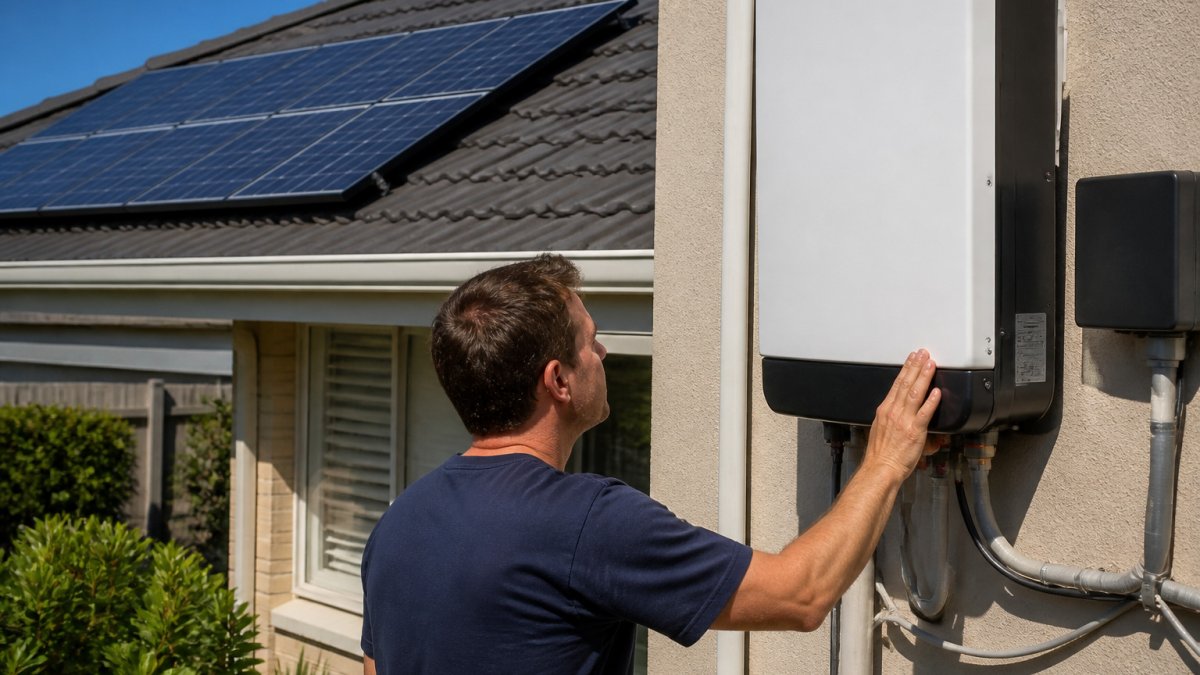
Before you worry about paperwork, make sure your system is safe and working. Look at the inverter display and your monitoring app, if you have one. Note any fault codes, warning lights, or drops in generation compared with normal sunny days.
- Confirm the system is generating power during daylight hours
- Check the inverter for error messages or flashing lights
- Look for burn marks, loose cables, or a hot electrical smell
If you notice a burning smell, scorch marks, or sparking, switch off the system at the isolator and call an electrician. Do not climb onto the roof or open the inverter yourself.
Find Out Whether Your Solar System Warranty Still Applies
Your system may still be covered even though your installer has gone. Warranties usually come from two separate sources, the installer, and the manufacturers of the panels, inverter, and any battery, and each works differently, so check both and identify which warranty you are claiming under, because the route to enforcement differs.
Workmanship warranties and what happens to them
A workmanship warranty covers the quality of the installation itself, such as mounting, wiring, roof penetrations, and commissioning. When the installer closes, this warranty does not automatically disappear, but enforcing it becomes harder. Work through these steps in order.
- Read the warranty clause in your contract. Look for wording about what happens if the installer ceases trading, assigns the warranty, or backs it with insurance.
- Check whether the workmanship warranty was insurance-backed. If you have a certificate or policy schedule, contact the insurer directly and ask how to lodge a claim. Do not assume the policy lapsed because the installer closed.
- Check for a manufacturer-backed installation guarantee. Ask whether the manufacturer offers an installation guarantee if the accredited installer fails. Search the manufacturer’s website for your installer’s accreditation status, or call their support line and ask whether an installation guarantee applies.
- Lodge a consumer-protection complaint. If the workmanship is defective and the installer is insolvent, your state or territory fair trading or consumer affairs agency can advise on your options. In some cases the agency can help you pursue the installer’s insurer or the directors personally, though recovery is never guaranteed.
- Register as a creditor in the insolvency. If the installer has entered voluntary administration or liquidation, the administrator or liquidator will publish a process for creditors. Register your claim for defective workmanship, even if you expect little return. It costs nothing and preserves your position.
A workmanship warranty is only as good as the business behind it. If the installer was a sole trader who has ceased trading, recovery may be limited to the director’s personal assets through the insolvency process. Get advice from a community legal centre or consumer affairs agency before spending money on legal action.
Manufacturer warranties for panels, inverters and batteries
Manufacturer warranties are usually separate from the installer and often continue after the installer closes. They typically cover product defects and sometimes performance output over many years.
To make a claim, you generally need:
- The product serial numbers (on the inverter, panel labels, and battery)
- Your proof of purchase or tax invoice
- The installation date and installer details
Contact the manufacturer directly, not the installer. Most major panel and inverter brands have Australian support lines and online warranty portals.
Manufacturers may decline claims where the fault is traced to poor installation workmanship.
Before you call the manufacturer, photograph the inverter display, the panel labels, and the battery nameplate. Serial numbers are often faint or behind covers, and having clear photos speeds up every warranty conversation.
Whether warranties or service agreements transfer to another provider
Manufacturer warranties generally stay with the equipment and do not need to be transferred. Workmanship warranties are harder: some are personal to the original contract and cannot be assigned, while others expressly allow transfer to a new installer or a buyer of the property. Check the wording before assuming a new technician can take over the remaining workmanship cover. If you are selling, disclose the installer’s status and hand over all warranty documents, because undisclosed defects can become a legal issue at settlement.
Gather Your Solar System Documentation Checklist
Good records make every step easier, from warranty claims to hiring a new technician. Collect these documents and store copies both digitally and in a folder.
- Signed contract and quote from the installer
- Tax invoice and proof of payment
- Solar installation certificate or compliance paperwork
If you took out a solar loan, keep making repayments until you have advice on your position.
Keep these records together, because they decide which warranties you can claim and how quickly a new technician can take over.
| Document | Why you need it | Where it helps |
|---|---|---|
| Signed contract and quote | Shows scope and warranty terms | Workmanship claims |
| Tax invoice and proof of payment | Proves purchase | Manufacturer warranty claims |
| Solar installation certificate | Confirms compliance | New technician handover |
| Serial numbers and model names | Identifies each product | Manufacturer warranty claims |
| Monitoring account details | Keeps production history | Warranty and diagnostics |
| Finance agreement and statements | Shows loan obligations | Protecting your credit |
Troubleshoot Solar Inverter Faults and Decide Urgency
Most inverter faults can be checked before you call a technician. Start with the error code shown on the display, then work through a few simple checks. Note the code and time, because a technician will ask for both.
A common first step is to restart the inverter: switch off the AC isolator, wait a few minutes, then switch it back on. If the fault keeps coming back, you can book inverter repairs and replacement with a service that handles both out-of-warranty repairs and replacements. For more detail on common fault types, read our guide on how to troubleshoot solar system issues.
Decision tree: urgent safety issues versus routine faults
Use this simple decision tree to decide how quickly you need help.
- Urgent, act now: Burning smell, smoke, sparking, scorch marks, water near the inverter, or a damaged cable. Switch the system off at the isolator and call an electrician immediately (Safely installing photovoltaic (PV) systems).
- Urgent, same day: The inverter shows a fault that will not clear after restarting, or the whole system has stopped generating during a sunny day.
- Routine, book soon: Reduced output, a warning light that clears by itself, or a monitoring alert with no visible damage.
If you are unsure, treat the problem as urgent. Electrical faults can cause fires, and a short visit costs far less than fire damage.
Finding a Qualified Solar Technician to Take Over Your System
Once you know what is wrong, you need a qualified technician to inspect and repair the system. Look for someone licensed to work on electrical systems and experienced with your brand of inverter or panels. The harder part is verifying that the person you hire is genuine and that the handover is complete, most guides skip this, so work through the checks below.
How to verify a replacement contractor’s credentials and avoid scams
Scammers sometimes target homeowners whose installer has closed. Before you pay anyone, verify each of the following.
- Electrical licence. In Australia, electrical work must be carried out by a licensed electrician. Ask for the licence number and verify it with the relevant state or territory electrical licensing authority (the name varies by jurisdiction, for example, the electrical safety regulator or building and plumbing commission in your state). A genuine technician will give you the number without hesitation.
- Public liability insurance. Ask for a certificate of currency showing current public liability cover. This protects you if the technician damages your roof or causes an electrical incident.
- Manufacturer accreditation. Many panel, inverter, and battery manufacturers list accredited installers on their websites. Accreditation is not a guarantee of quality, but it means the technician has completed the manufacturer’s training and may be required for certain warranty claims.
Get at least two quotes so you can compare scope and price. Use our solar component checks before you sign a quote to confirm each item is covered. If one quote is dramatically cheaper, ask why, it may exclude parts, compliance, or removal of the old equipment.
Never allow anyone to work on the system who cannot produce a licence number and proof of insurance. If they cannot, stop the conversation and report them to your state electrical regulator.
Recovering monitoring accounts and system credentials
This is the step most homeowners miss. If your original installer controlled your monitoring account, inverter login, or utility interconnection records, you may lose access to production history and remote diagnostics, both of which matter for warranty claims and for the new technician’s work.
Work through this handover list:
- Monitoring app or portal. Try the login your installer set up. If you do not have it, contact the monitoring platform’s support team (for example, the portal operated by your inverter brand) and ask to be made the account owner. You will usually need proof of ownership, such as an invoice or settlement statement.
- Inverter login. Some inverters have a local installer-level password. Ask the manufacturer how to reset it or how a new licensed technician can gain access.
- Production history. Export or screenshot your historical generation data before any account changes. This is your baseline for future performance claims.
A complete handover means the new technician can see the system’s history, log in to the inverter, and confirm compliance, not just turn up and replace a part. Build these checks into your hiring decision.
Your Next Step: Getting Your System Serviced and Protected
Start with the document checklist, confirm your warranties, and have a licensed technician check the system before any fault gets worse. Keeping your system well maintained protects your investment and helps your warranty claims. Learn more about keeping your solar system running efficiently, or read our guide on how to check your solar power system warranty so you know exactly what you are covered for.
Frequently Asked Questions
What should I do first if my solar installer goes out of business?
Start by confirming the business’s status, then gather your contract, invoices, warranty certificates and payment records. Check whether your system is still generating power using the inverter display or monitoring app. If it is running normally, there is no urgent action beyond keeping your records safe. If it has stopped, or you smell burning or see scorching on wiring or panels, switch off the isolator and call a licensed electrician before doing anything else.
Is my solar system warranty still valid if the installer goes out of business?
Manufacturer warranties on panels, inverters and batteries are usually held by the manufacturer, so they often remain valid even when the installer has closed. Workmanship warranties are different because they depend on the installer. If the business has ceased trading, that cover may be unenforceable, and you may need to pursue a claim through insurance or the consumer protection route. Check your contract and warranty certificates to see which party is responsible for each item.
Who can service my solar system if the original installer has closed?
Any licensed electrician who is accredited to work on solar systems can inspect, repair and maintain your system. Look for a licensed electrician with experience on solar systems. Manufacturer support lines can also help with equipment faults.
Can I claim a warranty from the solar panel or inverter manufacturer?
Yes, in most cases. Manufacturer warranties cover defects in the equipment itself, so you can lodge a claim directly with the manufacturer, usually with your serial numbers, proof of purchase and a description of the fault. You may need an accredited technician to diagnose the problem and confirm the fault before the manufacturer will approve a replacement or repair.
Solazone Australia can help you assess your system and point you towards the right service, so you know what to do next.
