
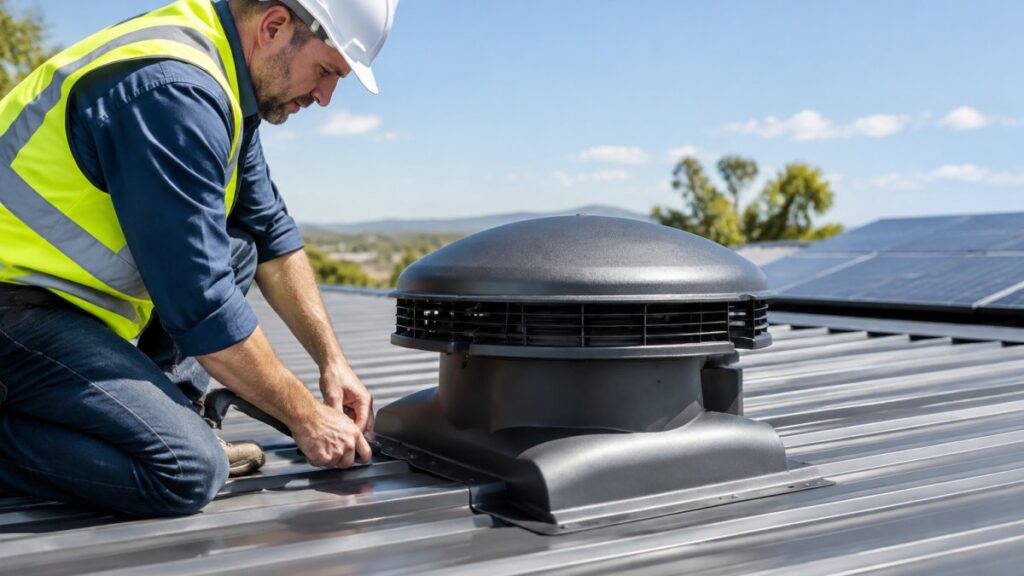
Last Updated: November 4, 2026
Quick Summary
Hybrid roof ventilation is worth the investment when its more consistent airflow addresses a clear roof-space problem and the installed cost makes sense for your home. It is harder to justify when a simpler passive or solar option meets the need. Compare roof conditions, installation requirements and evidence-based operating costs before deciding.
- Check that replacement air can enter through suitable openings, such as eaves or designed intake vents.
- Ask whether the motor runs continuously, uses a thermostat or humidistat, or is switched manually.
- Request an itemised quote separating equipment, labour, electrical work and additional roof repairs.
- Include mains-powered motor electricity use and likely maintenance costs in your annual estimate.
Table of Contents
- Is Hybrid Roof Ventilation Worth the Investment?
- How Hybrid Roof Ventilation Works in Changing Conditions
- Solar Roof Ventilation Benefits for Comfort and Moisture Control
- Whirlybird vs Solar Vent Comparison: Choosing the Right System
- Roof Ventilation Installation Cost and Long-Term Value
- Check Roof Compatibility, Noise and Payback Before You Buy
- Request a Roof Ventilation Assessment from Solazone
- Frequently Asked Questions
Is Hybrid Roof Ventilation Worth the Investment?
According to Australian Government YourHome guidance on passive cooling, roof design and ventilation can affect indoor comfort. Is hybrid roof ventilation worth the investment depends on whether your roof needs steadier airflow than wind alone can provide. This guide explains the trade-offs, what to check before buying, and how to assess value without relying on a generic payback promise.
Hybrid roof ventilation combines passive airflow with powered extraction. The practical question is whether that extra consistency addresses a real problem in your roof cavity. If heat buildup is occasional and wind exposure is good, a passive vent may be enough. If still conditions leave hot, stagnant air in the roof space, powered support may be more useful.
A common mistake is choosing a system before checking the roof’s airflow path. Start by identifying the problem: excess heat, moisture, or both.
How Hybrid Roof Ventilation Works in Changing Conditions
Hybrid roof ventilation is not one standard design. The term can describe a ventilator that uses natural wind-driven rotation and a powered motor, or a system that combines solar generation with another power source. Confirm the actual configuration: a solar-powered fan is not necessarily hybrid if it has no second operating mode or backup supply.
In a wind-assisted design, moving air can turn the ventilator without the motor. When wind is weak, the motor provides mechanical extraction. In a solar-and-mains design, the panel may supply power in suitable sunlight while mains power supports operation when solar output is insufficient; the changeover method depends on the product. Ask whether the motor runs continuously, is controlled by a thermostat or humidistat, or is switched manually. Those choices affect when it operates and how much electricity it may use.
Extraction only works as part of an airflow path. As air leaves the roof cavity, replacement air must enter through suitable openings, such as eaves or other designed intake vents. If intake is restricted, the fan may draw air from unintended gaps or deliver less effective ventilation. More extraction capacity alone does not guarantee better air exchange.
Before comparing products, ask the installer to explain:
- Which power sources the unit uses and what happens when wind or sunlight is limited.
- What controls start and stop the motor, and whether the controls can be adjusted.
- Where replacement air enters and whether existing openings are adequate.
- How the proposed unit’s airflow rating is specified, and under what test conditions.
- Whether the installation requires mains wiring, a switch, or other electrical work.
Watch out: Do not assume that a product labelled “hybrid” will provide powered backup during still or overcast conditions; check its wiring diagram and operating instructions.
“Hybrid” describes a combination of operating modes or power sources, not a guaranteed cooling result. The Australian Building Codes Board provides information on building requirements; ask a qualified installer or building professional which requirements apply to the specific project.
Solar Roof Ventilation Benefits for Comfort and Moisture Control
Solar roof ventilation benefits include extracting hot air without adding routine electricity use at the unit, when sunlight is available. It can support thermal comfort by reducing heat buildup in the roof space, but it cannot guarantee lower cooling costs or fix every moisture issue. Suitability depends on roof design, airflow and the source of dampness.
Solar-powered vents are a practical option when daytime heat is the main concern. Their output depends on available sunlight, so ask how the unit performs during shade or overcast conditions. Good moisture control also depends on adequate intake airflow and addressing leaks or other sources of humidity.
Roof ventilation is not a substitute for repairing water entry. If condensation buildup is the concern, ask for the cause to be checked before selecting equipment. The Australian Government’s condensation guidance for homes offers background on moisture management and ventilation. Similar principles of airflow management apply to the ground level, where subfloor ventilation systems address moisture issues that can compromise the structural integrity of the entire building.
Whirlybird vs Solar Vent Comparison: Choosing the Right System
In a whirlybird vs solar vent comparison, the deciding factor is what drives airflow: wind or sunlight. A whirlybird has no electrical components, while a solar vent uses an integrated panel and can provide extraction when sunlight is available. Neither option guarantees the same output in every weather condition.
| System | Main energy source | Main advantage | Main limitation |
|---|---|---|---|
| Whirlybird | Wind | No electrical connection | Still-air performance |
| Solar vent | Sunlight | No routine electricity use | Shade affects output |
| Hybrid ventilator | Wind and motor | Support in low wind | More complex installation |
Matching the system to the problem, rather than choosing the most elaborate option by default, is one way to approach the decision. A passive vent can suit a windy, straightforward roof. A solar vent can suit daytime heat concerns, while hybrid ventilation may suit a roof needing more consistent airflow. Check the product’s stated operation and installation needs before deciding.
For model details, see Solazone roof ventilators.
Roof Ventilation Installation Cost and Long-Term Value
The value of hybrid roof ventilation depends on the problem it solves, the installed cost and the system’s actual operating pattern. A quote can vary with roof access, the type and condition of the roof, the number and placement of units, intake-air work and any required electrical connection. Ask for an itemised quote that separates equipment, labour, electrical work and any additional roof repairs.
To test a claimed energy benefit, use a simple annual estimate rather than treating a general cooling-savings claim as a guarantee:
Estimated annual net benefit = estimated annual electricity-cost reduction − annual running cost − annual maintenance cost.
If the estimated annual net benefit is positive, a simple payback estimate is:
Simple payback period in years = total installed cost ÷ estimated annual net benefit.
For example, enter the installed quote and your own estimated annual figures; do not substitute an assumed saving. If the system’s net annual benefit is zero or negative, this calculation does not produce a meaningful energy payback. The system may still be worthwhile for a non-financial reason, such as addressing a persistent roof-space heat or moisture concern, but that benefit should be assessed separately.
Build the estimate from evidence specific to the home:
- Record the full installed quote, including any electrical or intake-air work.
- Ask what the proposed system is expected to change: roof-space temperature, indoor cooling demand, moisture management, or a combination.
- Request the assumptions behind any energy-saving estimate, including the home’s cooling use, local electricity tariff, operating hours and expected conditions.
- Include the ventilator’s electricity use if it has a mains-powered motor, plus likely maintenance costs.
- Compare the estimate with a simpler alternative, such as improving existing passive ventilation or addressing a roof leak or blocked intake.
A roof-space temperature reduction does not automatically translate into an equal reduction in indoor temperature or electricity use. The result depends on insulation, ceiling construction, air leakage, weather, household cooling settings and whether the ventilation system has a clear airflow path. Ask for the expected benefit to be described in measurable terms and for the assumptions to be provided in writing.
Watch out: Do not count the same benefit twice, for example, adding a claimed cooling-bill saving to a separate estimate that already includes that saving as a comfort benefit.
Use the calculation as a comparison tool, not a promise of payback. Solazone explains solar ventilator installation and provides a home solar ventilation guide to help readers assess installation and suitability.
Check Roof Compatibility, Noise and Payback Before You Buy
Before buying, check roof structure, available intake airflow, shading, noise expectations and the assumptions behind the payback estimate. Older or complex roofs need an individual compatibility check; a standard installation should not be assumed to fit every layout. Ask how the installer will protect roof integrity and manage any electrical work.
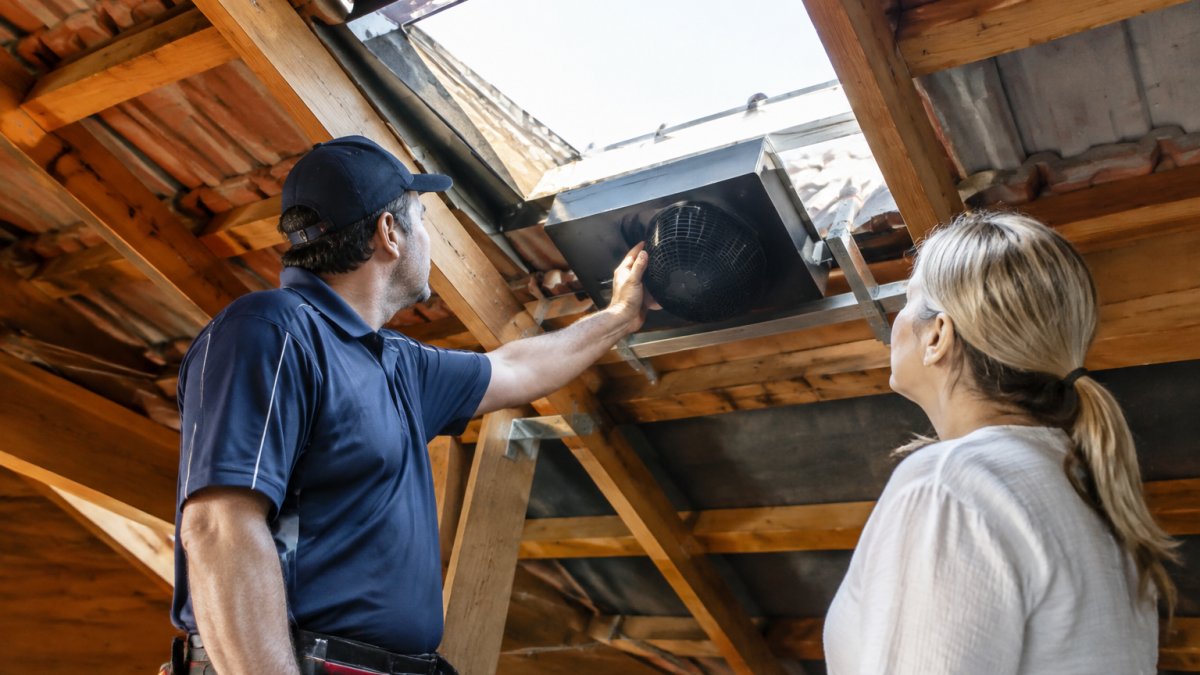
Noise comparisons should focus on the motor and where it sits, not just the product label. Ask for the manufacturer’s noise information and whether the unit can be placed away from sensitive rooms. A common mistake is judging ventilation capacity without checking where replacement air enters; poor intake can limit airflow even with a powered extractor.
A homeowner’s account can add context, but one installation does not predict another home’s results. Read this Solazone homeowner experience as an example, then ask for an assessment of your own roof.
Request a Roof Ventilation Assessment from Solazone
Hybrid roof ventilation is worth the investment when its more consistent airflow addresses a clear roof-space problem and the installed cost makes sense for your home. It is harder to justify when a simpler passive or solar option meets the need. Deciding from roof conditions and a transparent quote, rather than from a broad savings claim, is one way to approach the decision.
For background on the equipment, read about Solazone solar roof ventilators. Solazone Australia provides solar equipment and professional installation, with more than 40 years of technical expertise and personalised customer service.
Frequently Asked Questions
How does hybrid roof ventilation differ from standard whirlybirds?
A standard whirlybird relies on wind to turn its turbine and extract hot air. The term “hybrid” can describe different combinations of operating modes or power sources, so check the specific model’s operating method and power requirements before choosing.
Can hybrid roof ventilation reduce my air conditioning costs?
Whether roof ventilation affects comfort or energy use depends on the roof and household circumstances. It does not guarantee lower bills.
Do solar roof vents work on cloudy days?
A solar-powered roof vent depends on sunlight for its operation, so output can fall when direct sunlight is limited. The term “hybrid” can describe different combinations of operating modes or power sources; check the specific model’s operating instructions to understand how it works in overcast conditions.
How much does a hybrid roof ventilation system cost in AUD?
No verified price for a hybrid system is available here, so a reliable AUD figure cannot be stated. Pricing depends on the system and installation requirements. Contact Solazone Australia for current pricing or a quote.
A hot roof cavity, moisture concerns or uncertain airflow can make the choice difficult. Get started with Solazone Australia by requesting an assessment to discuss a solar roof ventilator suited to your roof and comfort goals.
