
Last Updated: October 28, 2026
Quick Summary
Pool heater warranty terms differ in what they actually cover, so the headline length can mislead. Compare which components are included, whether labour is covered, and what exclusions or maintenance conditions could void a claim.
- Check whether labour is covered, since a parts-only warranty can leave large call-out and labour charges with you.
- Read how prorated cover is calculated, because the manufacturer’s share can drop sharply as the unit ages.
- Keep installation certificates and dated service records, as missing maintenance proof can lead to a denied claim.
- Confirm the claim process, including whether approval is needed before booking a technician, and get the answers in writing.
- Check whether the warranty transfers to a new owner and whether registration within a set period is required.
Table of Contents
Pool heater warranties look similar on the surface, but the detail sits in the small print. Homeowners may compare warranty length and assume the longer one is the better deal. It often isn’t. Coverage depends on which components are included, who pays for labour, and whether a claim has to go through a specific network.
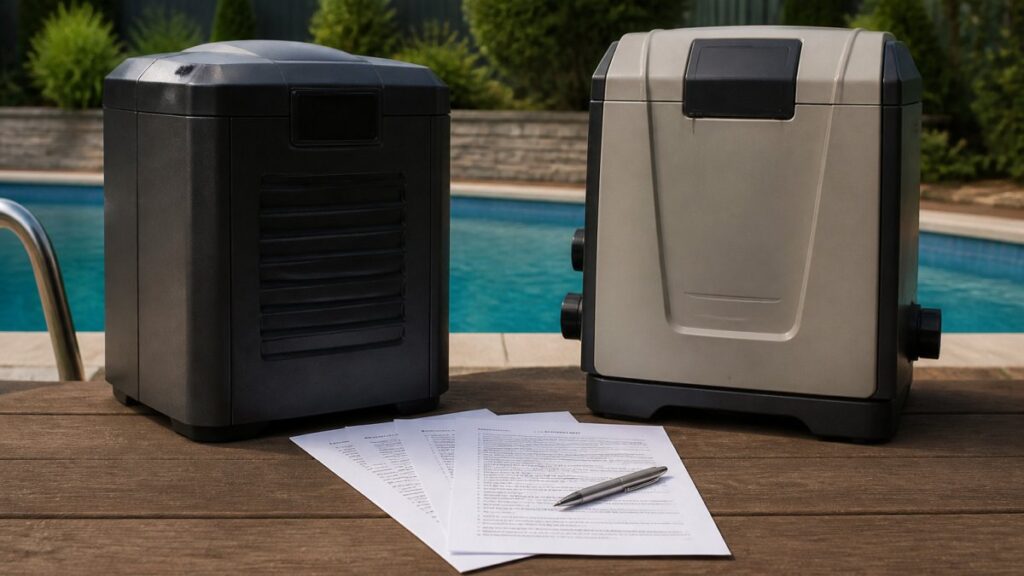
A warranty tells you what a manufacturer is prepared to stand behind. Two heaters with the same stated term can differ sharply in what that term actually covers. For a side-by-side look at how RPC and Sunbather systems differ in cost, efficiency and maintenance, check those factors before weighing their coverage. Some warranties cover the heat exchanger but not the electronic controller. Others cover parts only and leave installation and call-out costs with you.
Here is why the variation exists. Manufacturers design different products for different markets, climates and price points. Each sets its own terms to match its cost structure and its support network. Gas, electric and heat pump units also carry different failure risks, so their warranties rarely line up neatly.
That is why comparing terms line by line matters more than comparing headline years. The sections below set out what to check.
Pool Heater Warranty Coverage Compared Side by Side
Start with the components. Most warranties split coverage into parts, labour and workmanship, and each can have its own time limit. A heat exchanger might carry a longer period than the electrical board, for example. If you only read the headline term, you can miss that the expensive part is covered for less time.
Compare what each warranty names as covered. Look for explicit lists of components rather than general wording. Vague clauses leave room for the manufacturer to decide what qualifies after a fault appears.
Parts, Labour and Workmanship
Parts cover replacement components. Labour covers the technician’s time to fit them. Workmanship covers faults caused by how the unit was installed. These are separate promises, and a warranty can include one without the others.
Pay close attention to labour. A parts-only warranty can leave you paying several hundred dollars in call-out and labour charges for a single repair. Check whether labour is covered in full, partly or not at all, and whether there is a cap on the amount.
Prorated Cover, Shipping and Diagnostic Costs
Some warranties are prorated, meaning the manufacturer’s share of a repair drops as the unit ages. A claim in year one may be covered almost fully, while the same claim in year six may only carry a small contribution. Read how the proration is calculated before you rely on the cover.
Shipping and diagnostic costs also vary. Some manufacturers pay to ship a faulty part, and others expect you to cover freight. Diagnostic fees, the charge for a technician to confirm what has failed, are often excluded even when the part itself is covered. These costs add up quickly on a large commercial pool.
Pool Heater Warranty Exclusions That Can Void Your Cover
Exclusions decide whether a valid-looking claim gets paid. Read the exclusion clause as carefully as the coverage clause. Common triggers include incorrect installation, operation outside the stated water chemistry range, and damage from freezing or storms.
Some warranties are voided if the unit is serviced by someone who is not authorised by the manufacturer. Others require installation by a licensed trade with the correct paperwork. Keep your installation certificate and service records together, because you may need them when you claim.
Watch out: keeping water chemistry outside the manufacturer’s range can void a claim even when the fault is unrelated.
Maintenance Requirements Written Into Your Warranty
Many pool heater warranties make cover conditional on routine maintenance. This can include regular cleaning, checking water flow, inspecting the heat exchanger and keeping the unit clear of debris. If a claim is denied for lack of maintenance, the burden usually falls on you to show the work was done.
Log each service with the date, the work performed and the name of the person who did it. If you need practical instructions, see how to care for a solar pool blanket to extend its life and improve heat retention. A simple folder of invoices is often enough. Without records, a legitimate claim can become a dispute.
How the Pool Heater Warranty Claim Process Works
Most claims follow the same path. You report the fault, the manufacturer or dealer arranges a diagnosis, and a decision follows on whether the part is covered. Some companies run claims through a regional distributor, which can add time.
Ask in advance how claims are lodged, whether you need approval before booking a technician, and who pays the technician if the claim is accepted. Get the answers in writing. A clear process at the start saves weeks of back-and-forth later.
Support Quality and Transferability: What to Ask Before You Buy
A warranty is only as useful as the support behind it. Ask how long a typical claim takes to resolve, whether there is a named contact for escalations, and whether the manufacturer has a local service network. If you are unsure how to find a reputable installer, read our guide to choosing the right solar installer in Australia. A distant manufacturer with no local technicians can make even a valid claim slow to settle. You can learn why local solar experts matter for accreditation, climate knowledge and long-term support in Australia.
Check transferability too. If you sell the home, can the remaining warranty pass to the new owner? Some warranties require registration within a set number of days of installation, and missing that deadline can end cover before you ever need it.
Choosing a Pool Heater With Support You Can Rely On
Put the comparison into practice by building a short table of the terms that matter to you: component coverage, labour, proration, shipping, exclusions, maintenance conditions, claim process and transfer rules. Fill it in for each shortlisted heater from the manufacturer’s own warranty document, not a summary. Applying this same rigorous scrutiny to other climate control equipment ensures a deeper understanding warranty coverage that protects your long-term investment in home comfort.
Then weigh the support. A slightly shorter warranty backed by a responsive local network often beats a longer one that is hard to claim on. Our pick for most homeowners is the option where the exclusions are clear, labour is covered, and the claim path is written down.
For a broader view of running costs alongside warranty cover, see our solar pool heating cost and efficiency guide.
Quick Summary: Compare the labour cover, exclusions and claim process before the headline warranty length, because those decide what you actually get paid.
Frequently Asked Questions
How long is the warranty on a pool heater?
Pool heater warranties usually split coverage into periods for the heat exchanger, other parts and labour, and these periods often differ. Some manufacturers offer longer heat exchanger cover than general parts cover, while labour may be included only for a short time or not at all. Check the written terms for the exact durations for each component, and confirm whether the warranty applies to the Australian model you are buying and to installation carried out in Australia.
Are parts and labour both covered by a pool heater warranty?
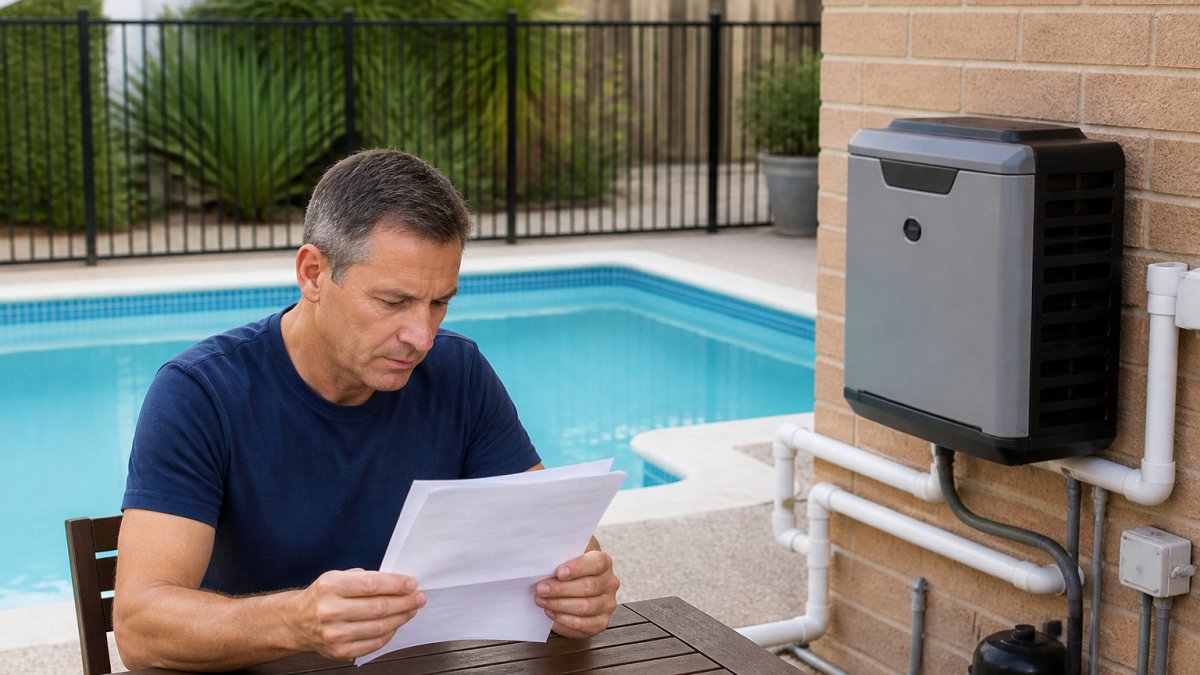
Often not. Many pool heater warranties cover defective parts but exclude or limit labour, so you may pay a technician to remove and reinstall a faulty component. Some warranties cover labour for a shorter period than parts, and some cover none at all. Ask the dealer or manufacturer to confirm in writing whether labour, diagnostic visits and shipping of replacement parts are included, and for how long.
What can void a pool heater warranty?
Common causes include installation that does not follow the manufacturer’s instructions, incorrect water chemistry, operating the heater without adequate water flow, and damage from storms or freezing. Failing to carry out required maintenance or using non-approved replacement parts can also void cover. Read the exclusions section before purchase and keep service records, since you may need to show that maintenance was done.
What does a pool heater warranty usually cover?
Most pool heater warranties cover manufacturing defects in listed components such as the heat exchanger, burner, controls and electronics, for a stated period. Installation workmanship, wear items, cosmetic damage and consequential loss are often excluded. Compare the list of covered components across brands rather than relying on the headline years, because two warranties with the same length can cover very different parts.
