
Table of Contents
- Quick Comparison of Top Commercial Solar Incentives
- Small-scale Technology Certificates (STCs) for Business
- Federal Instant Asset Write-off for Solar Systems
- State-Based Solar Grants and Upfront Discounts
- Commercial Solar Feed-in Tariffs and Energy Returns
- Understanding Commercial Solar Payback Period
- Battery Storage Incentives for Commercial Operations
- Financing and Investment Support for Larger Systems
- How to Claim Commercial Solar Incentives
- Conclusion
- Frequently Asked Questions
Last Updated: September 1, 2026
Quick Comparison of Top Commercial Solar Incentives
Navigating commercial solar incentives can feel overwhelming, but businesses combining multiple programs can recover a significant portion of their upfront solar investment. This guide from Solazone Australia breaks down the most valuable commercial solar incentives available to Australian businesses in 2026, helping you identify which programs apply, expected savings, and practical claiming steps.
Quick Picks:
- Best for immediate upfront savings: Small-scale Technology Certificates (STCs), available nationwide, reduce costs for eligible systems
- Best for Victorian businesses: Victorian Energy Upgrades Commercial and Industrial Solar, offering discounts for eligible systems
- Best for NSW battery storage: Peak Demand Reduction Scheme, offering discounts on battery costs when paired with new solar
- Best for financing large projects: Clean Energy Finance Corporation investment programs, specialised capital for mid-scale hybrid solar-plus-storage systems
| Incentive | Eligibility | Key Benefit | Best For |
|---|---|---|---|
| STCs (federal) | Systems up to 1 MW | Upfront discount | Most businesses nationwide |
| Instant Asset Write-off | Eligible businesses | 100% deduction in year one | Capital-constrained operations |
| Victorian Energy Upgrades | 30-200 kW systems in Victoria | Upfront discount | Victorian manufacturers, retail |
| NSW Energy Savings Scheme | NSW businesses | Financial incentives for efficiency | Energy-intensive operations |
| NSW Peak Demand Reduction Scheme | Commercial battery systems | Battery discount | NSW businesses with grid demand issues |
| Feed-in Tariffs | Grid-connected systems | Revenue per kWh exported | High-usage daytime operations |
| CEFC Investment Programs | Mid-scale projects (up to 5 MW) | Specialised financing | Large hybrid solar-plus-storage projects |
| ARENA Funding | R&D and demonstration projects | Grants for innovation | Developers and researchers |
| Solar for Business Program (Victoria) | Up to 30 kW systems | Rebate + loan | Victorian SMEs |
| Cheaper Home Battery Program | Battery systems nationwide | Upfront discount | Businesses adding battery storage |
Small-scale Technology Certificates (STCs) for Business
Small-scale Technology Certificates (STCs) are the federal government’s primary incentive for commercial solar. When you install an eligible system, you generate one STC per megawatt-hour of expected lifetime electricity production. You can sell these certificates to create an upfront discount on installation costs, or assign them directly to your installer.
The scheme applies to systems between 5 kW and 1 MW, typically reducing installation costs (cleanenergyregulator.gov.au). For a 50 kW commercial system, this means significant upfront savings before state programs. Your installer calculates certificate generation based on system capacity, location, and deeming years, then sells them or assigns them to an aggregator, passing the value to you as a discount at sale.
The scheme is being phased out, deeming years decrease annually and the scheme ends by 2030. Installing in 2026 captures significantly more value than waiting until 2029.
If your business is in Victoria or NSW, stack STCs with state-based programs. Combined incentives can reduce total capital expenditure. Your installer should automatically factor in both programs.
Federal Instant Asset Write-off for Solar Systems
The Instant Asset Write-off allows eligible businesses to deduct the full solar system cost in the installation year, rather than depreciating it over time. To qualify, your business must have annual turnover below $50 million, and the system must cost less than $20,000 (or $30,000 in specified regions) (ato.gov.au). This incentive can effectively reduce your tax bill in that financial year.
This incentive works independently of STCs. You can claim both: STCs reduce upfront installation cost, and the instant asset write-off reduces tax liability. Sole traders, partnerships, and companies qualify if they meet the turnover threshold.
The instant asset write-off is a tax benefit, not a cash rebate. You only benefit if your business has taxable income to offset. If your business is loss-making or has minimal tax liability, this incentive provides no immediate value. Consult your accountant before relying on it.
State-Based Solar Grants and Upfront Discounts
State governments have designed targeted programs to support commercial installations and meet renewable energy targets. These vary significantly by state.
Victorian Energy Upgrades and Solar for Business Program
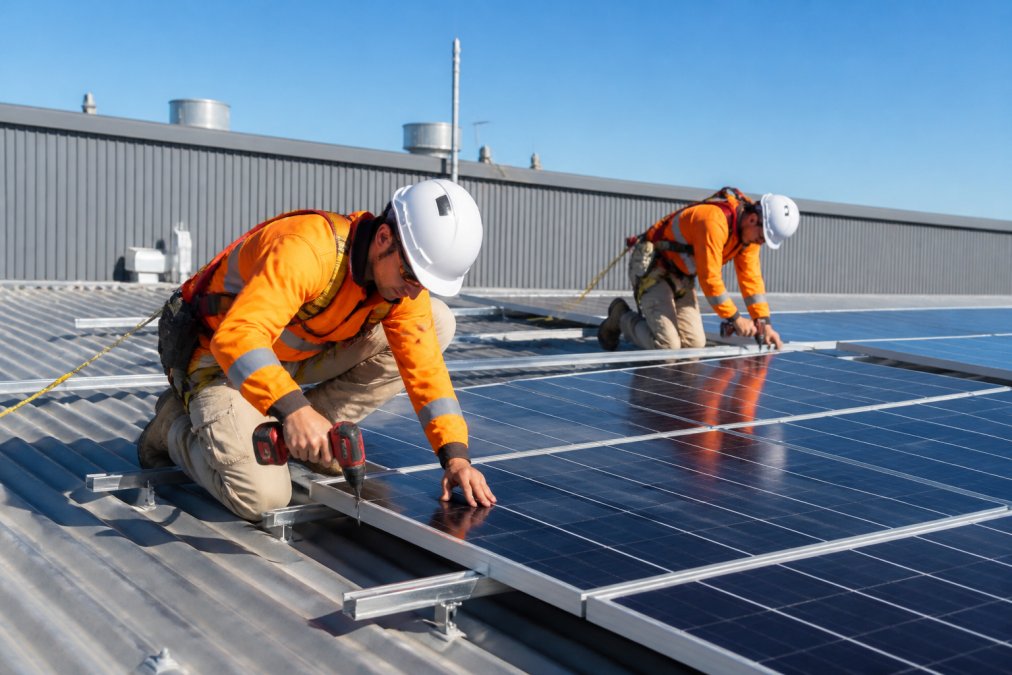
Victoria operates two distinct programs. The Victorian Energy Upgrades (VEU) program targets larger commercial and industrial operations with systems between 30 kW and 200 kW, offering upfront discounts via Victorian Energy Efficiency Certificates. Solar for Business targets smaller Victorian businesses, providing rebates plus interest-free loans for systems up to 30 kW. Both programs require installation by a VEU-accredited provider, with discounts applied at point of sale.
NSW Energy Savings Scheme and Peak Demand Reduction Scheme
The Energy Savings Scheme (ESS) provides financial incentives for energy-efficiency projects, including battery storage paired with solar. The Peak Demand Reduction Scheme (PDRS) offers discounts for battery-only installations and when paired with new solar, particularly valuable for businesses experiencing grid congestion or high peak-demand charges.
South Australian Retailer Energy Productivity Scheme
South Australia’s Retailer Energy Productivity Scheme (REPS) obligates energy retailers to deliver energy-productivity activities. Businesses contact their retailer to access approved solar and efficiency activities, with the retailer funding the incentive.
State-based grants are often more generous than federal incentives but geographically limited. If your business operates in multiple states, prioritise installing systems in states with the most attractive programs first. A Victorian system might save significantly through combined VEU and STC incentives, while the same system elsewhere might save less.
Commercial Solar Feed-in Tariffs and Energy Returns
Feed-in tariffs are the rates you receive for exporting excess solar energy to the grid. Feed-in tariff rates vary by state and retailer. A business with a 50 kW system exporting 30 kWh daily could generate significant monthly in feed-in revenue.
Understanding your energy consumption profile is critical. A manufacturing facility running primarily during daylight exports significant solar generation; a retail business with peak evening consumption exports less. Over a 25-year system lifespan, feed-in revenue can represent a notable portion of total solar return on investment.
Understanding Commercial Solar Payback Period
The payback period is the number of years for your solar system to generate enough savings and incentive value to equal upfront cost. For most commercial operations, payback ranges from 4 to 8 years, depending on system size, electricity consumption, and available incentives.
Calculating payback requires three inputs: annual electricity savings (kWh generated × cost per kWh), feed-in revenue, and net upfront cost after incentives. A business reducing its electricity bill by $5,000 annually and generating $1,500 in feed-in revenue, with a net system cost of $30,000 after incentives, achieves payback in a few years. reduce office energy costs.
Incentive stacking dramatically improves payback. Without incentives, the same system might cost more, extending payback. With STCs, state grants, and the instant asset write-off, net cost drops, cutting payback. Electricity costs typically increase 2-4% annually, meaning your actual payback period is likely shorter than static calculations suggest.
Use conservative assumptions: assume electricity prices increase at 3% annually, system efficiency degrades at 0.5% annually, and build in a 10% buffer for maintenance and unexpected costs. This gives you a realistic picture of true return on investment.
Battery Storage Incentives for Commercial Operations
Battery storage transforms solar into a 24-hour energy asset. For commercial operations, batteries reduce peak demand charges, improve energy resilience, and enable demand shifting using stored solar energy during high-cost evening periods.
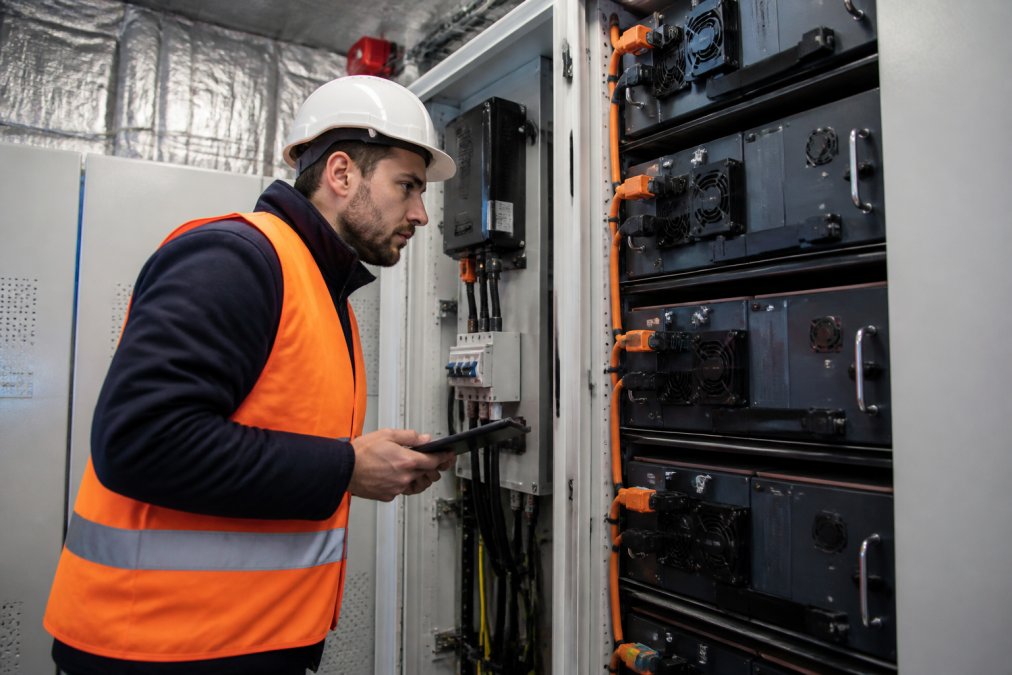
The Cheaper Home Battery Program provides an upfront discount off eligible battery systems nationwide using a sliding scale. NSW’s Peak Demand Reduction Scheme is more generous for commercial-scale batteries, offering discounts for battery-only installations and when paired with new solar.
Battery storage financial case depends on your electricity tariff structure. Businesses with time-of-use tariffs where peak evening rates significantly exceed daytime rates see faster payback from batteries. Modern lithium-ion batteries retain 80-90% of capacity after 10 years, with degradation accelerating after year 10 (peer-reviewed research).
Financing and Investment Support for Larger Systems
For systems larger than 1 MW or hybrid solar-plus-storage installations, standard rebate programs don’t apply. The Clean Energy Finance Corporation (CEFC) invests in clean energy projects struggling to secure traditional financing, with significant funds committed to mid-scale hybrid solar-plus-storage projects (up to 5 MW). CEFC investments are loans or equity investments offering terms and risk tolerance mainstream banks often don’t.
The Australian Renewable Energy Agency (ARENA) funds research, development, and demonstration projects in solar technology. For very large operations, bundle solar with other energy-efficiency investments (LED lighting, HVAC upgrades, insulation) to access broader energy-efficiency financing schemes at better rates than solar-only loans.
Solazone Australia helps businesses navigate financing options for larger systems. With over 40 years of technical expertise, we can assist in structuring financing combining rebates, tax benefits, and specialised lending to optimise capital structure and improve return on investment.
How to Claim Commercial Solar Incentives
Claiming incentives requires understanding each program’s application process. Most are applied at point of sale by your installer, but some require post-installation verification or tax-based claims handled by your accountant.
For STCs: Your installer manages this entirely, calculating generation, assigning certificates to an aggregator or retailer, and passing value to you as a discount at installation.
For the Instant Asset Write-off: Your accountant claims this on your tax return using your installer’s invoice as evidence.
For state-based programs (VEU, ESS, PDRS): Your installer must be accredited with the relevant state scheme. Confirm accreditation before signing a contract. The installer applies for the incentive on your behalf, with the discount applied at point of sale or within 30 days of completion.
For feed-in tariffs: Contact your energy retailer and request a feed-in tariff agreement, providing your system’s installation certificate and meter details.
For CEFC or ARENA funding: Contact the organisation directly with project details. These are competitive processes with formal application requirements. Allow time for assessment and approval.
The most common mistake is assuming your installer automatically claims all available incentives. Proactively ask your installer which programs they’re claiming and request written confirmation before installation begins.
Incentive eligibility is time-sensitive. Some programs have annual caps or funding limits. If you’re considering solar in 2026, apply for incentives now rather than delaying.
Conclusion
Commercial solar incentives in Australia have never been more generous or accessible. Between federal STCs, state-based rebates, feed-in tariffs, and financing support, most businesses can recover a significant portion of their solar investment through incentives alone. The critical step is identifying which programs apply to your business, stacking them strategically, and claiming them correctly.
At Solazone Australia, we’ve helped thousands of businesses navigate this landscape. Our team understands eligibility criteria, application timelines, and documentation requirements for every major program. With over 40 years of technical expertise and a commitment to Australian-made systems, we ensure your solar investment is optimised for maximum financial return and long-term reliability.
Get started with Solazone Australia and we’ll identify all available incentives for your specific situation, handle the applications, and deliver a system that reduces your operational costs for decades to come. Contact us today for a personalised solar assessment and incentive analysis.
Frequently Asked Questions
Q: How do Small-scale Technology Certificates (STCs) work for commercial solar?
A: STCs are created when you install an eligible solar PV system between 5 kW and 1 MW. The number of certificates generated depends on your system size, location, and how many years remain until 2030. You can sell these STCs to your installer for an upfront discount or retain them to sell later. The value fluctuates with market demand, so timing your sale matters. The scheme phases out by 2030, with deeming reduced annually.
Q: What is the instant asset write-off for commercial solar installations?
A: The instant asset write-off allows eligible businesses to deduct the full cost of a solar PV system from their taxable income in the year of purchase, rather than depreciating it over several years. This accelerates tax relief and improves cash flow. To qualify, your business must have a turnover under the threshold set by the ATO, and the system must be used for business purposes. Combined with STCs, this can substantially reduce your net installation cost.
Q: Do commercial solar incentives vary by state?
A: Yes, significantly. Victoria offers the VEU program (up to $34,300 discount for 30-200 kW systems) and Solar for Business rebates (up to $3,500 for small businesses). NSW provides the ESS for battery additions and the PDRS for battery storage (20-40% discounts). South Australia offers the REPS through energy retailers. Federal incentives like STCs and the instant asset write-off apply nationwide, but state schemes create additional opportunities depending on your location.
Q: What commercial solar payback period should I expect?
A: Payback periods typically range from 4 to 8 years for commercial solar, depending on system size, your energy consumption profile, local electricity rates, and available incentives. Larger systems with higher usage benefit from better economics. STCs and state grants can reduce payback by lowering upfront costs. Feed-in tariffs provide ongoing revenue from excess generation. Your actual payback depends on your specific energy consumption, peak demand patterns, and whether you add battery storage.
Q: Can I stack multiple incentives for the same solar installation?
A: Yes, you can combine federal incentives (STCs and instant asset write-off) with state-based grants in most cases. For example, a Victorian business can claim both VEU discounts and STCs, or a NSW business can combine ESS incentives with federal support. However, you cannot double-claim the same cost across schemes. Always verify current eligibility rules with your installer or state regulator, as scheme rules and combinations change annually.
This article was written using GrandRanker