
Table of Contents
- Solar System vs Battery Backup: Key Differences
- How Solar Battery Backup Works During Outages
- Is Home Battery Storage Worth It?
- Solar Battery Cost vs Savings: What to Expect
- Comparison Table: Solar System vs Battery Backup
- Which Option Should You Choose?
- Conclusion
Last Updated: August 27, 2026
Solar System vs Battery Backup: Key Differences
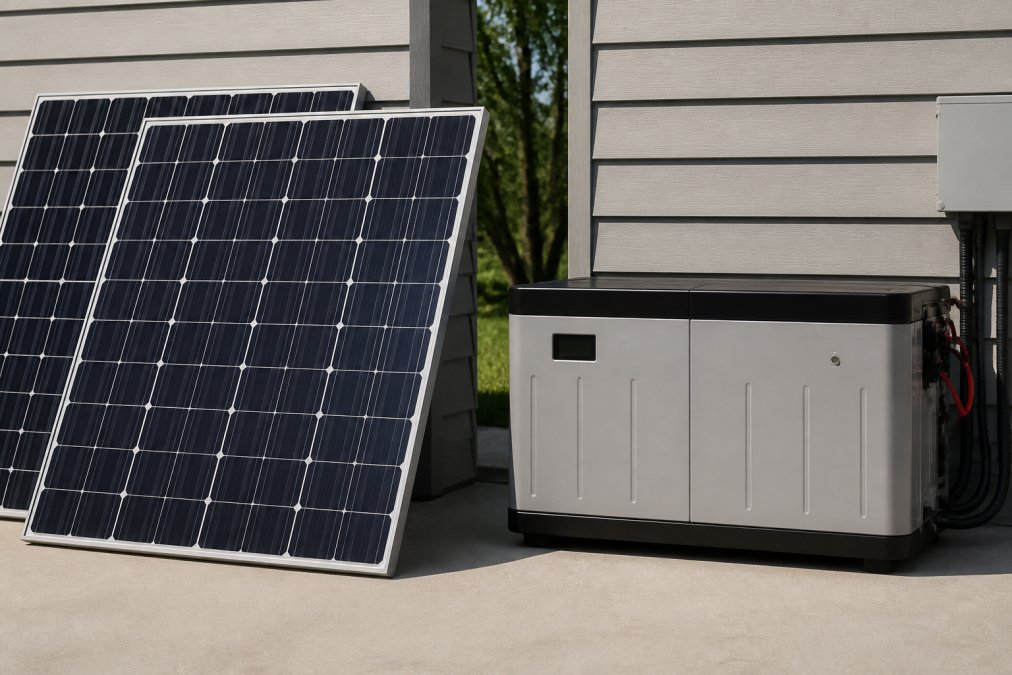
A solar system vs battery backup comparison reveals a fundamental distinction: one generates power, the other stores it. A solar photovoltaic system converts sunlight into electricity using panels mounted on your roof or property, flowing directly to your home’s circuits and reducing grid reliance. Battery backup captures electricity from solar panels, the grid, or both, and holds it for later use, particularly during outages when the grid fails.
The real tension: solar systems alone don’t protect you during blackouts. When the grid goes down, your solar panels shut off for safety reasons, even if the sun is shining. Battery backup solves that problem, but adds significant cost. At Solazone Australia, we’ve spent over 40 years helping homeowners and businesses navigate this choice. Most Australian households benefit from solar first due to shorter payback periods and immediate savings. Battery backup makes sense if you experience frequent power outages, want to maximise self-consumption of your own solar generation, or prioritise energy independence over pure economics.
How Solar Battery Backup Works During Outages
Battery backup operates through AC coupling or DC coupling, depending on your system design. When the grid fails, an automatic transfer switch detects the outage within milliseconds and isolates your home from the grid. Your battery system then supplies power to essential circuits, lights, refrigeration, heating or cooling, and communication devices, drawing from stored energy until either the grid restores or the battery depletes.
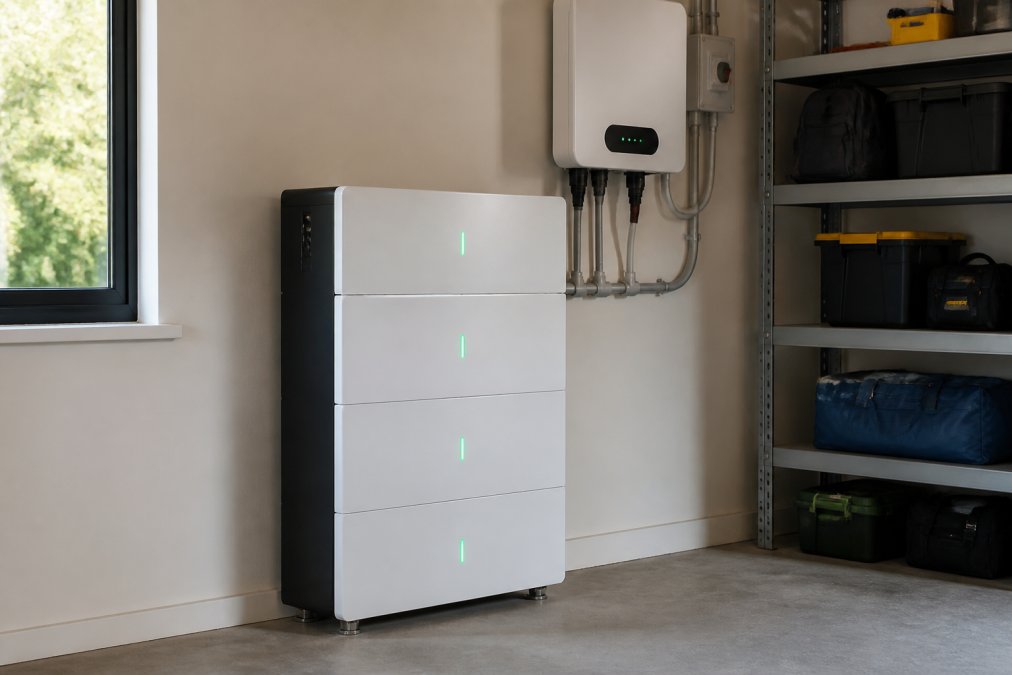
Modern battery systems like the Tesla Powerwall 2, AlphaESS SMILE5, and Sungrow SBR High Voltage Battery System handle this transition automatically. Your home doesn’t flicker or restart; the battery takes over so smoothly most residents don’t notice the grid has failed until they check their energy monitoring app.
What Actually Happens During a Blackout: Load Management Reality
During an outage, your battery doesn’t power everything simultaneously. A typical 13.5 kWh battery system discharges at 5-10 kilowatts continuously, which covers some household loads, but not all at once (peer-reviewed research). A refrigerator draws 0.7 kW, lights 0.3 kW, heating or cooling 3-5 kW, and a kettle another 2-3 kW. Run the kettle while the heater is on, and you’ve exceeded your battery’s output capacity.
Load management, prioritising which circuits stay live during an outage, determines how long your battery actually lasts. Most installers configure a "critical load panel" that isolates essential circuits (refrigerator, lights, communications, medical equipment) from non-essential ones (pool pumps, electric ovens, hot water systems). A 13.5 kWh battery powering only essential circuits (typically 2-3 kW continuous draw) can sustain your home for 4-6 hours. The same battery powering a full house load (7-10 kW) lasts 1-2 hours.
Premium systems like the Tesla Powerwall 2 with Backup Gateway and Sungrow systems with integrated energy management software handle load shedding intelligently, automatically prioritising loads and protecting the battery. Once the battery reaches its minimum safe depth of discharge (typically 10-20% reserve), it stops supplying power unless the grid restores or your solar panels are generating. A 13.5 kWh battery with 100% usable depth of discharge delivers more usable energy than a 15 kWh system that reserves 20% for safety, comparing kilowatt-hours alone misleads without knowing usable capacity.
AC Coupling vs DC Coupling
AC coupling connects the battery system to your home’s AC circuits through an inverter that converts stored DC energy into AC power. This works with existing solar installations, making it the most common retrofit option, though it incurs a small efficiency loss of 5-10%.
DC coupling connects the battery directly to a hybrid inverter that manages both solar input and battery storage in DC form before inverting to AC. This approach is more efficient (90-95% round-trip efficiency vs. 85-90% for AC coupling) and allows your solar panels to charge the battery directly. The downside: DC coupling requires a compatible hybrid inverter, often meaning you replace your current inverter.
For most Australian homes with existing solar installations, AC coupling makes financial sense. You keep your current equipment and add battery storage without major rewiring. If you’re installing solar and battery together, DC coupling edges ahead on efficiency, though the cost difference narrows as hybrid inverters become standard.
Is Home Battery Storage Worth It?
Whether battery backup justifies its cost depends on outage frequency, self-consumption goals, and energy independence priorities, but the honest answer also requires understanding what happens to your battery over time.
Outage Frequency and Reliability
If your area experiences regular blackouts (more than 2-3 per year lasting several hours), battery backup becomes practical insurance. The cost of spoiled food, lost work productivity, and discomfort often justifies the investment. If outages are rare (once every few years, lasting minutes), battery backup is expensive peace of mind.
Self-Consumption and Energy Arbitrage
Solar panels generate most electricity mid-morning through mid-afternoon, when many households draw minimal power. Without battery storage, that excess feeds to the grid at a lower rate than you pay for evening electricity. Battery backup lets you store that mid-day surplus and use it when rates are higher, improving returns on your solar investment through energy arbitrage.
Energy Independence and Risk Tolerance
Battery backup reduces your dependence on grid price increases, network outages, and future tariff changes. Some homeowners prioritise this autonomy even if financial returns are modest. Both perspectives are rational depending on your risk tolerance and values.
The Hidden Cost: Battery Degradation and Replacement
Lithium-ion batteries degrade gradually. A typical residential battery system loses 0.5-1% of capacity per year under normal use (peer-reviewed research). After 10 years, a 13.5 kWh battery might deliver only 12-13 kWh. Most manufacturers warrant their batteries for 10 years or 70-80% of original capacity. Tesla Powerwall 2 warrants 70% capacity retention over 10 years; AlphaESS systems typically guarantee 80%.
Replacement costs are substantial. A new 13.5 kWh battery system’s pricing depends on quantity, dates, and delivery. The true cost-of-ownership over 20 years includes initial battery cost, replacement battery at year 10-12, annual maintenance, and potential inverter replacement. Total 20-year cost: pricing depends on quantity, dates, and delivery for battery storage alone.
Maintenance Reality
Battery systems require annual health checks to monitor battery state of health, inverter performance and firmware updates, electrical connections and safety systems, and cooling system function. Most installers charge for these checks.
The Honest Assessment
Battery backup is worth it if you experience regular outages (2+ per year, lasting hours), want to maximise solar self-consumption with time-of-use tariffs, prioritise energy independence, or plan to stay in your home for 15+ years. If your grid is reliable, you’re purely chasing financial returns, and you plan to move within 10 years, solar alone typically delivers better payback. A 6 kW solar system breaks even in 5-7 years and requires minimal maintenance. Adding a 13.5 kWh battery extends payback to 15-18 years and introduces replacement costs within the ownership period.
Request quotes that include a 20-year cost projection, not just upfront price. Ask installers about battery degradation assumptions and what happens when your warranty expires.
Solar Battery Cost vs Savings: What to Expect
Battery system costs in Australia vary. The savings calculation depends on your electricity usage pattern and local tariffs. A household consuming 20 kWh daily sees different returns than one using 40 kWh. Time-of-use tariffs, where evening electricity costs 3-4 times more than mid-day rates, dramatically improve battery payback.
Solar systems typically break even in 5-7 years (energy.gov). Adding battery backup extends that to 12-18 years, though this improves as electricity prices rise and battery costs fall. Request quotes tailored to your specific usage, roof orientation, and local tariffs, as generic estimates mislead due to large variable differences.
Comparison Table: Solar System vs Battery Backup
| Factor | Solar System Alone | Battery Backup Added | Winner for Cost | Winner for Independence |
|---|---|---|---|---|
| Upfront Cost | Pricing depends on quantity, dates, and delivery | Pricing depends on quantity, dates, and delivery | Solar alone | Battery |
| Payback Period | 5-7 years | 12-18 years | Solar alone | Battery |
| Grid Outage Protection | None (shuts down) | Full backup power | Battery | Battery |
| Self-Consumption Rate | 30-40% (excess exported) | 60-80% (stored for later) | Battery | Battery |
| Maintenance | Minimal (panels only) | Annual health checks | Solar | Solar |
| Efficiency | N/A (direct use) | 85-95% round-trip | Solar | Battery |
| Best For | Cost savings, grid-tied homes | Outage protection, energy independence |
Which Option Should You Choose?
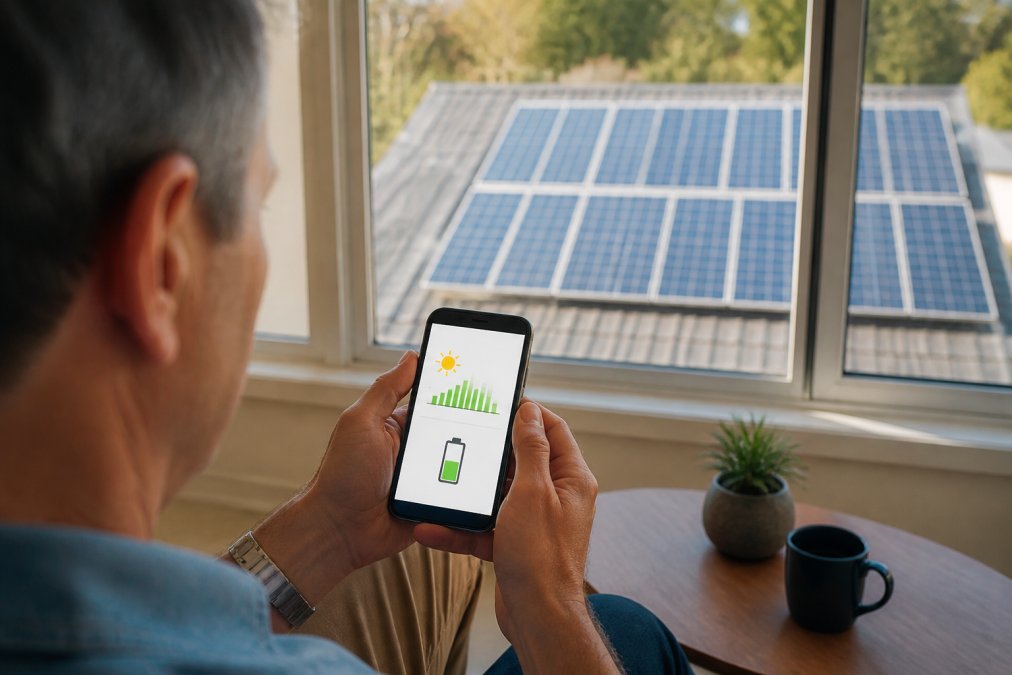
Choose solar alone if: you’re grid-connected in a reliable area, your primary goal is reducing electricity bills, and outages are rare. Solar delivers the fastest financial return and requires minimal ongoing attention, lasting 25-30 years.
Choose solar plus battery if: you experience regular power outages, want to maximise self-consumption of your own generation, or prioritise energy independence. The added cost extends payback by 5-10 years, but you gain outage protection and reduced grid dependence.
Choose battery backup alone (rare case) if: you already have solar installed and outages are now a concern. Retrofitting battery storage to existing solar is straightforward through AC coupling.
The decision ultimately rests on three questions: How often does your area lose power? How much do you value independence from grid price increases? And what payback timeline feels acceptable for your household budget?
Solazone Australia has guided thousands of households through this choice over 40 years. Our team assesses your roof, usage patterns, and local conditions to recommend a system tailored to your priorities, not a generic package. Australian-made systems and personalised installation ensure your choice fits your home’s specific needs.
=== FAQ ANSWERS (audit these too, same rules) ===
[1] Q: Is it better to get more solar panels or a battery?
A: The choice depends on your priorities. More solar panels maximise energy generation and feed-in tariff earnings, reducing grid reliance. A battery stores that energy for use during peak rates or outages, improving self-consumption. Many homeowners benefit from both: panels generate the energy, and battery storage captures it for later use. Consider your roof space, budget, and whether backup power during outages matters to you.
[2] Q: How long will a 10 kWh battery typically power a home?
A: A 10 kWh battery can power an average home for 1-2 days, depending on usage patterns. A typical household uses 15-20 kWh daily. During an outage, a 10 kWh system keeps essential circuits running longer if you manage loads strategically. Real-world duration varies with appliance usage, system efficiency, and depth of discharge allowed by your battery chemistry.
[3] Q: Can a solar battery provide power during a grid blackout?
A: Yes, but only if your system includes an automatic transfer switch and the battery is charged. When the grid fails, the transfer switch isolates your home from the grid and draws power from the battery. Once the battery depletes, backup power stops unless your solar panels are producing energy at that moment. This is why battery capacity and load management are critical for extended outages.
[4] Q: Do I need a battery if I have a solar feed-in tariff?
A: Not necessarily. A feed-in tariff allows you to export excess solar energy to the grid and earn credits. If you’re comfortable relying on the grid during evening hours and don’t prioritise backup power, solar panels alone may suffice. However, battery storage increases self-consumption, reduces reliance on grid electricity, and protects you during outages, making it valuable if blackout resilience or energy independence matters to you.
Frequently Asked Questions
Is it better to get more solar panels or a battery?
The choice depends on your priorities. More solar panels maximise energy generation and feed-in tariff earnings, reducing grid reliance. A battery stores that energy for use during peak rates or outages, improving self-consumption. Many homeowners benefit from both: panels generate the energy, and battery storage captures it for later use. Consider your roof space, budget, and whether backup power during outages matters to you.
How long will a 10 kWh battery typically power a home?
A 10 kWh battery can power an average home for 1-2 days, depending on usage patterns. A typical household uses 15-20 kWh daily. During an outage, a 10 kWh system keeps essential circuits running longer if you manage loads strategically. Real-world duration varies with appliance usage, system efficiency, and depth of discharge allowed by your battery chemistry.
Can a solar battery provide power during a grid blackout?
Yes, but only if your system includes an automatic transfer switch and the battery is charged. When the grid fails, the transfer switch isolates your home from the grid and draws power from the battery. Once the battery depletes, backup power stops unless your solar panels are producing energy at that moment. This is why battery capacity and load management are critical for extended outages.
Do I need a battery if I have a solar feed-in tariff?
Not necessarily. A feed-in tariff allows you to export excess solar energy to the grid and earn credits. If you're comfortable relying on the grid during evening hours and don't prioritise backup power, solar panels alone may suffice. However, battery storage increases self-consumption, reduces reliance on grid electricity, and protects you during outages, making it valuable if blackout resilience or energy independence matters to you.
Choosing between a solar system and battery backup isn’t about picking one or the other, it’s about sequencing. Start with solar to capture immediate savings, then add battery backup when outages become frequent or when you want deeper energy independence. Solazone Australia helps you build this path with expert installation, high-quality equipment, and support that lasts decades. Contact us for a personalised quote and discover how solar and battery systems work together for your home.
This article was written using GrandRanker