
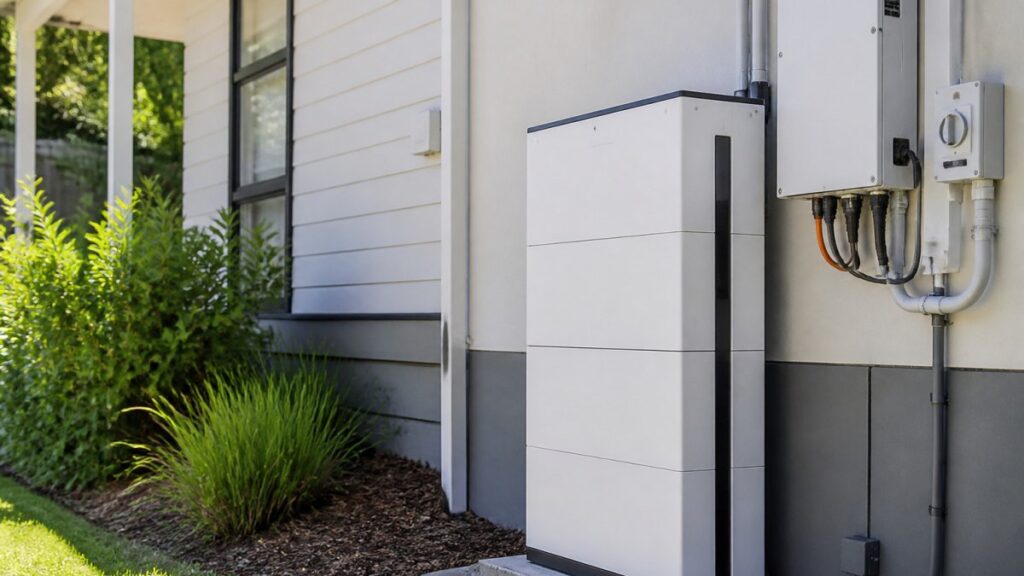
Quick Summary
A solar battery is worth it for a small home when your evening and overnight usage is high and you want more independence from the grid. Many small households do not need a large unit, since oversizing adds cost without adding savings. Working out your own payback period from your bill and tariff gives the clearest answer.
- Battery size should match evening and overnight usage, not total daily consumption.
- Oversizing is the most common mistake and lengthens payback for small homes.
- Payback period equals installed cost divided by annual savings.
- Conservative usage assumptions give a more realistic payback estimate.
- Check usable capacity, warranty terms and installer accreditation when comparing quotes.
Table of Contents
- Why a Solar Battery Question Is Different for Small Homes
- Home Battery Storage Cost: What You Actually Pay
- Solar Battery Size for a Small Home
- Solar Battery Payback Period: Working Out Your Own Numbers
- Solar Battery vs No Battery: Pros and Cons for Small Households
- Installation and Maintenance Considerations
- Deciding Whether to Book a Battery Assessment
- Frequently Asked Questions
Is a solar battery worth it for a small home? Our answer depends on your energy use, your tariff and how often you lose power. For many small households in Melbourne and the Sunshine Coast, a battery adds real value, but not in every case. This guide from Solazone Australia walks through the trade-offs so you can decide with your own numbers.
A solar battery is a storage unit that holds surplus energy from your panels for use later, typically in the evening or during an outage. Clean Energy Council guidance on home battery systems sets out the standards that installers in Australia should follow when designing these systems.
Why a Solar Battery Question Is Different for Small Homes
Small homes have a smaller daily energy footprint, and that changes the maths. A household that uses modest amounts of power during the day may export much of its solar generation to the grid. A battery lets you keep more of that energy for your own use.
On the other hand, a small home can be oversized for a battery. Spending on storage you rarely draw down will stretch out your payback period considerably. The right question is not whether batteries are good, but whether your household’s usage pattern justifies one.
Home Battery Storage Cost: What You Actually Pay
Battery pricing varies with capacity, brand, installation complexity and whether the system is retrofitted to existing solar. Solazone Australia does not publish fixed prices since costs depend on your home and the quote you receive. For current figures, see our Solar Battery Storage Cost: 2026 Guide or request a tailored quote.
When comparing quotes, check the usable capacity in kilowatt-hours, the warranty terms, the inverter arrangement and whether the installer is accredited. A cheaper unit with a short warranty can cost more over its life.
Solar Battery Size for a Small Home
Battery size should match your evening and overnight usage rather than your total daily consumption. Many small households find a smaller unit covers their needs, because much of the load falls outside peak solar hours. Review your electricity bill to see your typical daily usage before choosing a size. Our Best Solar Battery Storage Solutions: 2026 Buyer’s Guide compares available models by capacity.
Oversizing is the most common mistake here. A battery that is rarely fully cycled adds cost without adding savings.
Battery sizing comes down to a few practical checks, summarised below.
| Check | What to look at | Why it matters |
|---|---|---|
| Usage timing | Evening and overnight load | Battery should match when you draw power |
| Daily consumption | Typical daily usage on your bill | Sets the realistic size you need |
| Battery size | Smaller unit for many small homes | Oversizing adds cost without savings |
| Cycling | How often the battery is fully used | Rarely cycled units lengthen payback |
Solar Battery Payback Period: Working Out Your Own Numbers
Payback period is the time it takes for savings from stored energy and avoided grid purchases to cover the battery’s cost. To estimate it, divide the installed cost by your annual savings. Savings depend on your tariff, how much stored energy you actually use, and how long the battery lasts.
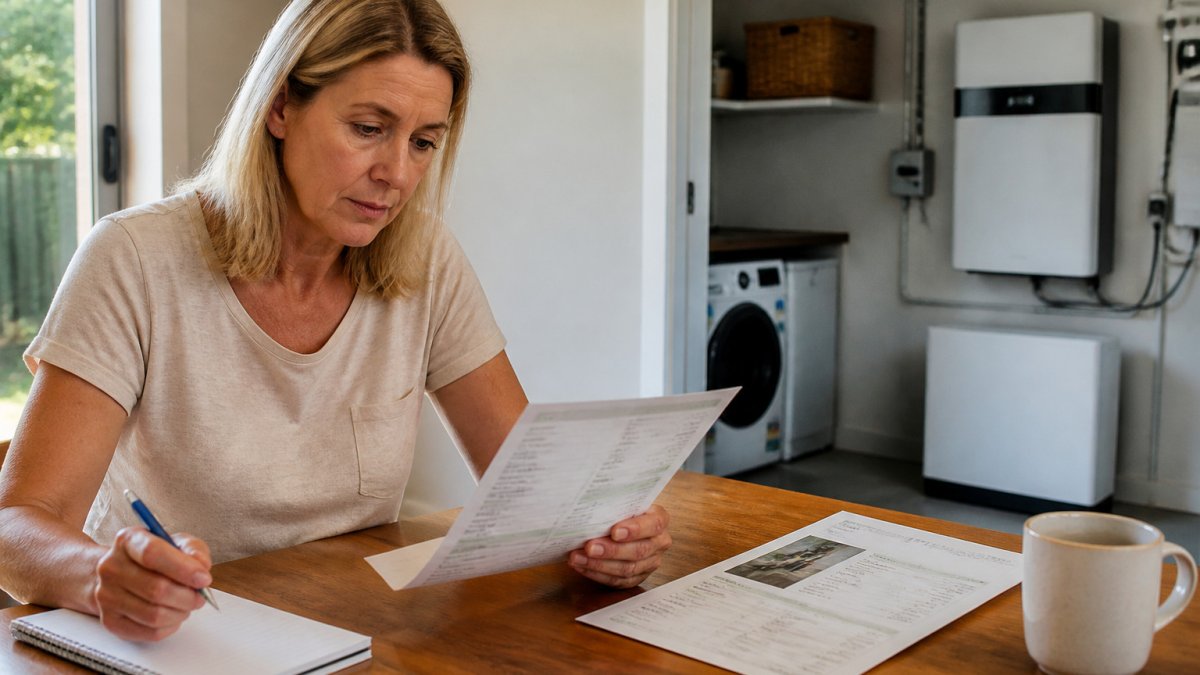
A common mistake is assuming your usage will drop as projected. If your household consumption stays higher than expected, savings fall and payback stretches. Run the numbers with conservative assumptions. If you are weighing ownership against other options, our Solar Lease vs Purchase: Payback Comparison 2026 article may help.
Solar Battery vs No Battery: Pros and Cons for Small Households
Pros of adding a battery:
- Greater use of your own solar generation
- Backup power during outages
- Reduced exposure to changing feed-in tariffs
Cons of adding a battery:
- Higher upfront cost, with longer payback for low-usage homes
- Capacity degrades over time
- Benefits are smaller if your solar system is already sized to meet most needs
Without a battery, a grid-tied system is simpler and cheaper, and may suit households who are mostly away during the day or who have limited roof space.
Installation and Maintenance Considerations
Battery installation should be carried out by an accredited installer who can check your switchboard, inverter compatibility and location requirements. Batteries need a suitable, ventilated spot that stays within the temperature range in the manufacturer’s specifications.
Maintenance is light but worth scheduling. Ask your installer what checks are included, how monitoring works, and how the warranty is handled if a fault occurs. Solazone Australia has more than 40 years of technical expertise in solar equipment and installation.
Deciding Whether to Book a Battery Assessment
A battery makes the most sense when your home uses a good share of its energy in the evening and you want more independence from the grid. If your usage is mostly daytime, a battery may add less value.
The practical next step is an assessment of your usage data and roof. Solazone Australia can review your situation and discuss the payback for your home. Get a solar installation quote to start that conversation with an installer near you.
Frequently Asked Questions
Is a solar battery worth it for a small home?
It depends mainly on how much of your daytime solar you currently export to the grid and how much you draw in the evening. Small homes often have lower daytime use, so a large share of panel output can flow back to the grid. A battery lets you store that power and use it after sunset, which can make it worthwhile when your evening consumption is steady. If your household is mostly out during the day and uses little power overall, the savings may be modest, so compare your own bills before deciding.
How long does it take for a solar battery to pay for itself?
The solar battery payback period depends on the installed cost, the usable capacity, your tariff structure and how often the battery cycles each day. Payback is calculated by dividing the total cost by the annual savings from using stored solar instead of buying grid power or exporting cheaply. Because these inputs vary widely between homes, Solazone Australia recommends requesting a quote based on your own bills so the payback estimate reflects your actual usage and tariff rather than a generic figure.
What size solar battery does a small home need?
A battery should generally be sized to cover your typical overnight or evening consumption rather than your whole day. Many small households find that a smaller usable capacity covers most of their evening needs, while oversized batteries can sit partly unused and extend payback. Review at least a few months of daily usage data from your meter or energy monitor before choosing a size, and ask your installer to model two or three capacities so you can compare the trade-offs.
Is it better to install solar panels with or without a battery?
Solar panels alone are usually the lower-cost starting point and suit homes where most generation is used during the day or where export rates are reasonable. Adding a battery increases upfront cost but can improve self-consumption and provide backup during outages. If you are planning solar now and may add storage later, confirm that your inverter and switchboard can support a battery later, as retrofitting can add cost. Solazone Australia can assess your setup and explain which option fits your household.
