
Table of Contents
- The Verdict: Is Commercial Solar Worth It for Manufacturing Plants?
- Key Strengths of Commercial Solar for Manufacturing
- Understanding Commercial Solar Payback Period in Australia
- STC and LGC Incentives for Business Solar
- Industrial Solar Battery Storage Solutions
- Real Limitations and Drawbacks
- Who Should Invest in Commercial Solar
- Conclusion
Last Updated: August 24, 2026
The Verdict: Is Commercial Solar Worth It for Manufacturing Plants?
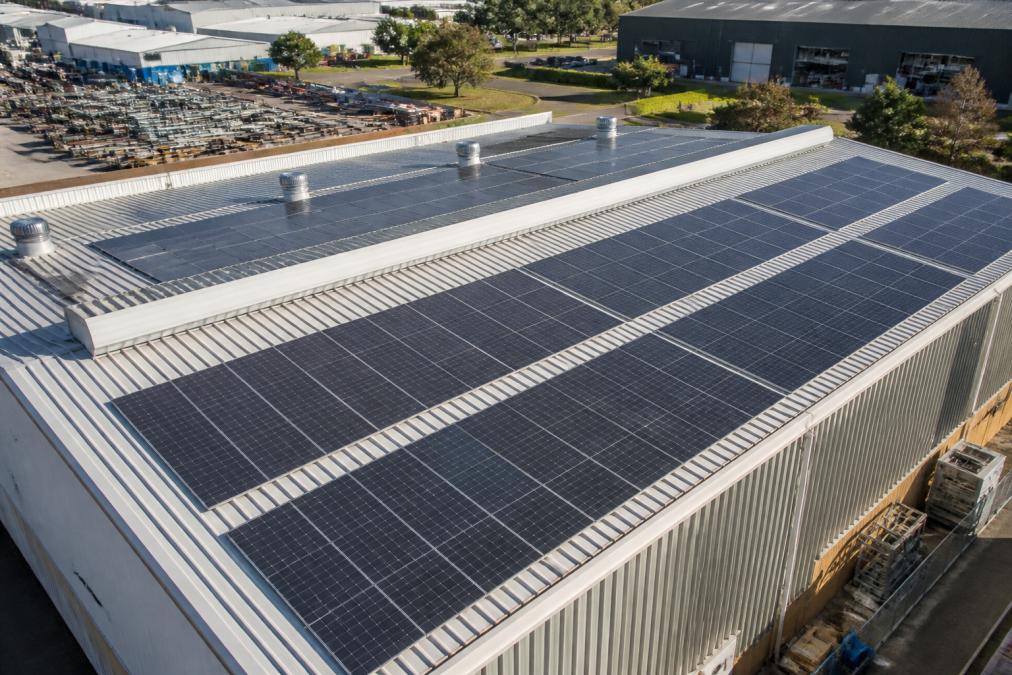
Is commercial solar worth it for manufacturing plants? For most manufacturing operations, the financial case is compelling. Manufacturing facilities typically operate during daylight hours when solar generation peaks, meaning you directly offset your highest consumption periods rather than relying on grid imports. This alignment between your load profile and solar production is the fundamental advantage that makes solar calculations favour manufacturers over many other business types.
At Solazone Australia, we’ve spent over 40 years analysing this scenario across hundreds of manufacturing sites. Facilities with consistent daytime energy demand, sufficient roof or ground space, and moderate shading can see significant reductions in energy costs, with the system generating free electricity for another 20-25 years of operational life.
This guide breaks down the financial reality, the hidden limitations, and the specific circumstances where commercial solar makes genuine economic sense for manufacturing plants.
Key Strengths of Commercial Solar for Manufacturing
Manufacturing plants have a structural advantage over most business types when it comes to solar viability. Your energy consumption typically concentrates during operating hours, the exact window when solar photovoltaic systems produce maximum output.
Daytime Load Alignment and Peak Demand Reduction
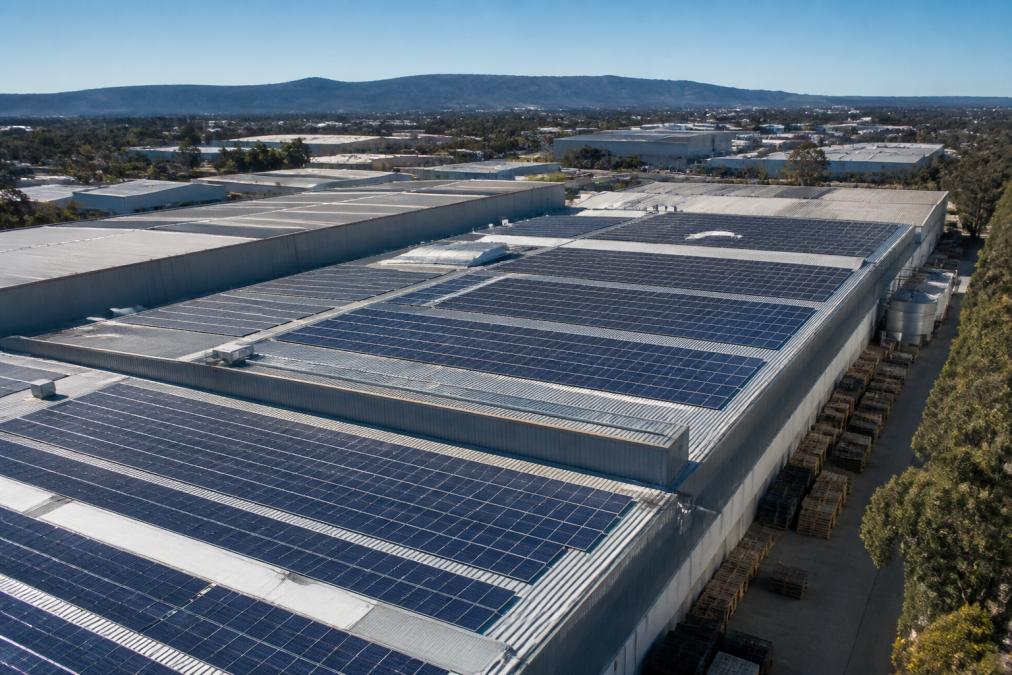
The alignment between your operational schedule and solar generation creates immediate value. When your production lines run at full capacity during midday, a rooftop or ground-mounted solar array generates peak power. You consume that electricity on-site rather than importing it from the grid at peak rates.
Peak load shaving delivers significant financial impact. Many manufacturing facilities face demand charges based on their highest 30-minute consumption window each month. A solar system can reduce your peak demand, potentially lowering demand charges. Solar generation also protects against energy price volatility. Grid electricity prices fluctuate based on wholesale market conditions, and manufacturing plants with high daytime consumption bear the full brunt of these price swings. Solar shifts your cost structure toward a fixed, predictable operational cost. After your system is paid off, your daytime electricity cost approaches zero, regardless of grid pricing (peer-reviewed research).
Long-Term Electricity Cost Protection
Manufacturing plants typically face electricity bills in the range of tens of thousands of dollars annually. A 50kW commercial solar system generates approximately 60,000-70,000 kilowatt-hours per year in most Australian locations (cleanenergycouncil.org.au). At current grid electricity rates, that’s equivalent to significant annual savings.
Grid electricity prices have risen 5-8% annually over the past decade, with no sign of reversal. Every year you delay installing solar, your baseline electricity costs climb higher. A system installed today locks in today’s installation costs while benefiting from tomorrow’s higher grid prices.
Industrial facilities with 24-hour operations face a different calculation. A system sized for daytime consumption won’t eliminate grid dependency entirely, but it will reduce it substantially. Many manufacturers combine solar with battery energy storage systems to shift surplus daytime generation into evening or night-shift operations.
Understanding Commercial Solar Payback Period in Australia
Payback period is the time required for cumulative solar savings to equal the system’s installed cost. For manufacturing plants, this can vary, depending on system size, energy consumption profile, available incentives, and your state’s electricity rates.
The pricing for a 50kW system depends on various factors. If that system generates significant annual savings, the payback period can be estimated. After payback, the system continues generating electricity at near-zero operational cost for another 20-25 years.
Government incentives improve this calculation. Small-scale Technology Certificates (STCs) and Large-scale Generation Certificates (LGCs) reduce your upfront capital requirement, effectively accelerating payback. For a 50kW system, STC rebates alone can reduce your net installed cost, shifting your payback window.
A manufacturing plant running three shifts consumes far less solar energy than its daytime consumption suggests, because peak consumption occurs during night shifts when solar generation is zero. Your actual solar offset might be 40-50% of total annual consumption rather than 70-80%, which extends payback periods accordingly. Site-specific analysis matters: generic payback calculations often overestimate actual savings.
Payback period calculations assume stable electricity rates and consistent system performance. If your facility relocates, undergoes major equipment upgrades that change energy consumption patterns, or experiences significant roof damage requiring system removal, your actual payback timeline shifts. Always model your specific scenario rather than relying on industry averages.
STC and LGC Incentives for Business Solar
Australia’s renewable energy incentive framework consists of two certificate-based schemes: Small-scale Technology Certificates (STCs) for systems under 100kW, and Large-scale Generation Certificates (LGCs) for larger systems. Both reduce your net installed cost by creating a tradeable value stream from your system’s renewable generation.
STCs apply to systems up to 100kW capacity. Your installer assigns STCs to your account based on the system’s expected 15-year generation output, and you can trade these certificates immediately for cash or use them to reduce your installation invoice. For a 50kW system, STC rebates typically reduce your net cost by 10-15%, depending on certificate market prices at installation time.
LGCs apply to systems over 100kW and represent a longer-term revenue stream. Your system generates LGCs annually for 15 years, each representing one megawatt-hour of renewable electricity. You sell these certificates on the open market, creating an ongoing revenue stream that supplements your electricity savings. For large industrial installations (250kW+), LGCs can contribute 15-25% of total financial returns over the system’s operational life.
Your installer must be accredited by Solar Accreditation Australia (SAA) to access these incentives. Not all solar installers hold SAA accreditation. Before committing to an installation, confirm your installer’s SAA status directly through the Council’s online register.
If your installer isn’t SAA-accredited, you forfeit thousands of dollars in potential STC rebates. Solazone Australia handles all STC administration as part of the installation process, ensuring you capture every available incentive without additional paperwork.
Industrial Solar Battery Storage Solutions
Battery energy storage transforms solar from a daytime-only energy source into a 24-hour power generation and management system. For manufacturing plants operating multiple shifts, battery storage solves the fundamental limitation of solar: it only generates during daylight hours.
Industrial battery systems come in two primary chemistries: lithium-ion and flow batteries. Lithium-ion systems offer compact form factors and high round-trip efficiency (90%+), but typically cycle 5,000-10,000 times before significant degradation. Flow batteries sacrifice some efficiency for superior cycle life and the ability to scale storage capacity independently of power output. For manufacturing plants requiring daily deep cycling, flow batteries often provide better long-term economics despite higher upfront costs.
The financial case for battery storage depends on your facility’s operational schedule and electricity tariff structure. A facility running 16-hour days benefits because surplus midday solar generation can power evening shift operations, reducing grid imports during high-rate periods. A facility running 24-hour operations benefits from backup power during grid outages and load shifting to lower-rate periods if your utility offers time-of-use pricing. solar property tax incentives.
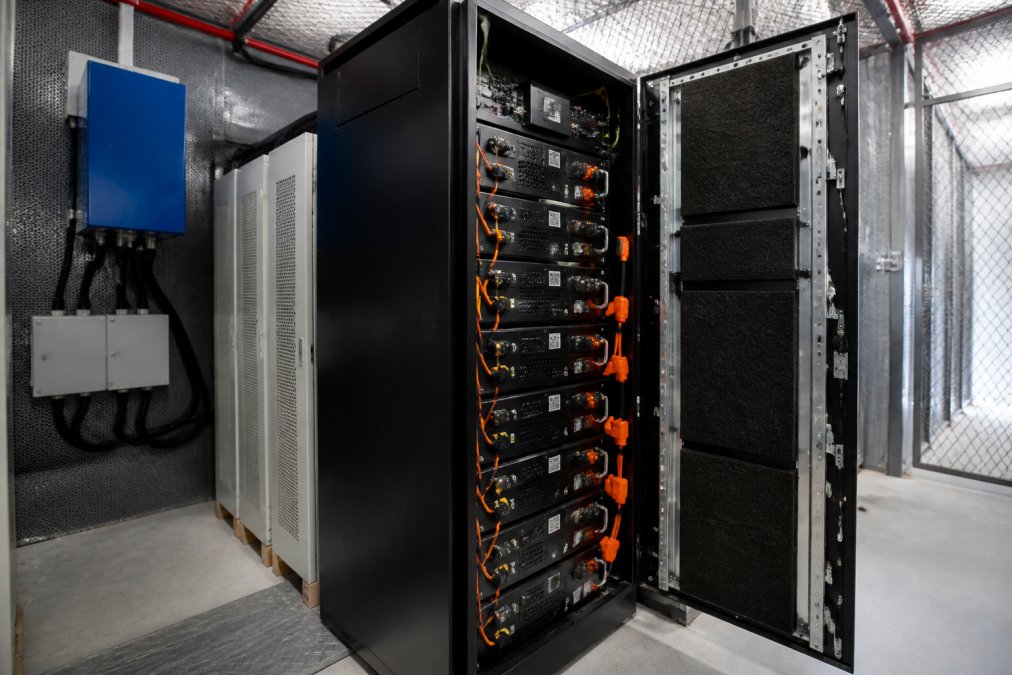
Battery storage systems vary in cost depending on usable capacity and other factors. Payback depends entirely on your specific use case. Facilities with frequent grid outages or time-of-use tariffs may see a faster return on investment. Facilities with stable grid supply and flat-rate tariffs may find the return on battery storage alone less compelling.
Demand charge management offers emerging opportunity. If your utility charges based on peak 30-minute consumption windows, a battery system can reduce your peak demand by discharging during your facility’s highest consumption periods. For manufacturers with 50-100kW peak demand, this single benefit can contribute to the justification of battery storage investment.
Real Limitations and Drawbacks
Solar isn’t a universal solution for every manufacturing facility. Understanding where commercial solar underperforms is essential.
Roof Structural Requirements and Shading
A 50kW solar array requires approximately 300-400 square metres of roof space. More critically, the roof structure must support the additional weight: a typical commercial solar system adds 10-15kg per square metre of roof load. Older facilities may require structural reinforcement before solar installation is feasible, which can add to project costs.
Shading is the second structural limitation. Even partial shading from trees, adjacent buildings, or roof-mounted equipment reduces system output disproportionately. A single solar panel shaded for 30% of the day can reduce the entire string’s output by 30-50%. Manufacturing facilities with surrounding trees, tall adjacent structures, or rooftop HVAC equipment need detailed shading analysis before proceeding.
Upfront Capital Expenditure
The upfront cost for a commercial solar system is a significant capital commitment, and many manufacturing facilities face budget constraints or competing capital priorities. Even with STC rebates reducing net cost by 10-15%, you’re still committing a substantial amount upfront.
Commercial solar loans and lease arrangements can spread costs over several years, but they add interest costs that can extend true payback periods. A facility with limited available capital or uncertain long-term operational stability may find the upfront commitment prohibitive, even if the long-term economics are sound.
Don’t let STC rebates distort your decision-making. The rebate reduces upfront cost but doesn’t eliminate it. Calculate your true net capital requirement after incentives, and ensure your facility can sustain that investment without compromising operational flexibility or maintenance budgets.
Who Should Invest in Commercial Solar
Commercial solar makes the strongest financial case for manufacturing facilities with these characteristics:
High daytime energy consumption: Facilities running 8-16 hour days with consistent production loads see the best solar economics. Your system directly offsets your highest consumption periods, maximising savings.
Stable long-term operations: Facilities planning to occupy their current location for 10+ years benefit from solar’s long operational life. If you’re considering relocation or major facility changes within 7-8 years, payback periods extend beyond your holding period.
Suitable roof or ground space: Facilities with south-facing roof exposure (or north-facing in southern regions), minimal shading, and structurally sound roof systems are ideal candidates.
Moderate to high electricity consumption: Facilities with annual electricity bills exceeding a certain threshold can see meaningful absolute savings.
Access to capital or financing: Facilities able to fund installation costs (or secure commercial solar financing) are positioned to capture incentives immediately.
Facilities that don’t fit this profile often find that solar doesn’t deliver acceptable returns. This isn’t a failure of solar technology; it’s a recognition that economics vary dramatically based on site-specific conditions.
Conclusion
Commercial solar is worth the investment for most manufacturing plants, provided your facility meets the basic criteria: high daytime energy consumption, suitable roof or ground space, structural capacity, and a long-term operational timeline. The financial case is strong for facilities with solar systems in high-consumption operations, where long-term savings accumulate substantially.
The decision hinges on your specific situation, your roof’s structural capacity, your consumption profile, your state’s electricity rates, and your access to capital. Generic payback calculations miss these details and often overestimate actual returns. Professional site assessment is essential. Solazone Australia provides comprehensive no-obligation site assessments that analyse your specific roof conditions, energy consumption patterns, and financial projections. Our team reviews your electrical systems, measures roof space, assesses shading, and models your actual solar offset. With over 40 years of technical expertise and thousands of satisfied customers across Australia, we help you determine whether commercial solar makes financial sense for your facility. Contact Solazone Australia for a free commercial solar assessment and discover your facility’s specific savings potential.
== FAQ ANSWERS (audit these too, same rules) ===
[1] Q: What is the typical payback period for commercial solar in Australia?
A: Payback periods vary based on system size, energy consumption, and available incentives. Plants with strong daytime load profiles, where production aligns with peak solar output, can achieve faster returns. Small-scale Technology Certificates (STCs) and Large-scale Generation Certificates (LGCs) accelerate payback by reducing initial capital costs. Your specific payback depends on your facility’s energy profile, roof space, and local electricity rates. A professional site assessment calculates your actual timeline based on your operational data.
[2] Q: How do Small-scale Technology Certificates and Large-scale Generation Certificates work for manufacturing plants?
A: STCs and LGCs are Australian government incentive schemes that create tradeable credits for renewable energy generation. Manufacturing plants installing systems under 100kW typically qualify for STCs, which are surrendered to offset the upfront cost. Plants installing larger systems may also access LGCs, earning credits for every megawatt-hour generated, creating ongoing revenue. The value of these certificates fluctuates with market conditions. Working with an experienced installer ensures your facility captures all available incentives and navigates compliance requirements correctly.
[3] Q: Can industrial solar battery storage solutions provide energy independence for manufacturing plants?
A: Yes, combining photovoltaic systems with battery energy storage systems enables manufacturing plants to store daytime solar generation and use it during peak demand or after hours, reducing grid reliance. However, full energy independence depends on system capacity, your facility’s energy consumption profile, and seasonal variations. Most plants achieve partial independence through peak shaving and load shifting rather than complete off-grid operation. Battery storage also provides backup power during grid outages and optimises energy management systems for maximum efficiency and cost savings.
[4] Q: What roof and structural requirements must my manufacturing facility meet for commercial solar installation?
A: Your roof must have adequate structural integrity to support the weight of photovoltaic systems, typically requiring engineering assessment. Orientation, pitch, and shading from trees or nearby structures affect system output, even partial shading significantly reduces performance. Most manufacturing facilities have suitable roof space, but complex layouts or older buildings may require custom design. A professional site assessment evaluates your roof’s structural capacity, solar irradiance, and shading patterns to determine feasibility and optimal system configuration.
Frequently Asked Questions
What is the typical payback period for commercial solar in Australia?
Payback periods vary based on system size, energy consumption, and available incentives. Plants with strong daytime load profiles, where production aligns with peak solar output, can achieve faster returns. Small-scale Technology Certificates (STCs) and Large-scale Generation Certificates (LGCs) accelerate payback by reducing initial capital costs. Your specific payback depends on your facility's energy profile, roof space, and local electricity rates. A professional site assessment calculates your actual timeline based on your operational data.
How do Small-scale Technology Certificates and Large-scale Generation Certificates work for manufacturing plants?
STCs and LGCs are Australian government incentive schemes that create tradeable credits for renewable energy generation. Manufacturing plants installing systems under 100kW typically qualify for STCs, which are surrendered to offset the upfront cost. Plants installing larger systems may also access LGCs, earning credits for every megawatt-hour generated, creating ongoing revenue. The value of these certificates fluctuates with market conditions. Working with an experienced installer ensures your facility captures all available incentives and navigates compliance requirements correctly.
Can industrial solar battery storage solutions provide energy independence for manufacturing plants?
Yes, combining photovoltaic systems with battery energy storage systems enables manufacturing plants to store daytime solar generation and use it during peak demand or after hours, reducing grid reliance. However, full energy independence depends on system capacity, your facility's energy consumption profile, and seasonal variations. Most plants achieve partial independence through peak shaving and load shifting rather than complete off-grid operation. Battery storage also provides backup power during grid outages and optimises energy management systems for maximum efficiency and cost savings.
What roof and structural requirements must my manufacturing facility meet for commercial solar installation?
Your roof must have adequate structural integrity to support the weight of photovoltaic systems, typically requiring engineering assessment. Orientation, pitch, and shading from trees or nearby structures affect system output, even partial shading significantly reduces performance. Most manufacturing facilities have suitable roof space, but complex layouts or older buildings may require custom design. A professional site assessment evaluates your roof's structural capacity, solar irradiance, and shading patterns to determine feasibility and optimal system configuration.
This article was written using GrandRanker