
Table of Contents
- How Commercial Solar Panels Work: The Fundamentals
- Commercial Solar System Benefits for Your Business
- The Commercial Solar Installation Process Explained
- Understanding STC Solar Rebate for Businesses
- Grid-Connected Systems and Feed-in Tariffs
- Battery Storage Integration and Energy Independence
- Monitoring System Performance and Maximising ROI
- Conclusion
- Frequently Asked Questions
How Commercial Solar Panels Work: The Fundamentals
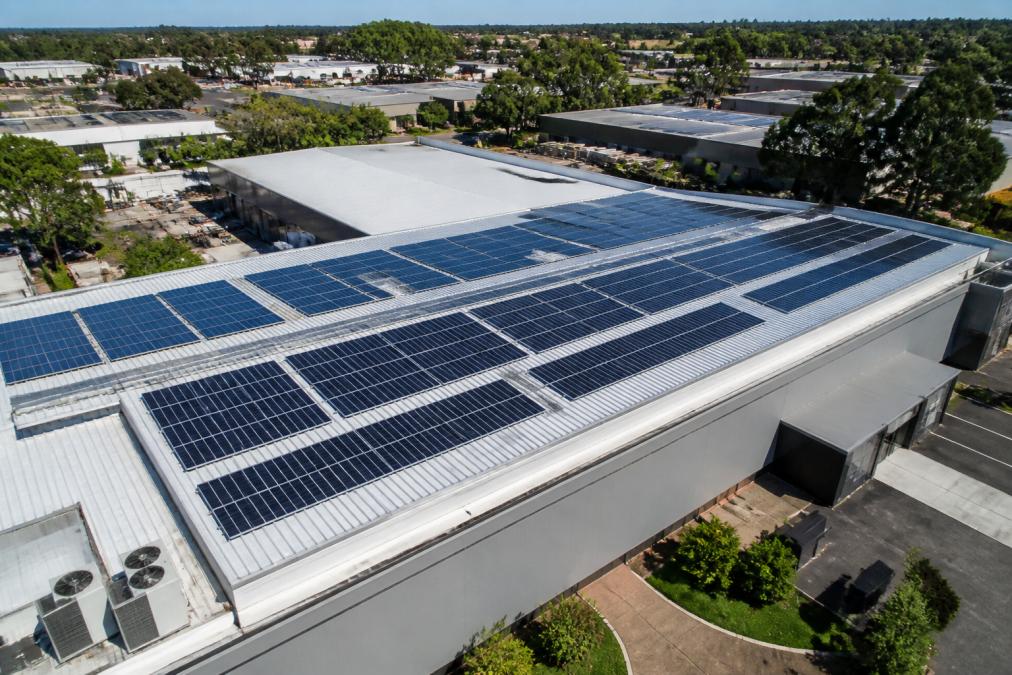
Understanding how commercial solar panels work for businesses starts with the physics of sunlight, but the practical payoff is operational. A commercial solar system captures sunlight through photovoltaic cells, which convert solar irradiance directly into electricity. For Australian business owners facing rising electricity tariffs, this conversion process is the foundation of every dollar saved on operational costs.
At Solazone Australia, we have spent over 40 years applying this technology across commercial rooftops and industrial sites. The process is more straightforward than most facility managers expect, yet the engineering decisions made during design determine whether your system delivers strong ROI or merely underwhelms.
Photovoltaic cells and energy conversion
Photovoltaic cells are semiconductor devices that generate direct current (DC) electricity when exposed to sunlight. Each cell produces a small voltage, so manufacturers wire dozens of cells together into panels, and panels into a solar array sized to your roof space and energy consumption.
The efficiency of this conversion depends on solar irradiance at your site, panel orientation, and shading. A common mistake is assuming all panels perform identically; in practice, the quality of Australian-made components and the accuracy of the site assessment matter more than brand marketing.
From direct current to alternating current
Your business runs on alternating current (AC), so the DC electricity from the solar array must pass through an inverter. The inverter converts DC to AC and synchronises the output with grid-connected power, ensuring your solar generation matches the frequency and voltage of the electricity grid.
Modern inverters also provide system monitoring data, letting you track generation in real time. This conversion step is where energy losses occur, which is why inverter quality directly affects how commercial solar panels work for businesses in practice.
Commercial Solar System Benefits for Your Business
The commercial solar system benefits extend well beyond the monthly power bill. Businesses that generate their own electricity reduce exposure to volatile electricity tariffs and gain predictable energy costs for budgeting and forecasting.
Reducing operational costs and energy consumption
Solar generation during daylight hours offsets the electricity you would otherwise purchase at commercial rates. For businesses with high daytime energy consumption, such as manufacturing, cold storage, or retail, the offset can be substantial. Peak demand charges, which often account for a large portion of commercial bills, can also be reduced when solar generation covers periods of high usage.
Achieving energy independence and security
Energy independence means your business is less vulnerable to grid outages and price spikes. A grid-connected system with battery storage keeps critical operations running during blackouts, protecting perishable stock, data systems, and productivity.
The real value of commercial solar is not just lower bills; it is predictable operating costs and resilience against an unreliable grid. Businesses that treat solar as an operational asset rather than an expense see the strongest returns.
The Commercial Solar Installation Process Explained
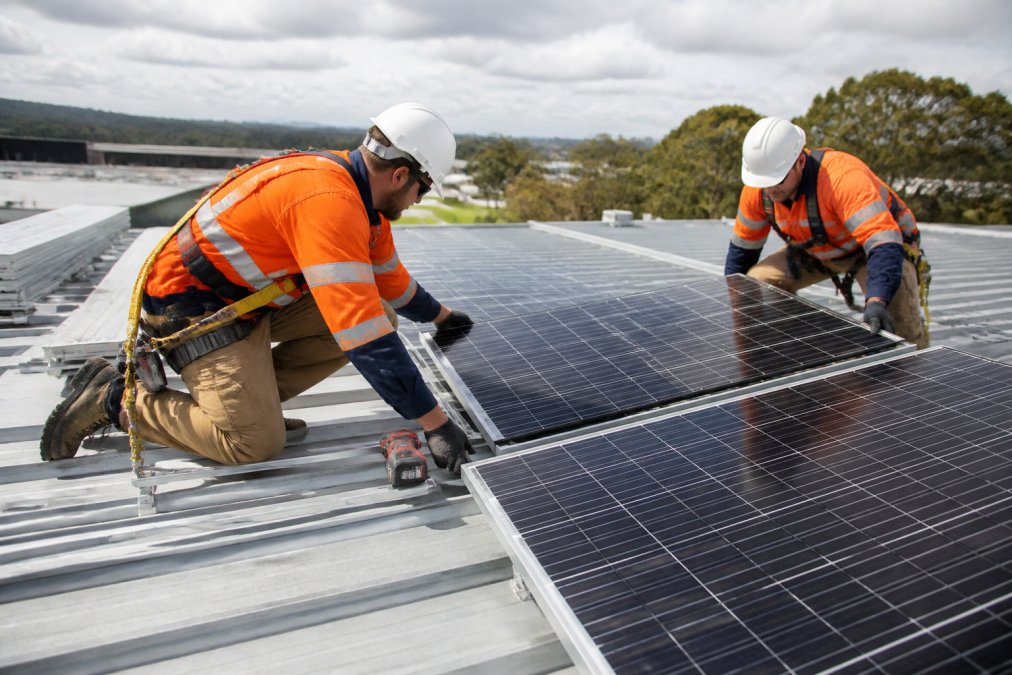
A professional commercial solar installation follows a structured sequence: site assessment, system design, regulatory approvals, installation, inspection, and grid connection. Each step involves technical and compliance requirements that, if overlooked, can delay project completion by months or result in non-compliant systems that void warranties and create safety liabilities.
Site assessment and system design
The first step is a thorough site assessment. An experienced team evaluates your roof structure, load-bearing capacity, orientation, shading from nearby trees or buildings, and your historical energy consumption data. This determines the system capacity you need and whether standard packages will fit, or whether custom design is required.
Design considerations include panel tilt, spacing for maintenance access, and the inverter capacity. A well-designed system matches generation to your consumption profile, avoiding oversizing that extends payback periods. The designer also identifies electrical infrastructure constraints, whether your switchboard can accommodate a new solar circuit breaker, whether your earthing system meets current standards, and whether your existing wiring can handle the DC and AC loads without upgrades.
Regulatory approvals and compliance requirements
Before installation begins, your system must comply with multiple regulatory frameworks. These approvals are often the longest part of the process and are frequently underestimated by businesses unfamiliar with commercial solar.
Planning and building permits: Most councils require development approval for rooftop solar systems, particularly if your building is heritage-listed or located in a visually sensitive area. Some councils fast-track solar applications, but others require detailed plans showing panel placement, structural calculations, and visual impact assessments. Check your local council’s website for solar-specific planning guidelines; some councils have streamlined approval pathways for systems under 10 kW, while others require full development applications regardless of size.
Electrical safety standards: Your system must comply with AS/NZS 3000 (the Australian electrical safety standard) and AS/NZS 4777 (grid connection standard for embedded generators) (standards.org.au). Your installer is responsible for designing the system to these standards, but your electrician must also verify compliance during installation. An independent electrical inspector (licensed by your state’s electrical regulator) must inspect the system before grid connection is permitted. This inspection covers switchboard modifications, earthing, circuit protection, and labelling. Non-compliance at this stage can result in the system being disconnected until remedial work is completed.
Grid connection agreement: Your electricity distributor (not your retailer) must approve your system’s connection to the grid. This is a separate process from your retailer’s feed-in tariff agreement. The distributor reviews your system design to ensure it will not destabilise the local network, cause voltage fluctuations, or interfere with other customers’ supply. Your installer typically lodges this application, but you should confirm the timeline with your distributor early in the design phase.
Structural certification: If your roof is not a standard commercial structure (e.g., a heritage building, a heritage-listed industrial site, or a structure with unusual load-bearing characteristics), a structural engineer must certify that the solar array and mounting system will not compromise the building’s integrity. This certification adds to the timeline.
Installation and grid connection
Once all approvals are in place, installation typically takes one to three days for most commercial rooftops, depending on system size and roof complexity. Licensed electricians mount the array, run cabling, install the inverter, and connect the system to your switchboard. After installation, an independent electrical inspector conducts a final inspection and issues a Certificate of Electrical Safety (or equivalent, depending on your state). Only after this certificate is issued can your distributor activate the grid connection.
Your system is then registered with the Clean Energy Regulator for STC assignment, and your retailer activates your feed-in tariff agreement. From this point, your system begins generating and exporting electricity.
Choosing an installer without proper accreditation risks non-compliant wiring, voided warranties, and rejection by your distributor. Always verify that your installer holds Clean Energy Council accreditation, that your electrician is licensed in your state, and that all components carry Australian certification. Request copies of all approvals (planning, electrical, grid connection) before signing the final invoice.
Allocate sufficient time for the full approval and installation process, not just the installation itself. Budget delays occur most often in the regulatory approval phase, particularly if your council or distributor requests additional information or modifications. Confirm timelines with your council and distributor before committing to an installation date.
::: fuel alternatives for businesses.
Understanding STC Solar Rebate for Businesses
The Small-scale Technology Certificate (STC) rebate is a federal incentive that significantly reduces upfront capital expenditure for eligible commercial solar systems. Understanding how STCs work is essential because the rebate can offset a portion of system costs, depending on system size, location, and the current STC price.
How STCs are calculated and valued
STCs are created based on your system’s expected electricity generation over a 15-year deeming period. The Clean Energy Regulator assigns each kilowatt of installed capacity a number of STCs based on your postcode’s solar zone (ranging from 0.8 to 1.6 kWh per watt annually). For example, a 25 kW system in a high-solar-zone postcode might generate a certain number of STCs, while the same system in a lower-zone postcode generates fewer.
The dollar value of each STC fluctuates based on market supply and demand. Your installer purchases STCs on your behalf (or arranges their sale) and deducts the total value from your invoice.
The Clean Energy Regulator publishes current STC pricing on its registry, and your installer should provide a rebate estimate based on current market rates before you commit to a purchase.
Eligibility rules and common disqualifications
Not all commercial solar systems qualify for STCs. The system must be installed by a Clean Energy Council-accredited installer and use components listed on the NECA (National Electrical and Communications Association) approved products list. Systems larger than 100 kW are ineligible, which excludes some large industrial facilities.
Additionally, if your business has claimed other government grants or subsidies for the same installation (such as certain state-based programs), you may not be eligible for the full STC rebate. Businesses that have previously installed solar and claimed STCs cannot claim again for the same site, though system expansions may qualify under specific conditions.
Leasing arrangements also affect eligibility. If you lease the system rather than own it outright, the leasing company typically claims the STCs, not your business. This is an important distinction when comparing purchase versus lease financing options.
Timing and claiming your rebate
STCs are created and assigned after your system is installed and inspected by a licensed electrical inspector. Your installer then lodges the STC assignment with the Clean Energy Regulator, which typically takes 4-8 weeks. The rebate is deducted from your final invoice once the assignment is confirmed, though some installers offer upfront rebate deductions based on an estimate, with reconciliation after assignment.
Because STC prices fluctuate, the timing of your installation affects the dollar value of your rebate. Installers often quote rebates based on current market prices, but confirm the final amount once your system is assigned to the registry.
:::warning
Always request a written rebate estimate from your installer that specifies the STC price assumed, the number of STCs your system will generate, and the total dollar rebate. Do not accept vague promises of “up to” a certain amount without detail.
Grid-Connected Systems and Feed-in Tariffs
Most commercial solar systems are grid-connected, meaning they draw power from the grid when solar generation is insufficient and export excess generation when production exceeds consumption. This arrangement eliminates the need for large battery banks in most cases.
Feed-in tariffs pay businesses for exported electricity, though rates vary by retailer and state. The export rate is typically far lower than the retail tariff you pay for imported power, which is why the financial case favours self-consumption over maximising exports. According to the Australian Energy Regulator’s market information, commercial electricity pricing structures continue to favour on-site generation for daytime consumption.
Battery Storage Integration and Energy Independence
Battery storage changes the economics of commercial solar by shifting generation to evening and night-time use. A business that closes at 5 pm might export most of its afternoon generation without batteries; with storage, that energy powers the site during evening cleaning, security, or second-shift operations.
Battery integration also provides genuine energy independence. For facilities that cannot afford downtime, such as medical centres or cold-chain logistics, battery backup bridges grid outages seamlessly. The upfront cost of batteries remains significant, so the decision should be based on your load profile and the value of uninterrupted power, not on general advice.
Monitoring System Performance and Maximising ROI
A solar array is a long-term asset that degrades slowly, but performance issues can arise from inverter faults, soiling, or vegetation growth. Regular system monitoring catches these problems before they cost you thousands in lost generation.
Most modern inverters include online monitoring dashboards. Reviewing generation against expected output monthly is a practical habit. A sudden drop often signals a fault requiring attention. For maximising ROI, schedule an annual inspection that includes thermal scanning of panels and verification of inverter efficiency.
Set a calendar reminder to review your monitoring dashboard on the same day each month. Comparing generation against the same month last year reveals degradation or faults early, when they are cheap to fix.
The commercial solar installation process we have outlined delivers the strongest results when paired with quality components and experienced design. For businesses evaluating options, the Clean Energy Council’s guide to choosing a solar installer provides a useful checklist of accreditation and warranty questions to ask.
Conclusion
Commercial solar is a significant capital expenditure that rewards careful planning. The businesses that capture the most value treat the system as an operational asset, sized to their consumption, monitored for performance, and integrated with battery storage where resilience matters. That approach, rather than simply chasing the cheapest quote, is what separates a sound investment from a costly mistake.
Solazone Australia brings more than 40 years of technical expertise to commercial solar design and installation, with a focus on Australian-made systems and personalised service. Our experienced teams handle the full process, from site assessment to grid connection, and our training history spans more than 200 industry professionals. Get started with Solazone Australia and put a system in place that cuts operational costs and secures your energy future.
Frequently Asked Questions
How do photovoltaic cells in commercial solar panels convert sunlight into electricity?
Photovoltaic cells contain semiconductor material, usually silicon, that releases electrons when struck by sunlight. These electrons flow through an electrical circuit, creating direct current (DC). An inverter then converts this DC into alternating current (AC), which powers your business equipment and feeds into the grid. The more sunlight hits the cells, the more electricity your system generates.
What is the STC solar rebate for businesses, and how does it reduce upfront costs?
The STC (Small-scale Technology Certificate) scheme provides rebates for eligible solar installations, helping offset capital expenditure. Businesses can claim STCs based on system capacity and expected energy generation. These certificates are tradeable, reducing your net installation cost. The rebate amount depends on your system size, location, and current market conditions. Your installer can help determine eligibility and calculate your specific rebate.
What happens to excess solar energy my system generates under feed-in tariff arrangements?
Excess energy your commercial solar array produces flows back into the grid. Feed-in tariffs compensate you for this surplus electricity at a rate set by your retailer. The tariff rate varies between providers and can change over time. Grid-connected systems automatically manage this exchange, crediting your account for exported kilowatt-hours. This arrangement improves your ROI and energy security while supporting renewable energy distribution.
How long does a typical commercial solar installation take from site assessment to grid connection?
The timeline varies based on system complexity, building structure, and regulatory approvals. Initial site assessment and design typically take 1-2 weeks. Installation itself usually spans 2-4 weeks for medium-sized systems. Grid connection and final inspections add to the overall timeline. Larger installations or buildings with structural challenges may require longer. Communication with your installer throughout the process ensures transparency and helps manage expectations.
This article was written using GrandRanker