
Table of Contents
- Average Australian Home Energy Use in 2026
- How to Calculate Your Daily Energy Consumption
- Why 6.6kW Is the Standard Solar System Size
- Cost of a 6.6kW Solar System in 2026
- When to Consider a Larger Solar System Size
- Benefits of Adding a Solar Battery
- Final Steps to Choose Your Solar System Size
- Frequently Asked Questions
Last Updated: September 7, 2026
Average Australian Home Energy Use in 2026
The question of what size solar system for average Australian home 2026 demand is not a simple one, but the default answer for most households remains the 6.6kW system. This size balances upfront cost against the typical daily consumption of a four-person household, which generally falls between 15 and 20 kilowatt-hours. Our installation data across Melbourne and the Sunshine Coast suggests that most homes with standard appliances, gas hot water, and no electric vehicle will cover the vast majority of their daytime usage with this capacity.
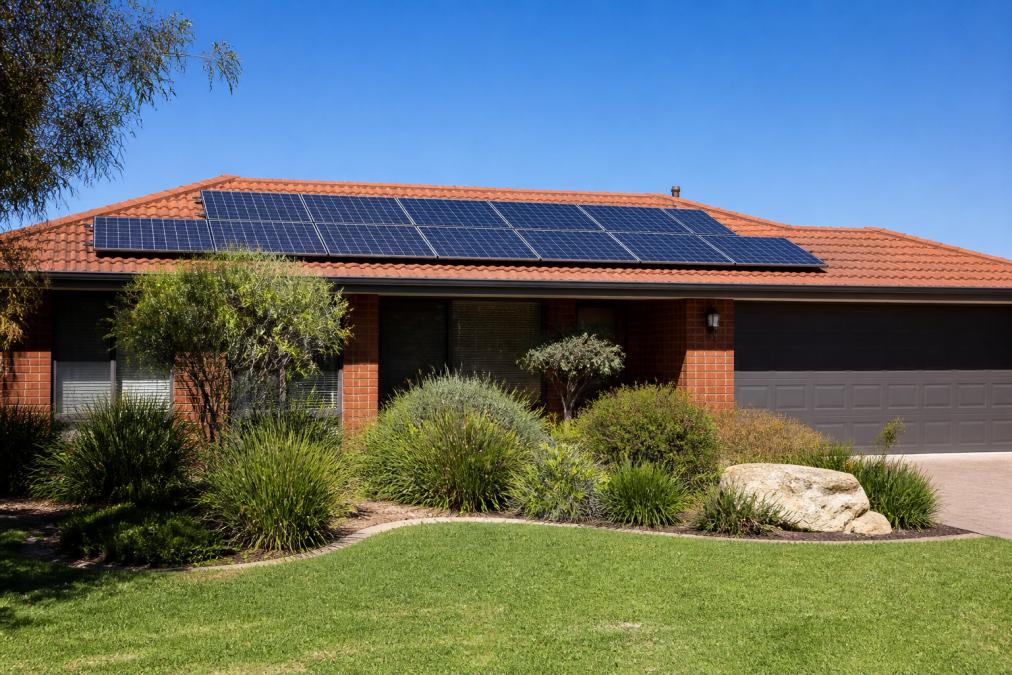
However, the “average” home is shifting. More households are adding electric vehicles, switching from gas to induction cooktops, and installing reverse-cycle air conditioning that runs across all seasons. Each addition changes your energy consumption profile and pushes the ideal system size upward. The standard advice of “just get 6.6kW” no longer fits every roof, which is why working through your actual usage matters more than following the crowd.
How to Calculate Your Daily Energy Consumption
Your daily energy usage is the single most important factor in determining your solar system size, and you can find it in under five minutes. Log into your electricity retailer’s portal or check your latest bill, which shows your usage in kilowatt-hours for the billing period. Divide that total by the number of days in the period to get your daily average, then compare that figure against the seasonal peaks on your bill.
A practical rule of thumb is that 1kW of solar panel capacity generates roughly 4 kilowatt-hours per day in most Australian climates, though this varies with your location’s solar irradiance and peak sun hours. To calculate the system you need, divide your daily usage by this generation figure. If your household uses 22kWh per day, a 5.5kW to 6.6kW system will cover most of your consumption.
Check your bill for both winter and summer usage. A home that uses 18kWh in summer but 26kWh in winter for heating needs a larger array than the summer figure suggests, or it will rely heavily on the grid during the cooler months.
Why 6.6kW Is the Standard Solar System Size
The 6.6kW capacity became the default for a specific technical reason that most guides gloss over: inverter oversizing rules. Under AS/NZS 4777.1, a standard 5kW single-phase inverter can be paired with a panel array up to 1.33 times its rated capacity, which works out to roughly 6.6kW of panels (standards.org.au). This configuration lets you capture more generation during the early morning and late afternoon when sunlight is weaker, without paying for a larger inverter that would sit idle most of the day. The array clips only during the few hours around solar noon when generation exceeds the inverter’s 5kW limit, and that lost energy is typically less than 2-3% of annual output.
A typical 6.6kW array uses 15 panels rated at 440W each, which requires roughly 29-32 square metres of roof space. Most Australian homes have enough north-facing or east-west split roof area to accommodate this, which is another reason the size became the industry default. But the more important shift is happening with panel efficiency and degradation rates. Modern panels from Tier 1 manufacturers degrade at roughly 0.4-0.5% per year, meaning a 6.6kW system will still produce around 5.9-6.0kW after 25 years. Cheaper panels from lesser-known brands can degrade at 0.7-1.0% annually, which means you lose an extra 75-150kWh of generation per year by the end of the system’s life, a difference worth several hundred dollars in avoided electricity purchases.
The 6.6kW standard exists because of inverter oversizing rules, not because it perfectly matches the average home’s consumption. If your usage is climbing toward 25kWh per day or you plan to add an EV or battery within five years, the 6.6kW benchmark is already outdated for your situation.
The more significant trend for 2026 is that the ‘average’ home is no longer static. The Clean Energy Regulator’s data shows that average system sizes installed under the Small-scale Renewable Energy Scheme have crept upward each year, with 8-10kW systems becoming increasingly common in states with high electricity prices (cer.gov.au). This is partly driven by households electrifying everything, induction cooktops, heat pump hot water, and EV chargers all add 5-15kWh of daily demand. A 6.6kW system paired with a 5kW inverter simply cannot feed a 7kW EV charger during the day without drawing from the grid.
The other factor reshaping the standard is the shift toward time-of-use tariffs and virtual power plant (VPP) programs. Under flat tariffs, exporting excess solar at a feed-in rate of 5-8c/kWh makes sense. But under time-of-use pricing, a 10kW system with a 8kW inverter can push more power into the grid during the 3pm-8pm window when some retailers pay 10-15c/kWh for exports, or better yet, charge a home battery that discharges during the peak evening period. This dynamic pricing environment means the ‘ideal’ size depends on your retailer’s tariff structure and whether you can shift loads into daylight hours.
For most households, the practical calculation is straightforward: if your daily usage is under 20kWh and you have no plans to electrify your transport or heating, a 6.6kW system remains the most cost-effective choice. If your usage is between 20-30kWh, or you expect it to grow, an 8kW array with a 6kW inverter typically costs only 15-20% more than a 6.6kW system but delivers 20-25% more annual generation.
Cost of a 6.6kW Solar System in 2026
The price range for a quality 6.6kW system in 2026 varies depending on your state, panel tier, and inverter brand. The wide spread reflects differences in hardware quality: a system using Tier 1 panels paired with a reputable inverter will typically sit at the upper end, while a budget system with lesser-known panels can come in at a lower price point. The gap matters over 25 years, an upfront saving on lower-tier panels can lead to lost generation if those panels degrade faster or fail entirely.
The single biggest price variable is the Small-scale Renewable Energy Scheme (SRES), which provides Small-scale Technology Certificates (STCs) that reduce your upfront cost. The number of STCs you receive depends on your postcode’s zone rating, Darwin and Cairns generate more certificates per kW than Hobart or Melbourne because they receive more solar irradiance. For a 6.6kW system in 2026, the STC discount typically ranges from $2,800 in southern zones to $3,400 in northern zones (cleanenergyregulator.gov.au). This means the same hardware can cost $600 more in Hobart than in Darwin before installation labour is even considered.
When comparing quotes, always ask for the ‘pre-STC’ price and the STC discount separately. Some installers advertise a heavily discounted price but then charge extra for essential components like a smart meter upgrade, isolator switches, or scaffolding on a two-storey roof. A quote that seems $1,000 cheaper may simply be excluding items that another installer includes as standard.
Installation costs also vary by state due to labour rates and compliance requirements. In areas where the market is highly competitive, you can expect to pay a certain amount for installation on a standard single-storey home with a simple tile or tin roof. In other regions, labour rates may be higher and travel distances longer, pushing installation costs up. Complex roofs, steep pitches, multiple storeys, or difficult access, add to the quote.
Payback calculations have shifted in 2026 because of two opposing forces. Feed-in tariffs have fallen to 3-8c/kWh in most regions, down from the 10-15c/kWh rates common a few years ago, making self-consumption more valuable than export. Simultaneously, electricity prices have risen 20-30% since 2023 in most states, meaning every kilowatt-hour you generate and use yourself is worth 30-45c. A typical 6.6kW system generating 24kWh per day, with 40% self-consumption and 60% export at 5c/kWh, can lead to significant annual savings in avoided purchases and export income. This can result in a payback period of 3-5 years for a quality system.
State-based incentives can further improve the economics. Victoria’s Solar Homes Program has historically offered rebates for eligible households, though funding rounds fill quickly. South Australia and the ACT have targeted battery incentives that pair well with a solar array. These programs change frequently, so checking your state energy department’s website before signing a contract is worthwhile.
The final cost consideration is future-proofing. A 6.6kW system with a 5kW inverter will need a second inverter or a system upgrade if you later add a battery with high charge rates or an EV charger that draws more than 5kW. Some installers now recommend installing a 6kW or 8kW inverter with a 6.6kW panel array, which adds $400-800 to the upfront cost but avoids a $1,500-2,500 inverter replacement later.
When to Consider a Larger Solar System Size
A larger solar system size becomes worthwhile when your daily consumption exceeds what a 6.6kW array can realistically generate, or when you plan to add major electrical loads soon. Homes with electric vehicles, for example, typically add 8 to 12kWh of daily charging demand, which pushes the ideal array to 10kW or more. Similarly, households switching from gas heating to reverse-cycle air conditioning often find their winter usage climbs well beyond the capacity of a standard system.
The decision also depends on your roof orientation and available space. A north-facing roof with minimal shading can fit a larger array efficiently, while an east-west split may require more panels to achieve the same annual yield. Climate-specific sizing matters here: homes in cooler southern regions need more capacity for winter heating loads, while those in subtropical areas may prioritise summer cooling. Before upgrading, check whether your inverter capacity and connection point can handle the larger array, as some networks require approval for systems above 10kW.
| System Size | Daily Output (approx.) | Best For | Typical Payback Period |
|---|---|---|---|
| 6.6kW | 22-28kWh | Standard homes, 15-20kWh daily usage | 3-5 years |
| 8kW | 28-36kWh | Homes with pools or large families | 4-6 years |
| 10kW+ | 36-45kWh | EVs, batteries, high daytime usage | 5-7 years |
Benefits of Adding a Solar Battery
Adding battery storage changes your solar system from a daytime-only proposition into one that delivers power around the clock. A battery lets you store excess generation during the day and draw on it in the evening when feed-in tariffs are low and grid electricity is expensive. This shift toward self-consumption is becoming more valuable as retailers introduce time-of-use tariffs that charge more for evening power.
Battery storage capacity is measured in kilowatt-hours, and a typical home battery ranges from 10kWh to 15kWh of usable capacity. That is enough to cover most households’ evening and overnight usage, provided the battery is fully charged by solar during the day. For homes in areas with frequent power cuts, a battery also provides backup power when the grid goes down, though this requires the system to be configured for islanding rather than purely grid-tied operation.
The economics of batteries have improved as prices have fallen, but they remain a significant additional investment on top of the solar array. The payback depends on your evening usage, your retailer’s feed-in tariff, and whether you can access virtual power plant programs that pay you for making your battery capacity available to the network. Households that use little power in the evening may find a battery hard to justify, while those with high evening demand often see a compelling return.
Final Steps to Choose Your Solar System Size
Choosing the right system size comes down to matching your generation to your consumption, not following a one-size-fits-all recommendation. Start with your daily average from your electricity bills, then add a buffer for planned changes such as an electric vehicle, a heat pump, or a pool. Once you have that target, check your roof space and orientation to confirm the physical capacity for the array you need.
Getting an accurate picture requires a professional assessment of your site, including shading analysis and roof condition. A common mistake is assuming that partial shading only affects the shaded panels, when in fact it can reduce the output of the entire string. An experienced installer will evaluate your specific layout and recommend the right combination of panels, inverter capacity, and optional battery to meet your goals.
At Solazone Australia, our team brings more than 40 years of technical expertise to every assessment. We promote Australian-made systems and provide personalised service that accounts for your home’s quirks, your budget, and your energy goals. Rather than offering a standard package and hoping it fits, we work through your numbers and recommend the solar system size that aims to deliver a good return on investment for your situation.
Frequently Asked Questions
Is a 6.6kW solar system enough for an average Australian home?
For most homes using 15-20kWh per day, a 6.6kW system is sufficient. It produces around 24kWh daily depending on your location and roof orientation, covering typical usage and allowing you to export surplus to the grid. However, if you have an electric vehicle or high daytime usage, you may need a larger system. Review your energy bills to confirm your consumption before deciding.
What is the 33% rule for solar panels?
The 33% rule is a guideline suggesting your solar system’s inverter capacity should be about 33% less than the panel capacity. For example, a 6.6kW system typically uses a 5kW inverter. This allows panels to overproduce slightly, maximising generation during peak sun hours without overloading the inverter. It’s a cost-effective standard that maintains efficiency and complies with most network connection approvals.
How much does a 6.6kW solar system cost in 2026?
The cost of a 6.6kW solar system in 2026 varies based on panel quality, inverter type, and installation complexity. Prices have generally fallen, but supply chain factors and technology improvements can affect quotes. For an accurate price tailored to your home, request a personalised quote from Solazone Australia. We offer Australian-made systems and professional installation, aiming to ensure you get value and long-term reliability.
Should I add a battery to my solar system in 2026?
Adding a battery increases your self-consumption, letting you store excess solar power for evening use. This is especially valuable if you face high evening tariffs or frequent outages. Batteries are a significant investment, but with the right system size and usage patterns, they can shorten your payback period. Consider your daily consumption and whether you want backup power before deciding.
Choosing the right solar system size is the difference between a system that pays for itself quickly and one that leaves you buying grid power at peak rates. The team at Solazone Australia can assess your energy consumption profile, roof layout, and future plans to recommend the ideal capacity, whether that is a 6.6kW standard array or a larger system with battery backup. Get started with Solazone Australia and take the guesswork out of your solar investment.